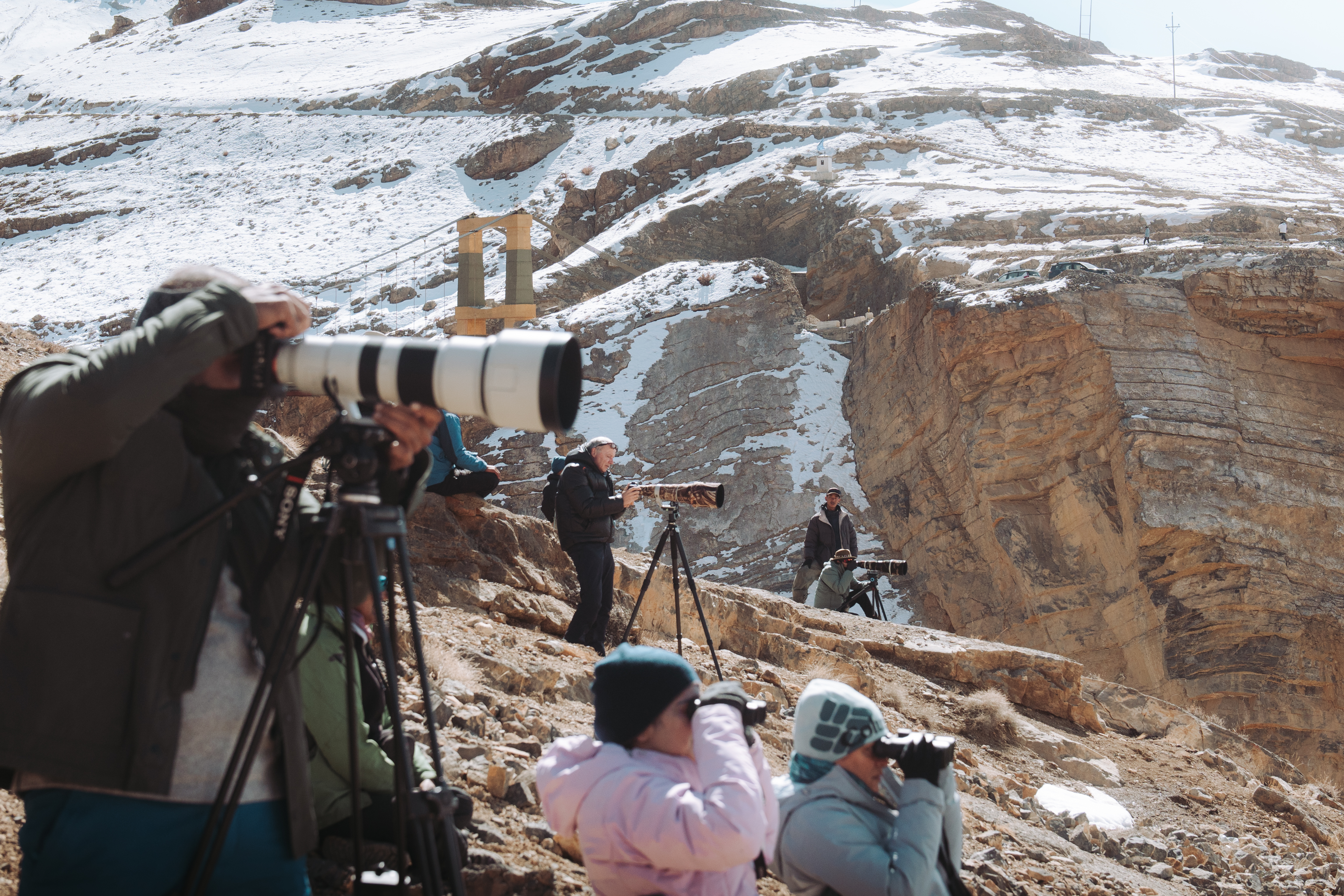
The air at 4,200 metres has a distinct, brittle quality before dawn. You feel it in your lungs before you see the landscape - a sharp, icy stillness that settles over the Spiti Valley. We stand on a frozen ridgeline near Kibber, breath pluming in the minus-twenty-degree air, waiting for the first light to bleed over the jagged peaks. Below us, the valley is a monochrome expanse of snow, scree, and shadow. I adjust the focus on my spotting scope, slowly panning across a distant, near-vertical rock face. Tracking here is not about motion; it is about pattern recognition. You are looking for a rock that seems out of place, a shadow that shifts against the wind. Suddenly, a patch of grey-white scree detaches itself from the mountain. A tail flicks, thick and cylindrical. The ghost has materialised. This is the reality of tracking snow leopards - a masterclass in patience, endurance, and profound stillness.
Table of Contents
What Makes Spiti One of the World's Best Places to See Snow Leopards
To understand why Spiti Valley, and specifically the area around Kibber, has become the global epicentre for snow leopard tracking, you have to look at the landscape through the eyes of an apex predator. The Trans-Himalayan region is a high-altitude cold desert, characterised by stark, treeless mountains, plunging gorges, and vast, open slopes of loose scree. Unlike tiger tracking in the dense sal forests of Central India, where visibility is often limited to a few dozen metres and encounters are sudden and close-quarters, tracking in Spiti is an exercise in distance and scale.
The absence of dense vegetation in Spiti is the tracker’s greatest asset. In forested habitats, a predator can disappear behind a thicket in a fraction of a second. Here, the sheer openness of the valleys allows us to set up spotting scopes on vantage points and scan literal kilometres of mountain face simultaneously. We are not driving blindly through a jungle hoping to cross paths with a cat; we are systematically dismantling the landscape visually, looking for the slightest anomaly in the rock formations.
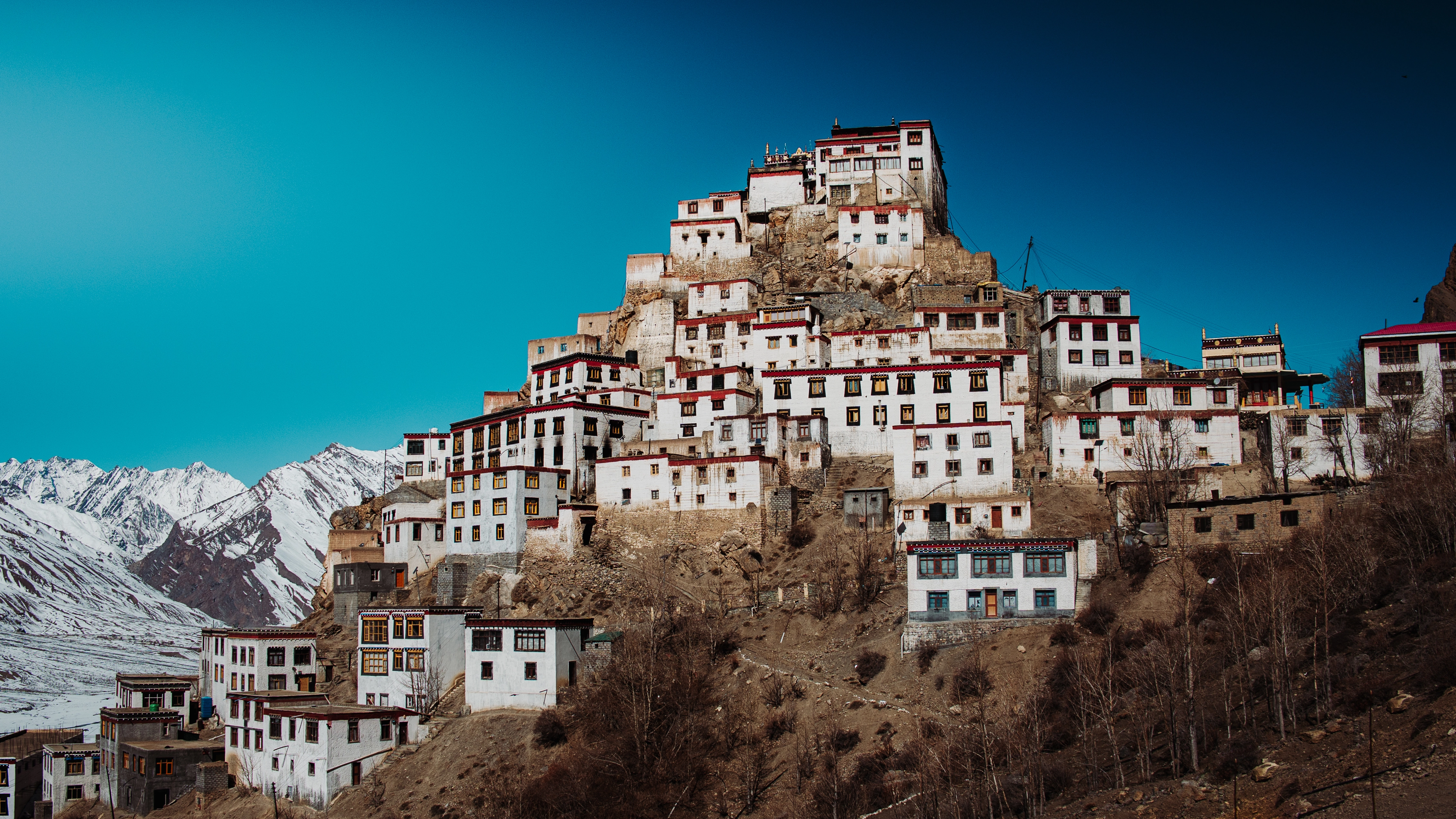
Kibber and its surrounding villages sit at elevations above 4,000 metres. In the summer, these heights are grazed by domestic livestock and scattered wild ungulates. But as the severe winter sets in, the heavy snowpack at higher elevations forces the snow leopard's primary prey - the blue sheep, or bharal - down into the lower valleys to forage for sparse vegetation. Where the prey goes, the predator follows. This winter migration effectively funnels the snow leopard population into a much more concentrated and accessible geographic area around human settlements and lower pastures.
Furthermore, the topography of Spiti provides the perfect amphitheatre for observation. The valley walls are steep, broken by deep ravines and ridgelines that snow leopards use as natural highways to patrol their territories. When a cat is spotted across a gorge, the distance provides a natural, ethical buffer. We can observe natural behaviours - stalking, resting, marking territory, or interacting - for hours without our presence altering their conduct. This distance is crucial. It transforms an expedition from a mere sighting into a deep, sustained observation of a highly elusive species in its natural element.
The Ghost of the Mountains: Understanding Snow Leopard Behaviour
The snow leopard (Panthera uncia) is arguably the most highly adapted large feline on the planet, a creature sculpted entirely by the harsh demands of the roof of the world. Every aspect of their physiology is engineered for survival in sub-zero, oxygen-deprived environments. Their nasal cavities are enlarged to warm the freezing air before it reaches their lungs. Their paws are exceptionally wide, acting as natural snowshoes to distribute their weight and prevent them from sinking into deep drifts, while thick fur between their toes provides insulation and traction on sheer ice.
Perhaps their most iconic feature is their tail - measuring almost a metre long and incredibly thick. This appendage acts as a vital counterbalance when they are executing high-speed, acrobatic pursuits across near-vertical cliffs. When resting, the tail is wrapped around their face and body like a thick, insulating scarf to protect against the biting wind.
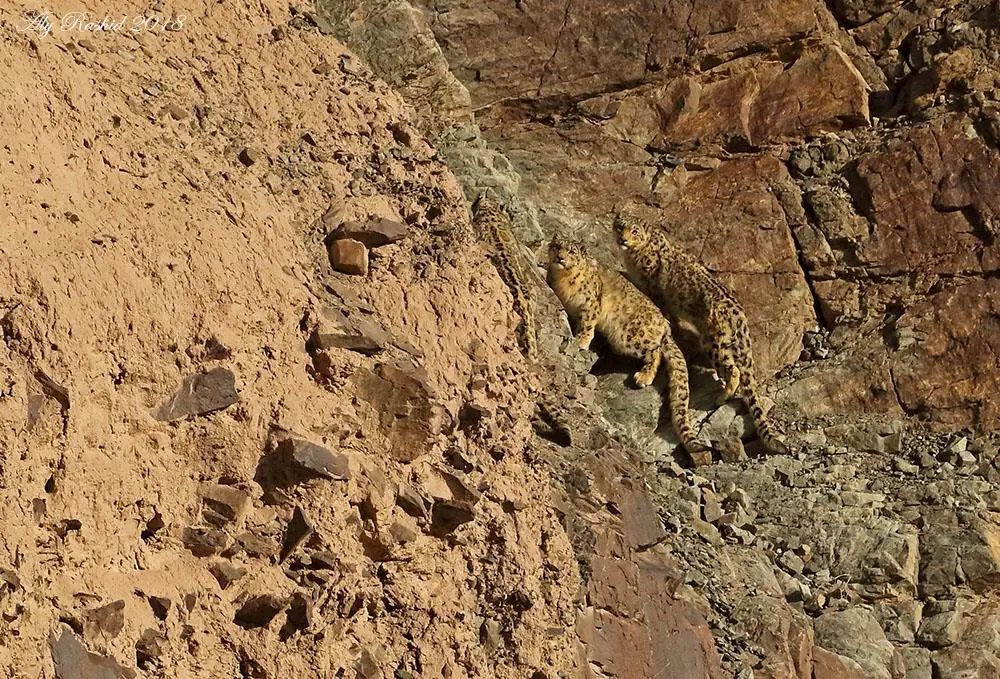
They are ambush predators, relying entirely on their supreme camouflage. Their smoky-grey coats, patterned with dark rosettes, perfectly mimic the dappled shadows of snow-dusted rocks and scree. It is this near-magical ability to blend into the barren landscape that earned them the regional moniker pahad ka bhoot - the ghost of the mountains. A snow leopard can be resting completely exposed on a ledge just a few hundred metres away, and until it twitches an ear or turns its head, it remains entirely invisible to the untrained eye.
Understanding how they hunt is critical to tracking them. Their primary prey in Spiti is the blue sheep (bharal), a robust and sure-footed mountain ungulate. Snow leopards prefer to attack from above. They will spend hours perfectly still, watching a herd of bharal graze below, calculating the precise angle of attack. When they strike, they use the steep, broken terrain to their advantage, launching themselves into a sprint that often involves leaping across treacherous chasms.
Because they are fundamentally solitary, tracking them requires reading the subtle messages they leave in the landscape. A snow leopard’s territory is vast - often spanning hundreds of square kilometres. To communicate with other leopards, maintain boundaries, and signal reproductive readiness, they leave specific signs. As naturalists, we do not just look for the animal; we read the terrain. We look for fresh pugmarks in soft snow, identifying the direction of travel and the age of the track by how much the edges have melted or frozen.
We search for scrapes - depressions in the dirt or gravel where a cat has kicked back with its hind legs to leave a visual marker and scent. We inspect the undersides of overhanging rocks for scent sprays and cheek rubs. Finding a fresh scrape, with the displaced dirt still loose and un-frozen, tells us that the ghost passed through only hours before, dictating where we set up our scopes for the day.
Best Time to Track Snow Leopards in Spiti
Timing is everything in the Trans-Himalayas. During the summer, snow leopards retreat to the high alpine pastures, often above 5,000 metres, following the migration of the bharal and ibex. The terrain at this time is vast, the snowline is incredibly high, and the logistics of tracking become exponentially more difficult. The cats are dispersed over massive areas, making sightings exceptionally rare and largely dependent on blind luck.
However, as winter tightens its grip on the region, the paradigm shifts entirely. By January, the high passes are choked with deep snow, and the temperatures plummet to extremes. The grazing for wild sheep and goats becomes buried beneath the snowpack, forcing these herds to descend into the lower valleys, often coming remarkably close to human settlements like Kibber and Chicham where the wind clears patches of dry grass.
This altitudinal migration is the key to winter tracking. The snow leopards follow their food source. Suddenly, a population that was spread across hundreds of square kilometres of inaccessible peaks is compressed into a much narrower elevation band. This concentration of prey and predator in the lower valleys dramatically increases the probability of sightings.
March is a particularly fascinating month, which is precisely why we schedule our fixed departure expeditions during this window. Beyond the favorable concentration of animals, March marks the onset of the snow leopard mating season. These typically silent, solitary ghosts become unusually active and vocal. Males expand their patrols, seeking out receptive females, and the mountains occasionally echo with their distinctive, non-roaring calls - a piercing, guttural yowl.
During this brief biological window, it is not uncommon to witness multiple cats interacting, or a male relentlessly trailing a female across a ridgeline. The dynamics of the landscape change from quiet endurance to active pursuit, offering wildlife enthusiasts a rare opportunity to observe complex social behaviours in an animal that spends the rest of the year in strict isolation.
The Expedition Experience
If you are accustomed to the standard rhythm of Indian wildlife safaris - driving down forest tracks in an open gypsy, following alarm calls, and rushing to a sighting - a snow leopard expedition will require a complete recalibration of your expectations. This is not a safari; it is an expedition in the truest sense. It demands discipline, resilience, and an appreciation for the slow, meticulous art of field observation.
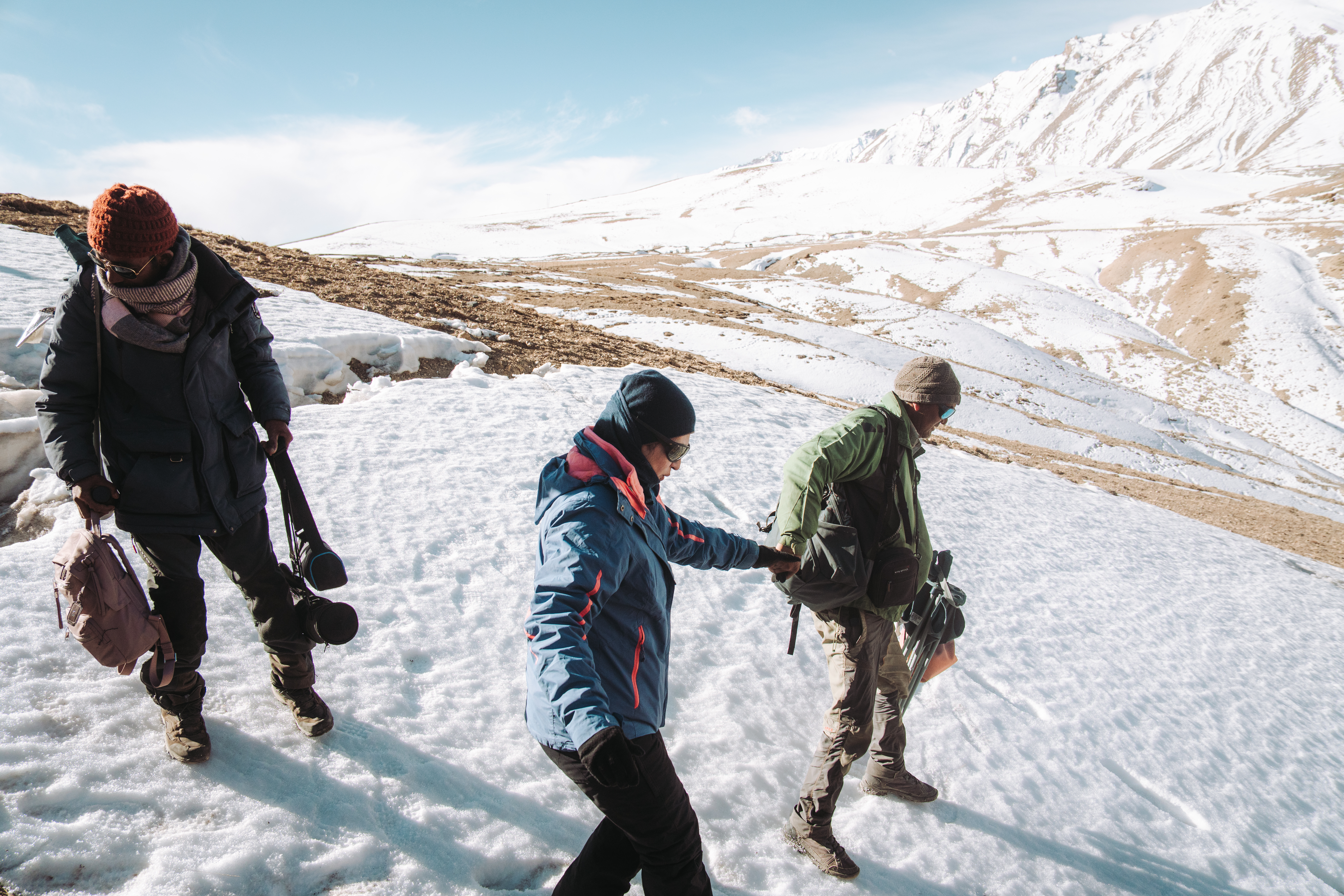
A typical day begins long before dawn. You wake up in a local homestay, the temperature outside hovering around -15°C to -20°C. You layer up methodically - merino wool base layers, thick down jackets, windproof shells, and heavy insulated boots. Over steaming cups of butter tea or black coffee, the tracking team discusses the plan based on the previous night's intel - perhaps a local shepherd heard a distress call from a blue sheep, or one of our spotters found fresh pugmarks on the edge of the village.
We drive a short distance to a predetermined vantage point, setting up our heavy tripods and spotting scopes as the first light hits the peaks. And then, the real work begins. You spend hours standing in the biting cold, your eye pressed against the eyepiece, slowly and systematically scanning the opposite valley wall. You divide the mountain into grids in your mind, checking every rocky outcrop, every shadow, every subtle ridge.
The silence is absolute, broken only by the whistling wind or the occasional clatter of falling scree. Our local spotters, whose eyes are remarkably attuned to this specific landscape, communicate quietly in the local dialect. When a spotter freezes and locks his scope, the energy in the group shifts instantly.
The moment of spotting is rarely dramatic. It is usually a quiet confirmation: "I have something. Lower ridge, by the distinct triangular rock." You align your scope, adjust the focus, and suddenly the mountain resolves into a living breathing creature. The reward for hours of freezing immobility is watching a snow leopard navigate a vertical cliff face with casual grace, or seeing a mother resting with her cubs on a sun-baked ledge.
Because we operate in small, intimately guided groups, we can maintain the silence and ethical distance required for such observations. We are not crowding the animal; we are sharing its space. For photographers, this is the time to carefully set up long lenses, understanding how to expose correctly for the bright snow and harsh shadows, capturing images that convey the stark, unforgiving reality of the predator's home.
Who Leads This Expedition
The difference between a successful snow leopard expedition and a frustrating cold-weather camping trip almost entirely comes down to the expertise of the people leading it. Many operators in the Himalayas function primarily as logistics providers - they book your jeep, arrange your homestay, and provide a local driver who knows where cats have been seen in the past.
At Just Nature Expeditions, we approach tracking fundamentally differently. We are, at our core, a team of passionate naturalists. When you are standing on a freezing ridge for six hours, you need more than a driver; you need someone who can interpret the ecosystem for you. My background as an ornithologist and head naturalist at Reni Pani Jungle Lodge means I look at the landscape holistically. We don't just stare at empty rocks waiting for a cat; we observe the behaviour of the blue sheep herds, we watch the golden eagles riding the thermals, we track the red foxes scavenging in the valleys.
Our naturalists work in seamless tandem with our elite local Spitian trackers. These local experts possess an intergenerational, intuitive knowledge of the terrain that is absolutely invaluable. We combine their indigenous tracking skills with our broader ecological understanding and wildlife ethics.
Furthermore, we provide dedicated, in-the-field photographic guidance. Photographing in the high Himalayas is technically demanding. The intense reflection off the snow will fool your camera's light meter, and the extreme cold drains batteries in minutes. We help our guests navigate these technical challenges in real-time - advising on exposure compensation, composition against the vast landscapes, and the ethical protocols of photographing apex predators without causing disturbance. We invite you to learn more about our team on our Expedition Leaders page.
Who This Expedition Is For
01 The Serious Wildlife Enthusiast
If you have tracked tigers in Bandhavgarh or jaguars in the Pantanal, and are now looking for the pinnacle of feline tracking, this expedition is built for you. You understand that real wildlife observation is not a guaranteed spectacle delivered on a platter. You appreciate the intellectual challenge of reading tracks, understanding prey dynamics, and the deep satisfaction of earning a sighting through patience and persistence. You are frustrated by overcrowded tourist jeeps and operators who lack a genuine understanding of ecology. Here, you will find a team that speaks your language, prioritizing ethical observation, behavioural understanding, and the preservation of the wilderness over quick, disruptive encounters.
02 The Bucket List Adventurer
You have dreamed of seeing the ghost of the mountains and can say you stood on the roof of the world to track them. You might be anxious about the altitude, the sheer physical toll of the cold, or the uncertainty of the sightings. This is completely normal. Our expeditions are structured to mitigate these exact anxieties. We manage the logistics flawlessly, prioritize your physical safety and comfort in extreme conditions, and provide a supportive, deeply knowledgeable environment. You don't need to be an expert wildlife biologist to join us; you simply need a resilient mindset, a willingness to endure the cold, and a profound respect for the mountains. We handle the rest.
Practical Details
Altitude and Acclimatisation: The single most critical factor of a Spiti winter expedition is managing the altitude. Kibber sits at approximately 4,200 metres, where the oxygen levels are significantly lower than at sea level. Acute Mountain Sickness (AMS) is a real risk if not managed correctly. Our itineraries are meticulously designed with slow, phased ascents. The first few days are dedicated entirely to acclimatisation, with minimal physical exertion. We mandate high fluid intake and monitor our guests closely. This is not a race; it is an exercise in listening to your body.
Extreme Cold Gear: You cannot overstate the cold in Spiti during January or March. Proper gear is the difference between an incredible wildlife experience and sheer misery. You must utilize a strict layering system. This begins with high-quality merino wool base layers to manage moisture, followed by heavy fleece mid-layers for insulation, and topped with a heavy-duty, expedition-grade down jacket and windproof/waterproof outer shell. Extremities are the most vulnerable - you will need heavily insulated, waterproof boots rated for sub-zero temperatures, thermal socks, and high-quality gloves (a thin liner glove inside a thick mitten allows you to operate camera gear without exposing bare skin to the wind).
Fitness Expectations: While you do not need to be a marathon runner, a moderate level of cardiovascular fitness is required. The lack of oxygen makes even simple tasks, like walking a few hundred metres up a slight incline to a vantage point, feel incredibly taxing. You should be comfortable walking on uneven, snow-covered, and potentially icy terrain. Much of the day is spent stationary behind scopes, but reaching those vantage points requires effort.
Small-Group Ethos: We strictly limit our group sizes. This is a non-negotiable aspect of our conservation-first ethos. Large groups are disruptive to the fragile alpine environment, stressful to the wildlife, and severely diminish the quality of the tracking experience. A small group ensures we remain nimble, quiet, and intimately connected to the landscape, allowing for the ethical observation that defines Just Nature Expeditions.
Frequently Asked Questions
What is the best time to see snow leopards in Spiti Valley?
How do I plan a snow leopard expedition in Ladakh or Spiti?
How likely am I to actually see a snow leopard in Spiti?
Is Spiti or Ladakh better for snow leopard tracking?
What fitness level do I need for high-altitude snow leopard tracking?
What should I pack for sub-zero snow leopard tracking?