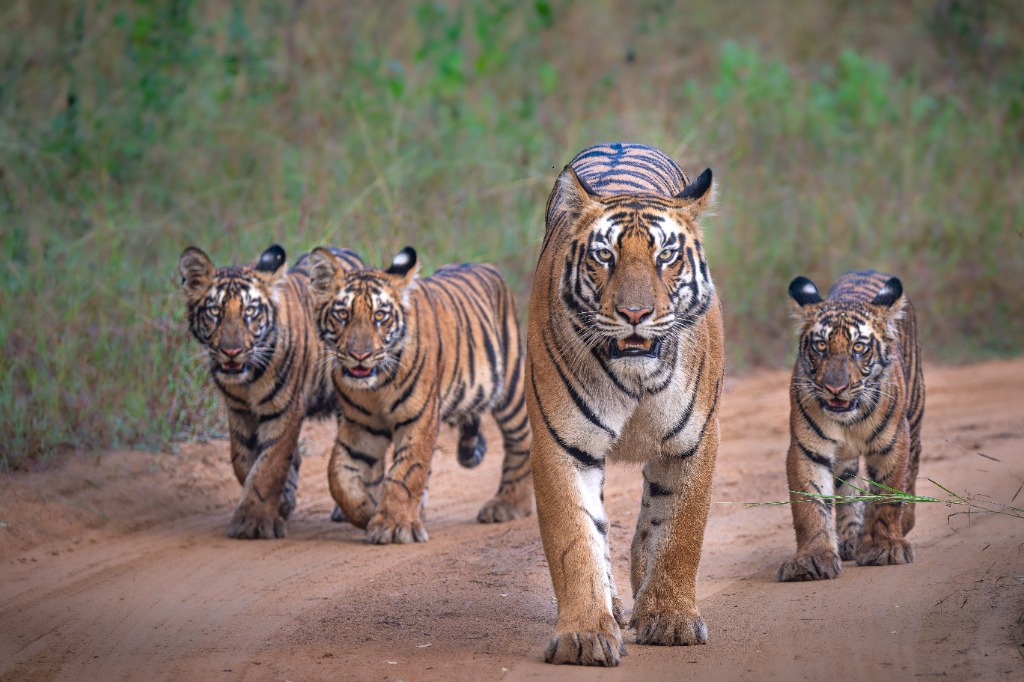
In the high-altitude desert of Spiti Valley, at fourteen thousand feet, the wind carries a chill that cuts through down jackets, but you forget the cold the moment a snow leopard steps out from the crags. A thousand miles south, the humidity of Satpura at first light clings to your skin as a Royal Bengal Tiger moves silently through the sal forest. Head west, and you will find Indian leopards resting openly on the sun-baked granite boulders of Jawai, while further still, Asiatic lions roam the dry, scrubby terrain of Gir.
India is the only country on earth where these four big cats still walk in the wild. Yet, most travellers arrive with a singular focus on the tiger, treating the forest as a checklist rather than an ecosystem. As we often say on expedition:
- Aly Rashid, Founder & Naturalist
To track India's big cats is to read four utterly different landscapes - and to learn the quiet, deliberate art of observation.
Table of Contents
India's Four Wild Big Cats: An Overview
The scale of India's big cat story is difficult to overstate. While Africa is rightly celebrated for its lions and leopards, and South America for its jaguars, the Indian subcontinent holds a unique evolutionary crossroads. The Himalayan ranges act as a frozen fortress for the snow leopard. The dense, deciduous forests of central India and the tidal mangroves of the east belong to the tiger. The adaptability of the Indian leopard allows it to thrive everywhere from deep jungle to the edges of human settlements. And tucked away in the western corner of Gujarat, a single, isolated forest holds the last surviving population of the Asiatic lion.
To track all four is a geographic and ecological masterclass. You cannot use the same tracking techniques in the snow of Ladakh that you would use in the dust of Kanha. The alarm calls, the substrate, the prey base, and the cats' very behaviour dictate entirely different expedition rhythms. When you embark on a multi-species journey across these landscapes, you stop being a tourist and start thinking like a naturalist.
The Royal Bengal Tiger
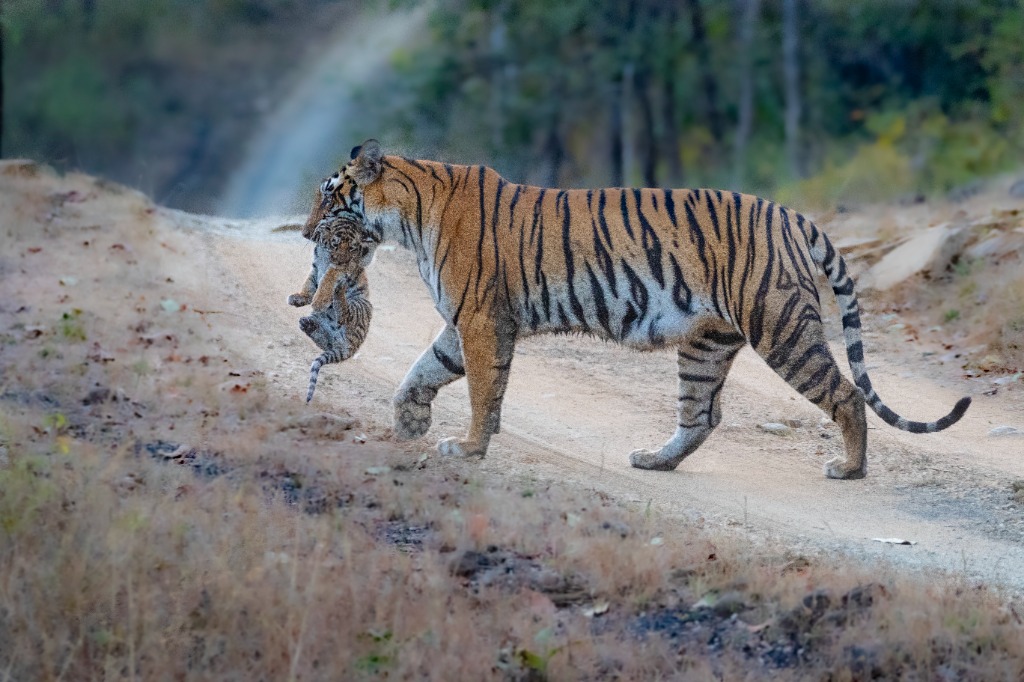
A tiger is not designed for a long chase; it is designed for explosive, close-range power. This biological imperative dictates everything about how they behave and, consequently, how we track them. They move along the edges of meadows, using the deep shade of lantana thickets and bamboo groves to break their massive orange-and-black outlines.
When you spend enough time in tiger country, you realize that finding them is rarely about seeing them first - it is about hearing the forest react to their presence. A langur coughing from the high canopy, a spotted deer stamping its hoof and issuing a sharp alarm call, or the sudden, eerie silence of the jungle are the true indicators of a moving tiger. Erwin D'rose, who spent over five years in Kanha studying tiger behaviour, often tells guests to close their eyes and listen before scanning the tree line.
Just Nature's tiger expeditions focus on the distinct character of each landscape:
- Satpura Tiger Reserve: The walking safari - where tracking happens on foot, reading pugmarks and scat in the sand of dry riverbeds.
- Kanha National Park: The classic central Indian wilderness, defined by towering sal trees and expansive meadows where tiger-prey dynamics play out openly.
- Panna Tiger Reserve: A landscape of deep gorges and the Ken River, offering a masterclass in successful tiger reintroduction.
- Bandhavgarh National Park: High tiger density amidst ancient ruins and dramatic sandstone hills.
- Sundarbans: A completely unique ecosystem where tigers have adapted to a semi-aquatic life in the tidal mangroves.
The Indian Leopard
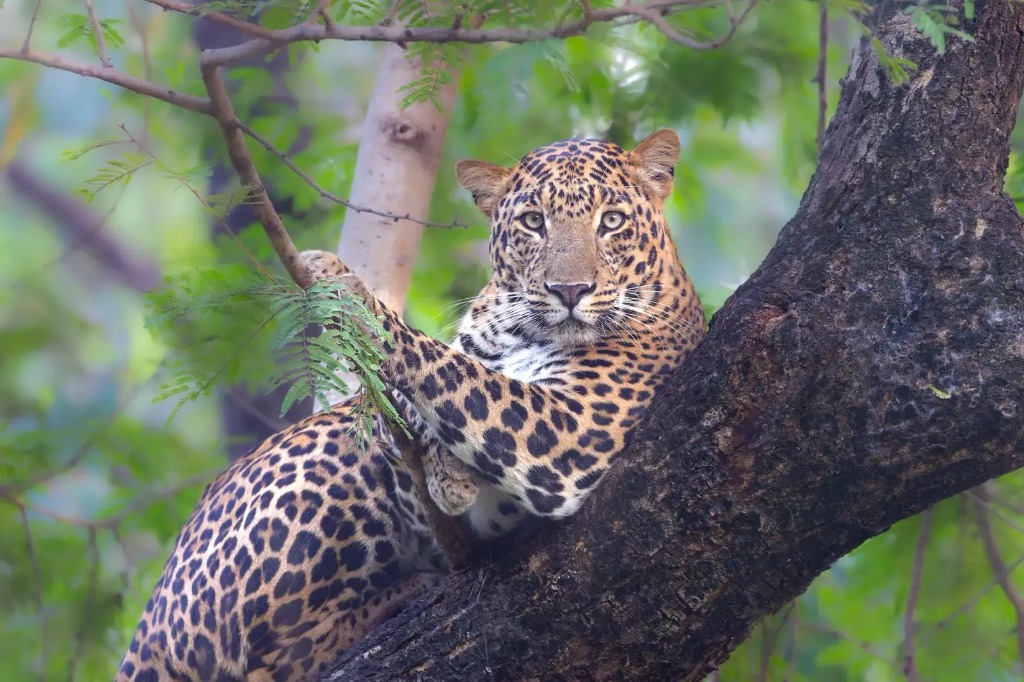
If the tiger is the undisputed king of the central Indian forest, the leopard is its brilliant, opportunistic shadow. In reserves like Kanha and Satpura, leopards are strictly nocturnal or highly arboreal, forced up into the canopy to avoid tigers and wild dogs (dholes). Seeing a forest leopard is a matter of looking up - scanning the thick lateral branches of ancient trees for a draped tail or a sleeping rosette-patterned form.
However, the leopard's true adaptability shines when you step out of the dense jungle and into Jawai. In this arid region of Rajasthan, the landscape is dominated by smooth, ancient granite boulders. Here, there are no tigers to push the leopards into hiding. Consequently, the Jawai leopards exhibit behaviour seen nowhere else: they rest openly on the rocks in the early morning and late evening, surveying their domain.
More remarkably, Jawai offers a profound lesson in coexistence. The leopards share this landscape with the indigenous Rabari herdsmen. There are no fenced boundaries here. Tracking in Jawai is a stark contrast to central India; it involves scanning the ridges of the granite hills and understanding how these cats navigate the rocky terrain alongside human settlements. It is an experience that completely rewrites what most people assume about big cat behaviour.
The Snow Leopard
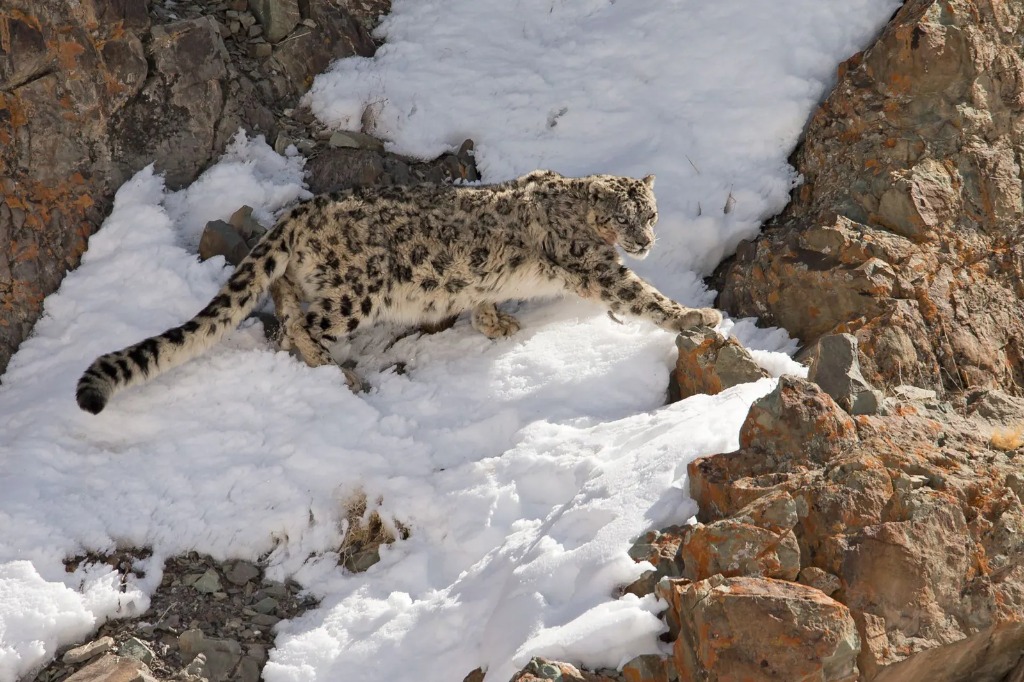
To track a snow leopard is to accept that you are entirely at the mercy of the mountains. You do not drive through a forest looking for footprints; you sit on a freezing, wind-scoured ridge at 14,000 feet, your eye pressed against a spotting scope, meticulously scanning miles of grey and white scree.
The snow leopard's camouflage is flawless. They do not just blend into the rocks; they become the rocks. The key to finding them lies in understanding their prey. When we lead a Snow Leopard Expedition in Spiti Valley, our naturalists first locate the herds of bharal (blue sheep) or Himalayan ibex. Where the prey goes, the predator follows.
An expedition here requires a physiological and mental shift. The air is thin, the cold is biting, and days can pass without a sighting. But when a snow leopard finally materializes - often moving with a fluid, silent grace that defies the harshness of the terrain - the reward is unmatched. It is a sighting that you earn. For a deeper understanding of this high-altitude ecosystem, our dedicated Snow Leopard Guide covers the expedition logistics and ecology in full detail.
The Asiatic Lion
The survival of the Asiatic lion is one of the most successful, yet fragile, conservation stories of the modern era. From a population that dwindled to double digits in the early 20th century, the lions of Gir have clawed their way back.
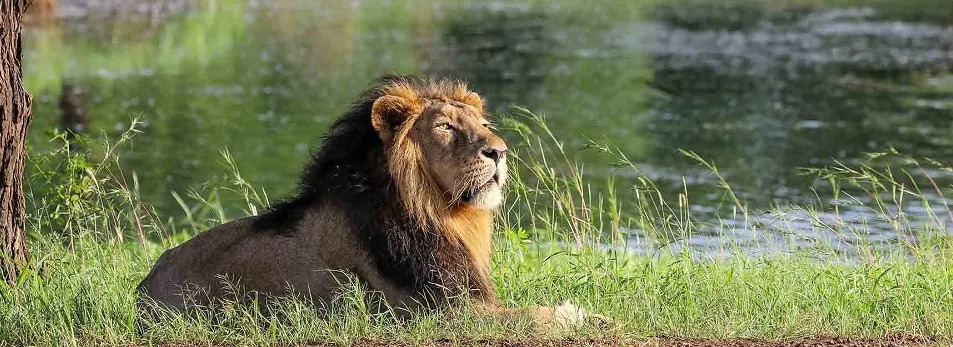
A Gir Expedition feels entirely different from a tiger safari. The landscape is a dry, teak-dominated scrubland, bleached yellow and brown for much of the year. Unlike the solitary tiger, lions are fiercely social. When you encounter a pride, you are observing complex familial dynamics: lionesses interacting with cubs, the intricate body language of social bonding, and the stark, imposing presence of the nomadic males who patrol the territory's edges.
Because they are apex predators without the need to hide from anything else, Asiatic lions are often remarkably indifferent to human presence. They rest openly in the dry leaf litter, their tawny coats blending perfectly with the arid environment. A skilled naturalist in Gir does not just point out the sleeping lions; they decode the pride's hierarchy and predict their movements based on the temperature and the availability of water.
Beyond the Big Four: India's Lesser-Known Cats
While the big four draw the most attention, India's ecosystems are supported by a fascinating array of smaller, highly specialized felines. These lesser-known cats are the true indicators of a healthy, complex habitat.
In 2014, while working in Panna National Park alongside Dr. Shekhar Kolipaka, my focus was on the caracal - one of India's most elusive and rapidly declining small cats. Tracking a caracal requires an entirely different methodology than tracking a tiger; it demands an understanding of the scrubland's micro-ecology and the habits of ground-nesting birds and small rodents.
Beyond the caracal, India's wilderness holds the jungle cat (often seen hunting in the tall grasses of Kanha and Satpura), the fishing cat (a wetland specialist found in the Sundarbans), the leopard cat, and the incredibly rare, diminutive rusty-spotted cat. Encountering one of these small cats on a night drive or a walking safari is a rare privilege. They remind us that the forest is deeply layered, and that true wildlife observation means paying attention to the shadows just as much as the spotlight.
Planning a Big Cats of India Expedition
Attempting to see all four big cats in a single trip is a logistical and physical challenge, but it is entirely possible with the right route. The key is understanding the biological calendar of the subcontinent.
- Snow Leopards: strictly winter (January through March). This is when the heavy snowpack at higher altitudes forces the blue sheep - and the snow leopards - down into the valleys where they can be tracked.
- Tigers and Leopards (Central India & Jawai): The dry summer months (April to June) offer the best visibility as the cats congregate around permanent water sources.
- Asiatic Lions (Gir): The dry season (December to May) offers excellent visibility before the monsoon rains.
When you book a fragmented trip through multiple generic travel agents, you risk mismatched pacing, poor localized tracking knowledge, and a lack of narrative continuity. A cohesive, naturalist-led approach ensures that the tracking methodology builds upon itself. The skills you learn scanning the ridgelines of Spiti translate directly into how you read the granite boulders of Jawai.
For those who want to experience the absolute pinnacle of Indian wildlife, our flagship 14-Day Big Cats of India Itinerary is designed to move you seamlessly through these distinct habitats with a dedicated naturalist guiding the entire narrative.
Who Leads These Expeditions
The difference between a good safari and a true expedition is the person sitting beside you in the vehicle. Our naturalists are not just guides; they are field researchers, authors, and conservationists.
- Aly Rashid: Our founder, an ornithologist and published author with extensive field experience ranging from caracal research in Panna to leading specialized expeditions across the subcontinent.
- Erwin D'rose: A senior naturalist who spent over five years in Kanha specifically studying tiger behaviour, offering guests an unparalleled ability to predict feline movement before it happens.
- Shivraj: A naturalist and wildlife photographer with over a decade of experience, trained alongside African safari guides, who bridges the gap between ecological tracking and capturing the perfect ethical photograph.
Frequently Asked Questions
What big cats can you see in India?
Which is the best park in India to see a tiger?
Can you see snow leopards and tigers on the same India wildlife trip?
What is the best time of year for a big cats of India expedition?
How is a naturalist-led big cat expedition different from a regular safari?
Does India have leopards as well as tigers?