Most people know that red pandas live in the high-altitude bamboo forests of Singalila. Very few know that just a few hours' drive away, one-horned rhinos thunder through the tall elephant grass of the Terai and Kaziranga. In all the ecosystems I have worked in, the Eastern Himalayan corridor is the one that most consistently surprises people who thought they already knew Indian wildlife. You can wake up to the smell of woodsmoke and freezing mist in a montane forest, track a completely arboreal predator through rhododendron canopy, and a day later be sitting in a jeep under a heavy sun, watching a prehistoric grassland giant graze.
We built this expedition to capture both extremes of this extraordinary geography - and we threw in the tea estates and the narrow-gauge steam of the Darjeeling Himalayan Railway because to ignore them is to miss the texture of the region entirely. It is a journey across ecosystems, altitudes, and centuries.
Why the Darjeeling Region Is India's Most Underrated Wildlife Destination
If you have spent your wildlife travel years tracking tigers in Kanha or leopards in Kabini, the Eastern Himalaya is going to feel like a different continent. The gap between Central India and the Northeast is not just geographic distance; it is a gap in awareness.
The Darjeeling region sits at an ecological crossroads. The Singalila ridge forms a high-altitude border with Nepal, dominated by temperate broadleaf and coniferous forests. As you descend, the landscape fractures into the foothills and eventually flattens into the Terai arc - a fertile, grassland-and-wetland ecosystem. This means that within a remarkably tight geographic radius, you have two entirely distinct wildlife arenas. It is this sheer concentration of biodiversity, largely absent from the mainstream wildlife circuit, that makes the region India's most compelling unexplored frontier for the serious naturalist.
The Wildlife: Three Species That Define This Region
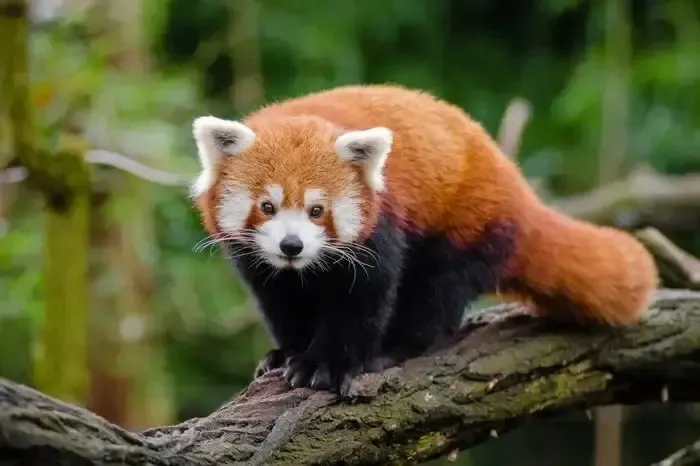
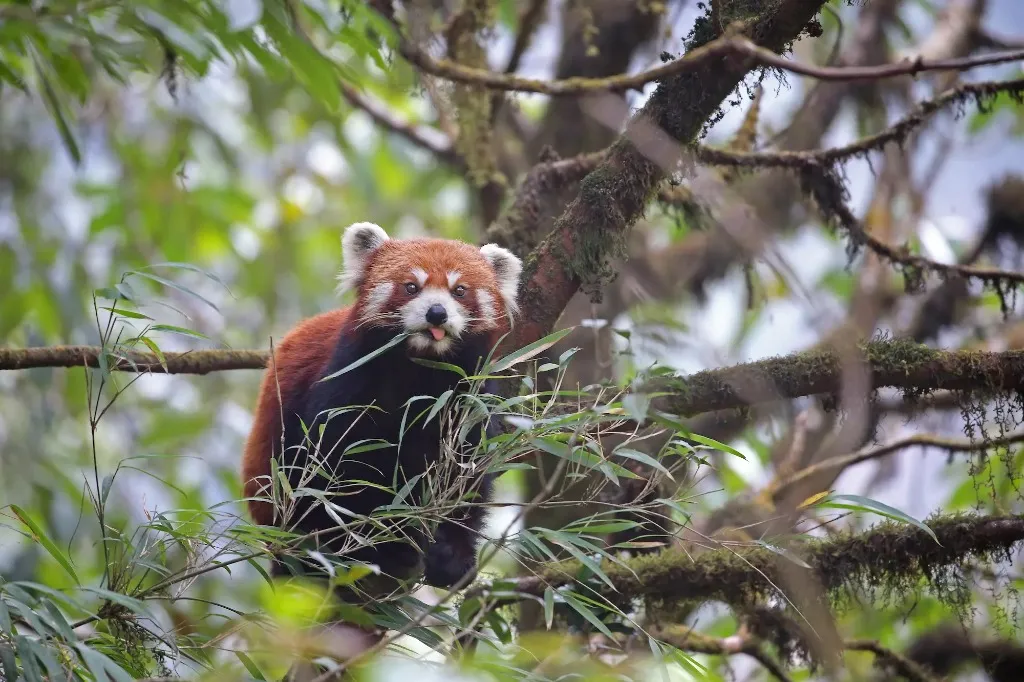
The red panda is the undisputed ghost of the Eastern Himalaya. It is a carnivore that eats bamboo, a solitary wanderer wrapped in rust-red fur, and an animal that spends most of its life high in the canopy. Finding one requires reading the forest vertically, scanning moss-draped branches and bamboo thickets for a flash of auburn. For a deeper understanding of how we track them, read our complete naturalist's guide to red panda tracking in Singalila.
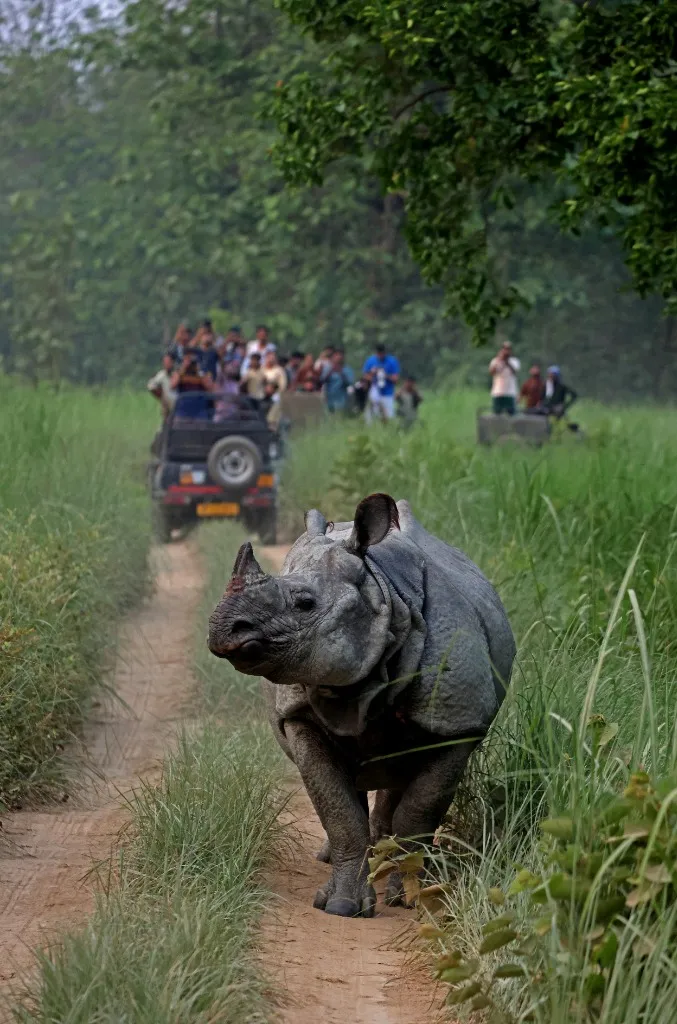
The greater one-horned rhino is the ecological counterweight to the red panda. Where the panda is secretive and arboreal, the rhino is a two-ton fixture of the open grasslands. Watching one emerge from the elephant grass in Kaziranga or the Terai is like watching a piece of geology decide to walk. Tracking them is a horizontal game, played out from a jeep across vast, sun-drenched floodplains - a stark contrast to the quiet, neck-straining work of forest tracking.
Then there is the avian life, which in the Eastern Himalaya is staggering. The Satyr tragopan, a crimson-and-black pheasant found in the moist oak and rhododendron forests, is a prime example. It is a shy, ground-dwelling bird that demands immense patience to photograph. For the serious birder, species like the tragopan, the blood pheasant, and the fire-tailed myzornis elevate the expedition from a mammal-chase into a complete ecological immersion.
The Red Panda in Singalila: What to Expect
Singalila is not a drive-through park. It is a ridge of old-growth forest where the mist moves like a physical presence. The tracking here is done on foot, and it is a masterclass in patience. Red pandas are primarily crepuscular, meaning our best windows are the quiet hours of early morning and late afternoon.
Because they spend their days sleeping high in the crotches of trees, wrapped in their bushy tails for warmth, you are rarely looking for the whole animal. You are looking for a rusty patch of fur that doesn't quite match the red moss, or the subtle sway of a bamboo stalk. The tracking relies on interpreting scat, fresh feeding signs on bamboo leaves, and the unparalleled local knowledge of our spotters. It is quiet, immersive work.
The One-Horned Rhino: Where and How
Dropping down from the mountains into the plains changes the entire rhythm of the expedition. We move from the intimate, closed-in world of the bamboo forest to the sprawling grasslands and wetlands where the greater one-horned rhino thrives. Kaziranga holds the world's highest density of these animals, a conservation success story written in the tall elephant grass. The Terai grasslands offer a similarly raw, open-sky experience.
Tracking here is jeep-based. Instead of peering up into the canopy, you are scanning the horizon. The one-horned rhino is not a subtle animal, but the tall grass can swallow a two-ton herbivore completely. You wait for the grass to part, for the distinctive grey armor to catch the sun. For a guest who has spent the last few days in the quiet, misty concentration of Singalila, the sheer scale and visibility of the grasslands is a physiological release.
The Cultural Layer: Darjeeling as a Destination
The Darjeeling Himalayan Railway has been climbing these hills since 1881. It is not a novelty ride. It is a working narrow-gauge steam railway that still serves the hill towns above the plains - and from a carriage window, the Kanchenjunga range appears and disappears in the clouds at a pace slow enough to actually register.
Similarly, the tea estates that carpet the lower slopes are not just scenery; they are the economic and cultural lifeblood of the region. Walking through a working estate, smelling the processing leaves, and understanding the century-old infrastructure gives you a sense of place that wildlife alone cannot. For guests stepping out of the intense focus of a tracking day, the colonial-era architecture, the bakeries of Darjeeling town, and the slow rhythm of the hills provide a necessary and beautiful contrast. The culture earns its place on this expedition because it is the context in which the wilderness exists.
The Expedition Experience: What a Day Actually Looks Like
In Singalila, the day begins before the light. It is cold - often freezing - and the air is thin. You layer up, drink hot tea, and step into the forest while the mist is still heavy. The morning is spent walking quietly, listening to the spotters, and scanning the canopy. It is meditative, sometimes frustrating, and entirely exhilarating when the radio crackles with a sighting.
A few days later, the rhythm changes entirely. You are in a jeep in the grasslands. The air is thick and warm. You cover ground quickly, the focus shifting from the microscopic details of the forest floor to the wide-angle sweep of the wetlands. For photographers, this means shifting from high-ISO, low-light canopy shots to fast-action, bright-light grassland photography. Shivraj, our naturalist and photography lead, manages this transition seamlessly, ensuring you are positioned correctly whether you are trying to pull a red panda out of the shadows or freeze a rhino charging through the water.
Who This Expedition Is For
For the Serious Wildlife Enthusiast:
If you have exhausted the Central Indian tiger reserves and want a deeper understanding of India's biodiversity, this is your next step. This expedition offers an unparalleled cross-section of ecosystems, from alpine broadleaf to lowland floodplain, delivering two of the subcontinent's most significant conservation stories in a single journey.
For the Wildlife Photographer:
The photographic conditions are demanding and diverse. You will need to manage the low light and dense cover of Singalila for the red panda, and then adapt to the harsh sun and distance of the grasslands for the rhino and avian life. Guided by Shivraj, you will have the positioning, the time, and the technical advice needed to build a portfolio that spans the full visual range of the Eastern Himalaya.
For Families and Cultural Travellers:
This is not an extreme, survivalist trek. While the Singalila tracking requires moderate fitness and tolerance for the cold, it is accessible to anyone in good health. More importantly, the inclusion of the Darjeeling Himalayan Railway, the tea estates, and the comfortable hill-station pacing means that the expedition offers rich rewards even for family members who are less intensely focused on the wildlife.
Practical Details
Getting here is straightforward: the primary entry point is Bagdogra Airport (IXB) or New Jalpaiguri Railway Station (NJP), both well-connected to major Indian cities Bagdogra is well-connected with numerous daily direct flights from Delhi on carriers like IndiGo and Air India Express. For travelers coming from Mumbai, while some direct flights are available, convenient daily connections via Delhi or Kolkata are also frequent.. From there, the ascent into the hills begins.
We run this expedition in November because the post-monsoon skies are clear, offering the best views of Kanchenjunga, and the forest is lush but accessible. In Singalila, expect cold nights (dropping toward freezing) and crisp, sunny days. Layering is essential. The grassland temperatures are significantly warmer but still pleasant.
While you do not need to be a mountaineer, moderate cardiovascular fitness is required for the Singalila leg, as you will be walking on uneven forest trails at altitude (around 2,500 to 3,000 metres). We strictly limit our group sizes. This is both a conservation imperative - large groups disturb the forest and ruin sightings - and a guarantee of the quality of your experience. We use premier, conservation-focused eco-lodges. In Singalila, we base ourselves at specialized wildlife homestays like Habre's Nest, which offers heated comfort at 10,000 feet and employs dedicated local tracking teams. For the grassland leg, we utilize luxury eco-lodges such as Diphlu River Lodge near Kaziranga, known for its sustainable practices and excellent proximity to the park..
Frequently Asked Questions
Can you see red pandas and rhinos on the same India wildlife expedition?
What is the best time to visit Darjeeling for wildlife?
Is Darjeeling good for wildlife photography?
How difficult is red panda tracking in Singalila for a first-timer?
What wildlife can you see in the Darjeeling region?
Is the Darjeeling Himalayan Railway worth doing alongside a wildlife expedition?
Join the Expedition
The Darjeeling region is not a place you can understand by looking at a map. You have to feel the temperature drop as you climb toward the ridge, and smell the crushed bamboo where a red panda has just been feeding.
For those looking to combine the full experience of Singalila, the rhino grasslands, and the heritage of Darjeeling on their own schedule, we build bespoke Tailor-Made Safaris across the region.
To join us in the Eastern Himalaya, view the full Darjeeling Expedition Itinerary or contact us directly to discuss your travel plans.