Masai Mara Safari: A Naturalist's Guide to the Great Migration, the Big Five & Kenya's Savannahs
Why southwestern Kenya's "spotted" plains, Mara River crossings, and Maasai community conservancies deliver the most concentrated big game viewing on Earth.
Before the sun crests the Oloololo Escarpment in southwestern Kenya, you hear the Masai Mara long before you see it. The rumble of a million hooves vibrates through our open-sided 4x4 Land Cruiser, punctuated by the nasal calls of Blue Wildebeest and the sharp barks of Burchell's zebras. When first light washes across the red-oat grasslands, a black-maned lion steps out from a whistling thorn thicket, revealing a living sea of wildlife.
For Indian wildlife enthusiasts and photographers accustomed to tracking tigers in dense Central Indian forests, a Masai Mara safari with Just Nature Expeditions is a revelation in openness. Adjoining Tanzania's Serengeti National Park to form the 30,000-square-kilometre Serengeti-Mara ecosystem, this ancestral homeland of the Maasai people offers unobstructed 360-degree encounters with the Big Five, the Great Migration, and nearly 500 bird species.
What Makes the Masai Mara Africa's Premier Wildlife Safari Destination?
Masai Mara National Reserve is a 1,510-square-kilometre savannah sanctuary in southwestern Kenya's Narok County, bordering Tanzania's Serengeti National Park along the 30,000-square-kilometre Serengeti-Mara ecosystem. Named Mara ("spotted") by the Maasai people who have stewarded these plains for over 3,000 years, it hosts Africa's highest density of plains game and apex predators.
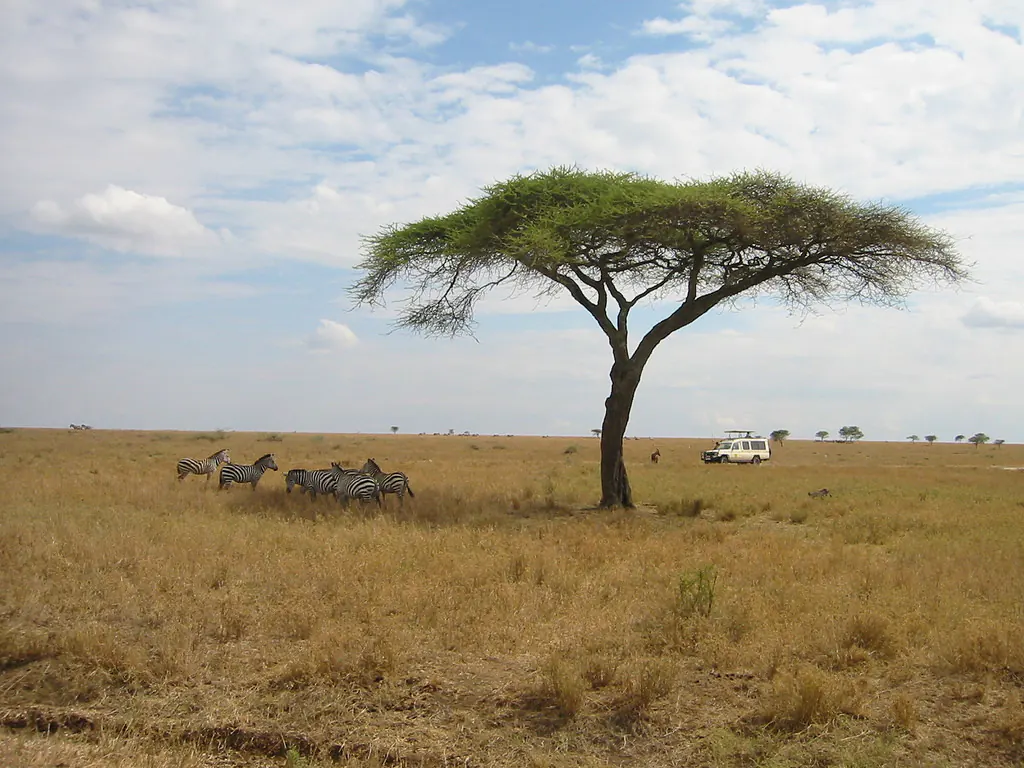
Sitting between 1,500 and 2,170 metres along the Great Rift Valley, the Masai Mara wilderness combines golden plains, seasonal marshes, and riverine gallery forests flanking the Mara, Talek, and Sand rivers. The Maasai pastoralists who have lived here for over 3,000 years named the landscape Mara ("spotted" in Maa) because umbrella thorn acacias (Vachellia tortilis), desert date trees, and cloud shadows dot the horizon like a leopard's coat.
Lone umbrella thorn acacias dot the golden grasslands of the Masai Mara, inspiring the Maa word "Mara" ("spotted").
How Does the Great Wildebeest Migration Unfold Across the Masai Mara?
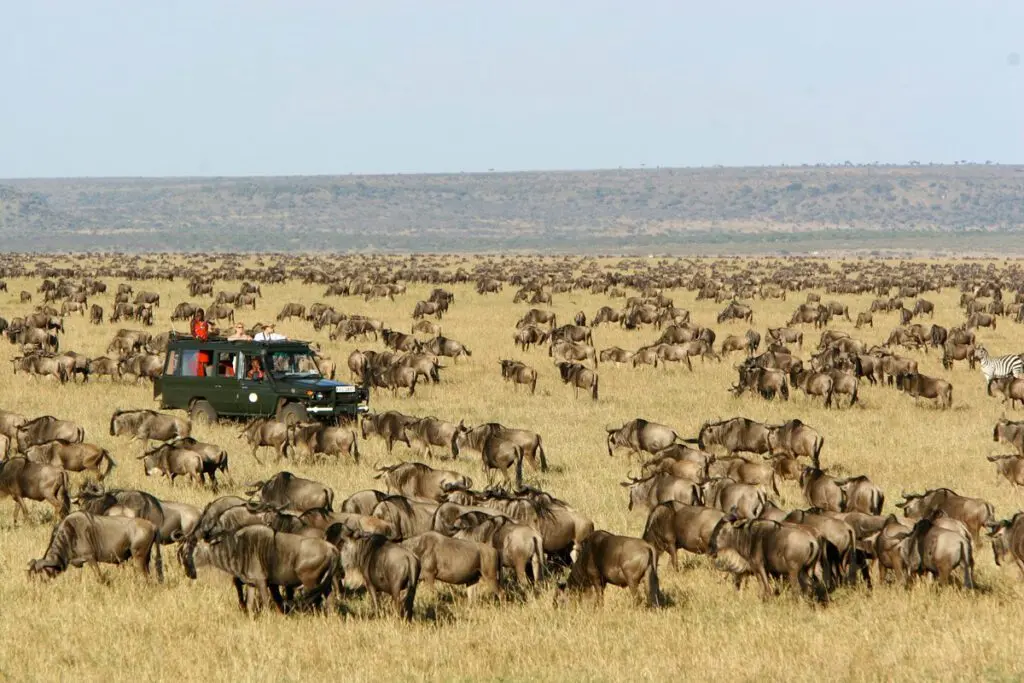
Every year, over 1.25 million Blue Wildebeest, 200,000 Burchell's zebras, 500,000 Thomson's gazelles, and 18,000 elands trek clockwise across the Serengeti-Mara ecosystem. After calving in the southern Serengeti in January and February, the herds cross the crocodile-filled Mara River into Kenya's Masai Mara between July and October in search of fresh pasture.
Recognised as one of the Wonders of the Natural World, the Great Migration is an 800-kilometre ecological cycle driven by rainfall and grass nutrition. In January and February, the herds gather on the Southern Serengeti plains to birth nearly 500,000 calves before moving north toward Kenya. Zebras lead the columns, clipping coarse grass stems so wildebeest and Thomson's gazelles can graze the tender shoots underneath.
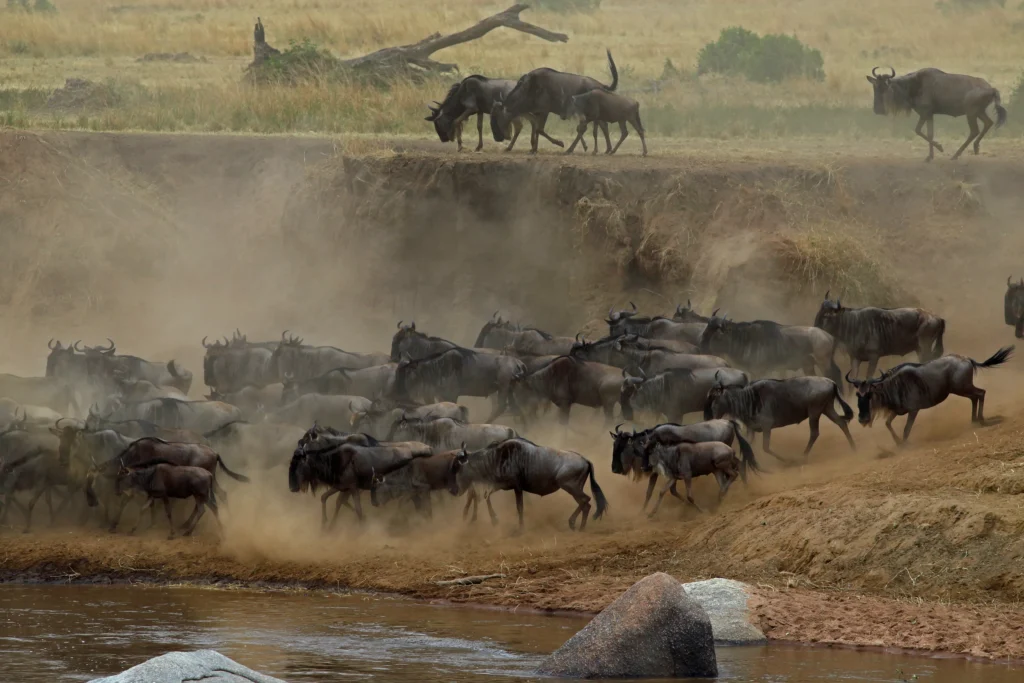
From July to October, the megaherds pour into the Mara Triangle and Musiara sectors. At steep crossing points along the Mara and Talek rivers, thousands of wildebeest plunge past five-metre Nile crocodiles while lion prides, leopards, and spotted hyenas wait along the banks.
Between July and October, over 1.25 million wildebeest brave steep riverbanks and giant Nile crocodiles to cross the Mara River.
Which Big Five Mammals and Raptors Rule the Masai Mara Plains?
The Masai Mara shelters all members of Africa's Big Five—Lion, Leopard, African Bush Elephant, Cape Buffalo, and critically endangered Eastern Black Rhinoceros—alongside the wider Big Nine, including Cheetah, Masai Giraffe, Burchell's Zebra, and Hippopotamus. Over 500 bird species, including 47 raptors and the Grey Crowned Crane, inhabit its riverine forests and grasslands.
01
How Do Lions, Leopards, and Cheetahs Coexist on the Open Grasslands?
The Greater Masai Mara ecosystem supports over 850 to 900 lions across famous prides, elusive leopards hunting along the fig-lined Talek and Mara rivers, and open-plains cheetahs scanning for gazelles from sun-baked termite mounds. Different hunting hours and prey sizes allow all three big cats to share the same savannah.
African Lion (Panthera leo): Famous prides (Marsh, Rekero, and Topi prides) hunt Cape buffalo, zebra, and wildebeest at dawn and dusk.
African Leopard (Panthera pardus): Ambush predators that haul impala kills high into sausage trees and sycamore figs along the Talek River.
Spotted Hyena, Serval & Caracal: Powerful hyena clans, marsh-stalking servals, and bat-eared foxes complete the carnivore guild.
Higher elevation and cooler nights in the Masai Mara produce some of East Africa's most impressive black-maned male lions.
02
Where Can You Spot Black Rhinos, Elephants, and 500+ Bird Species?
Protected breeding populations of Eastern Black Rhinoceros roam the central Musiara and Mara Triangle sectors, while elephant herds and thousands of Cape buffaloes gather along seasonal marshes. Above the plains, 47 raptor species—including Bateleur eagles, Martial eagles, and Secretarybirds—share the skies with Kori bustards, lilac-breasted rollers, and Southern Ground Hornbills.
Protected by Kenya Wildlife Service and Mara Conservancy rangers, indigenous Eastern Black Rhinoceros (Diceros bicornis michaeli) browse whistling thorn scrub in the Mara Triangle. Matriarchal herds of African Bush Elephants, Cape Buffaloes, Masai Giraffes, and Hippos complete the "Big Nine", while Grey Crowned Cranes, Saddle-billed Storks, and Bateleurs fill the skies.
Unobstructed savannah horizons make the Masai Mara the finest place in Africa to observe female cheetahs raising cubs.
"What strikes an Indian naturalist first in the Masai Mara is how exposed the drama is. You aren't peering through dense bamboo—you are watching an entire cheetah hunt unfold from initial stalk to sprint across three kilometres of open horizon."
— Aly Rashid, Founder & Naturalist Expedition Leader, Just Nature Expeditions
When Is the Best Time to Visit the Masai Mara for a Wildlife Safari?
The Masai Mara is an exceptional year-round safari destination, with July to October offering peak Mara River wildebeest crossings and dry-season predator action. November to March brings lush green savannahs, resident big cat cubs, migratory Palearctic birds, and quieter sightings, while January and February mark calving season in the southern Serengeti.
How Can You Explore the Masai Mara: Game Drives, Walking Safaris & Conservancies?
Beyond classic 4x4 Land Cruiser game drives in the main reserve, guests can experience guided walking safaris, off-road night drives, bush breakfasts, and sunrise hot air balloon flights across 15 adjacent Maasai-owned community conservancies. Leasing savannah directly from Maasai families funds local livelihoods while limiting vehicle density to five per sighting.
The Mara's blend of government reserve and community-owned conservancies lets you explore the grasslands in multiple ways:
4x4 Jeep Safaris & Guided Walking Safaris: Pair classic open-sided Land Cruiser drives with a thrilling walking safari alongside Maasai naturalist-rangers in private conservancies to track giraffes, zebras, and elands on foot.
Hot Air Balloons, Bush Planes & Wild Breakfasts: Fly by chartered bush plane onto dirt airstrips, float at sunrise in a hot air balloon over hippo pools, and enjoy a savannah bush breakfast where giraffes and zebras graze right past your table.
Giving Back Through Maasai Conservancies: Staying in community conservancies (Naboisho, Olare Motorogi, Mara North) channels monthly lease fees directly to over 14,500 Maasai landowner families.
Feature
Masai Mara National Reserve
Mara Community Conservancies
Governance & Size
Narok County Government & Mara Conservancy (1,510 sq km)
Maasai landowner partnerships with eco-camps (1,500+ sq km)
River Crossings
Direct Access: Hosts all primary Mara & Talek crossing points
Day trips into Reserve for crossings; hosts Loita Hills migration
Walking & Night Drives
Not permitted (daytime vehicle drives only until 6:30 PM)
Permitted: Guided bush walks, off-road tracking & night drives
Exclusivity
Higher vehicle volume near main river crossings in Jul–Sep
1 tent per 350–700 acres & max 5 vehicles per wildlife sighting
How Do You Plan a Tailor-Made Masai Mara Expedition from India?
Just Nature Expeditions designs bespoke 7-to-10-day Masai Mara and Serengeti safaris from India led by founder Aly Rashid and veteran naturalists. Travellers fly from Mumbai or Delhi into Nairobi (NBO), connect via bush charter flight from Wilson Airport directly to Mara airstrips, and split stays between the Mara Triangle and private conservancies.
When crafting your Tailor-Made African Safari from India, we recommend splitting seven to ten days between a private conservancy (for walking safaris, night drives, and off-road big cat photography) and the Mara Triangle or Tanzania's Serengeti, or pairing Kenya with our 9-Day Uganda Gorilla & Savannah Expedition. Need a 100-400mm or 200-600mm telephoto lens for your trip? Reserve camera bodies and lenses before departure via our Camera Rental service.
Frequently Asked Questions About Masai Mara Wildlife Safaris
Below are naturalist-verified answers to the most common questions travellers ask when planning a Masai Mara wildlife safari from India, covering Great Migration river crossing months, National Reserve versus private conservancy rules, Maasai cultural visits, Nairobi flight logistics, yellow fever requirements, and recommended telephoto camera lenses.
What does the name Masai Mara mean and how large is the reserve?
The name combines the Maasai people, who have lived here for over 3,000 years, with the Maa word 'Mara' ('spotted'), describing how umbrella acacias and cloud shadows dot the plains. The National Reserve spans 1,510 square kilometres in southwestern Kenya, bordered by 1,500+ square kilometres of community conservancies.
When does the Great Migration reach the Masai Mara vs the Serengeti?
In January and February, over 1.25 million wildebeest calve on the southern Serengeti plains before trekking north from April to June. The herds cross the Mara River into Kenya's Masai Mara between July and October, delivering peak crocodile-filled river crossings from late July through September.
What is the difference between Masai Mara National Reserve and the private conservancies?
Masai Mara National Reserve is managed by Narok County and hosts the primary Mara River crossing points, where vehicles stay on tracks and exit by 6:30 PM. Adjacent private conservancies (Naboisho, Olare Motorogi, Mara North) are leased from Maasai landowners, allowing walking safaris, night drives, bush breakfasts, and five-vehicle sighting limits.
Can you see all of the Big Five in the Masai Mara?
Yes. The Masai Mara is one of Africa's top reserves to see all Big Five mammals: African Lion, Leopard, African Bush Elephant, Cape Buffalo, and critically endangered Eastern Black Rhinoceros. Lions, elephants, and buffaloes are seen daily, leopards hunt along the Talek River, and black rhinos inhabit the Mara Triangle.
How do travellers from India reach the Masai Mara and what vaccinations are needed?
Travellers from India fly from Mumbai or Delhi into Nairobi (NBO), then take a 45-minute bush flight from Wilson Airport directly to their Mara camp airstrip. Indian citizens require a Kenya Electronic Travel Authorisation (eTA) and a Yellow Fever vaccination certificate taken at least 10 days before travel.
What safari activities are available in the Masai Mara besides jeep drives?
Beyond morning and afternoon 4x4 Land Cruiser game drives, guests can experience sunrise hot air balloon flights with a champagne bush breakfast, ranger-led walking safaris in private conservancies, nocturnal spotlight drives, and visits to traditional Maasai manyatta homesteads.
Bespoke Kenya & Tanzania Expeditions
Plan Your Masai Mara Safari With Aly Rashid
Design a tailor-made Great Migration, Big Five, or wildlife photography safari in the Masai Mara and Serengeti from India.
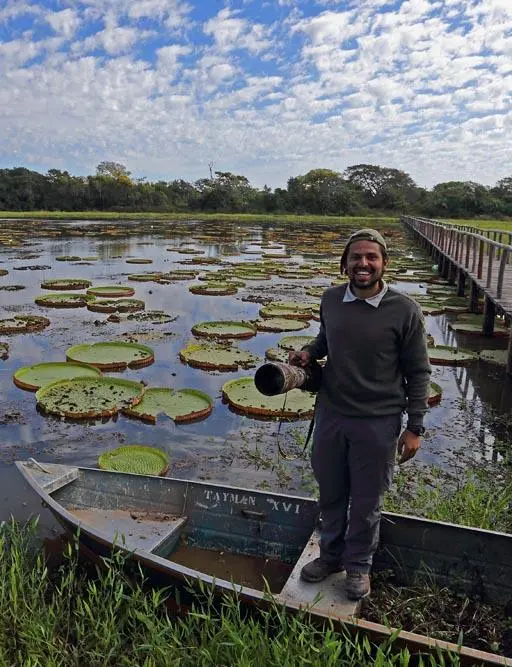
Aly Rashid is the Founder of Just Nature Expeditions, a trained ornithologist, and author of Tales from the Bush: A Peek into the World of Satpura. Having spent over seven years heading the naturalist team at Reni Pani Jungle Lodge, he leads small-group wildlife and photography expeditions across India, East Africa's Masai Mara and Serengeti, the Brazilian Pantanal, and Borneo.