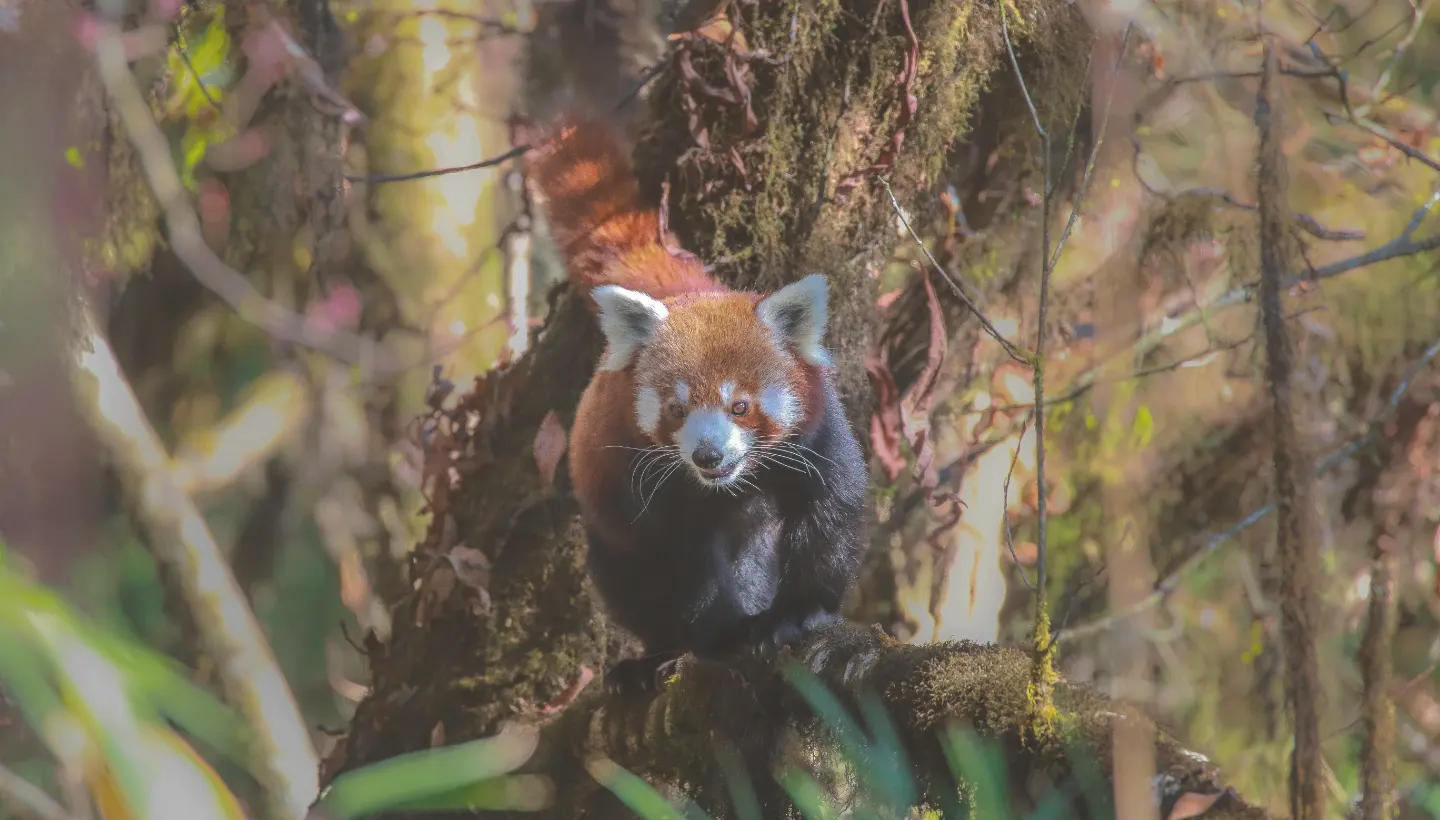
At 9,500 feet on the Singalila National Park ridge, the morning mist parts like a stage curtain between India and Nepal. One moment you are standing in a silent tunnel of silver fir and weeping bamboo; the next, golden light illuminates a russet, ring-tailed silhouette curled forty feet overhead in an ancient oak. When I bring guests here with Just Nature Expeditions, that first glimpse of a wild red panda (Ailurus fulgens) stops every conversation on the trail.
Often mistaken by first-time travellers for a park inside Sikkim, Singalila is actually West Bengal's highest protected wilderness, crowning the Darjeeling district along the international ridge shared with Nepal and Sikkim. Climbing from 7,000 feet (2,134m) near Manebhanjan to nearly 12,000 feet (3,636m) at Sandakphu, this 78.6-square-kilometre cloud forest is where vintage 1950s British Land Rovers rumble up cobbled tracks, 600 orchid species cling to mossy trees, and Everest and Kangchenjunga stand on a single horizon.
Table of Contents
- 1. What Makes Singalila National Park Unique?
- 2. Why Is Singalila the Best Place in India for Red Pandas?
- 3. What Mammals, Birds & Orchids Live on the Ridge?
- 4. When Is the Best Time to Visit Singalila?
- 5. Sandakphu Trekking vs Vintage Land Rovers
- 6. How Our 5-Day Singalila Red Panda Expedition Works
- 7. Frequently Asked Questions
What Makes Singalila National Park India's Premier Eastern Himalayan Sanctuary?
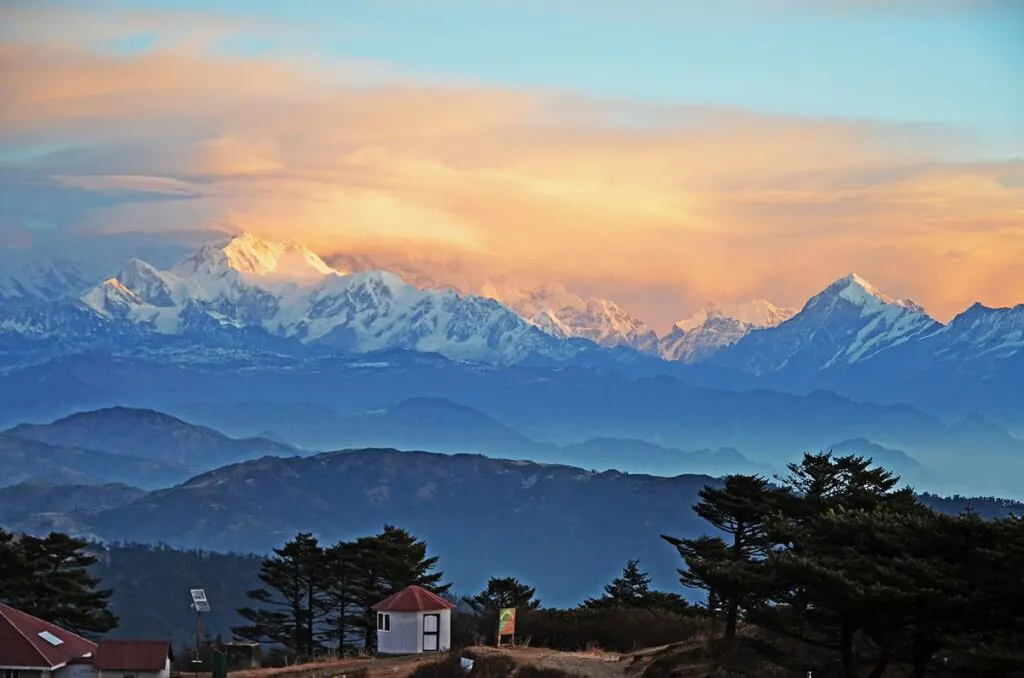
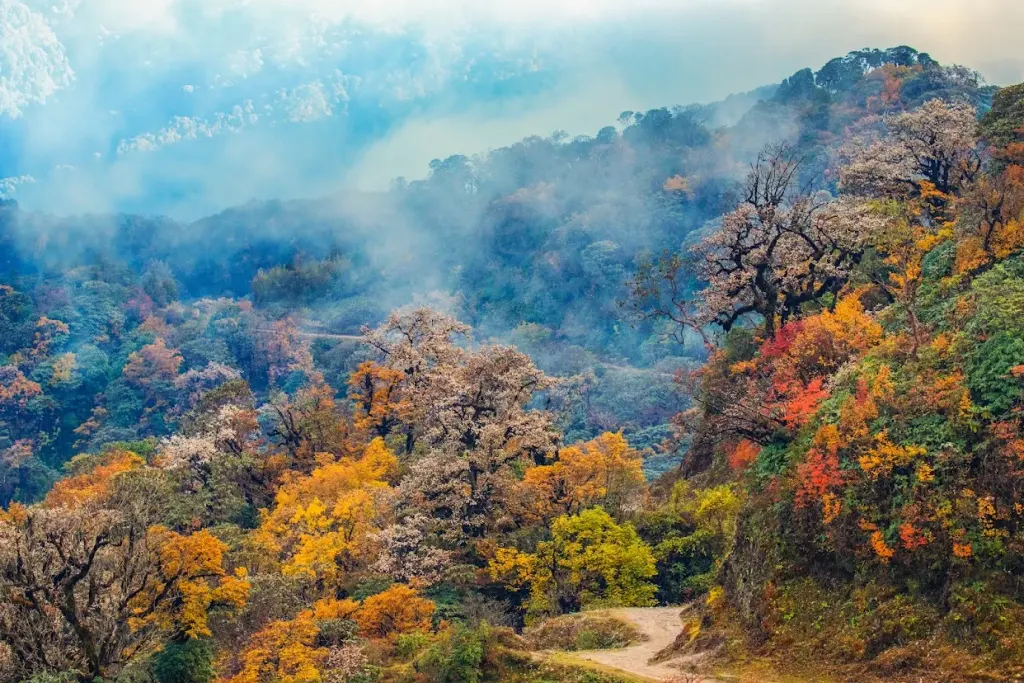
Singalila National Park sits atop a sharp north-south ridge separating India's Teesta River drainage from eastern Nepal. Moisture rising from the Bay of Bengal collides directly with this barrier, bathing the park in mist and nourishing sub-alpine silver fir, mossy oak, magnolia, and dense bamboo. A single 500-metre climb takes you from broadleaf cloud forest into alpine meadows framed by the 8,586-metre Kangchenjunga massif (the Sleeping Buddha) and Mount Everest.
Why Is Singalila the Best Place in India to See the Wild Red Panda?
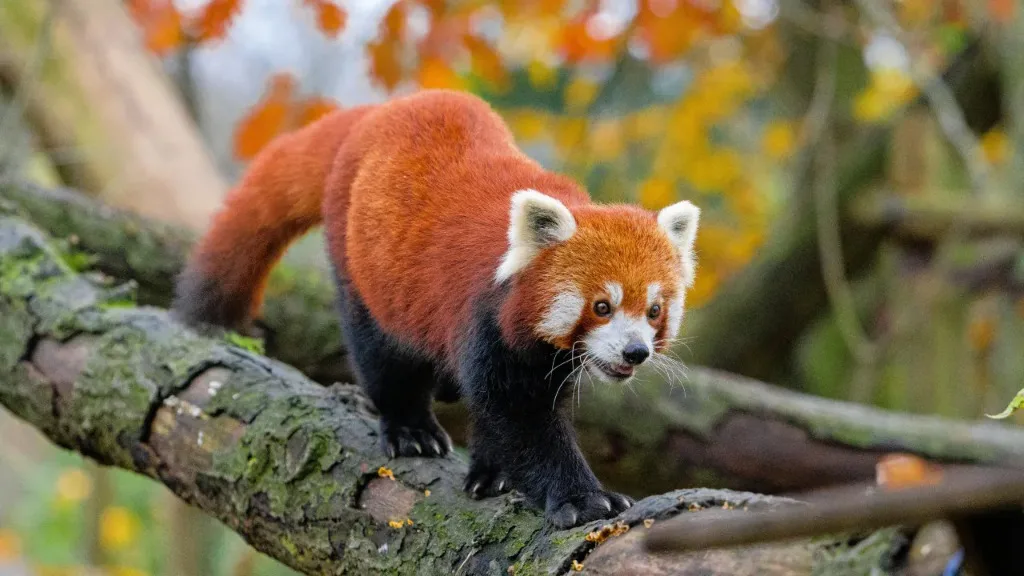
The Himalayan red panda (Ailurus fulgens), locally called Habre, is the sole living member of the family Ailuridae. Weighing 4 to 6 kilograms with a bushy ringed tail used for canopy balance and warmth, it is listed as Endangered on the IUCN Red List, with fewer than 10,000 mature individuals left in the wild.
Supported by conservation releases from Darjeeling's Padmaja Naidu Himalayan Zoological Park and transboundary forest guardians trained with the Red Panda Network, the ridge between Tumling, Gairibas, and Kalipokhri connects habitats across India and Nepal. As explained in our Red Panda Tracking in Singalila Guide, pandas spend up to 13 hours daily eating bamboo leaves. Our spotters inspect branch forks for fresh spindle-shaped droppings before scanning the sunny upper canopy with optics.
What Rare Mammals, Birds, and Orchids Live Along the Singalila Ridge?
01 Which Elusive Himalayan Mammals Inhabit the Cloud Forest?
- Clouded Leopard & Leopard Cat: Secretive nocturnal felids documented along the bamboo ridge via camera traps and dusk walks.
- Asiatic Black Bear (Ursus thibetanus): Moon bears whose claw marks and tracks frequently appear on ancient oaks.
- Yellow-Throated Marten (Martes flavigula): Golden-and-black diurnal hunters often seen bounding in pairs along forest trails.
- Himalayan Serow, Barking Deer & Pika: Mountain ungulates in the misty valleys and tail-less Royle's pikas among Kalipokhri's rock walls.
02 Why Do Ornithologists and Botanists Flock to Singalila?
Walking between Gairibas and Kalipokhri brings waves of mixed bird flocks: Fire-tailed Myzornis, Golden-breasted Fulvettas, Spotted Laughingthrushes, and Scarlet Minivets, while Satyr Tragopans and Blood Pheasants call from the bamboo at dawn. Between March and May, 20 rhododendron species paint the ridge crimson and cream, followed by hooded Cobra Lilies and 600+ wild orchid species through autumn.
— Aly Rashid, Founder & Naturalist Expedition Leader, Just Nature Expeditions
When Is the Best Time to Visit Singalila National Park?
We run our fixed-departure Singalila Red Panda Expedition in mid-November (12th–16th November) when crisp skies meet reliable daytime panda basking. Compare the seasons below:
| Season | Ridge Temps | Red Panda & Birding | Views & Flora |
|---|---|---|---|
| Autumn (Oct – Dec) | 8°C to 14°C / -2°C to 4°C | Peak Window: Mothers move with cubs; pandas bask on sunny morning branches. | Clear Kangchenjunga & Everest views; autumn orchids. |
| Winter (Jan – Feb) | 2°C to 8°C / -8°C to -2°C | Mating Season: Adults vocalise and travel in pairs; winter bird flocks at Gairibas. | Frosty silver firs and occasional snow at Sandakphu. |
| Spring (Mar – May) | 10°C to 16°C / 3°C to 8°C | Birding Peak: Satyr Tragopan displays; pandas feed on fresh bamboo shoots. | 20 rhododendron species, magnolias & Cobra Lilies bloom. |
| Monsoon (Jun 16 – Sep 15) | 12°C to 18°C / 8°C to 12°C | Park Closed: Closed by the Forest Department for the breeding monsoon. | Heavy rain, fog, and leeches across the ridge. |
How Do You Explore Singalila: Trekking the Sandakphu Ridge vs Vintage Land Rovers?
At the gateway town of Manebhanjan (26 km from Darjeeling), colonial-era 1950s British Land Rovers still climb the cobbled track to Sandakphu. Point-to-point trekkers often march past resting wildlife with eyes on the stones; on a naturalist-led expedition, we use 4x4 vehicles for transfers and spend full days walking slowly on foot with trackers across the key habitat zones:
| Ridge Zone | Altitude | Distance | Primary Wildlife & Habitat Focus |
|---|---|---|---|
| Manebhanjan | 2,134m (7,000 ft) | 0 km | Forest permit checkpost, SSB registration & vintage 1950s Land Rover hub. |
| Tumling & Meghma | 2,900m – 2,970m | 9 – 11 km | Indo-Nepal border ridge, Kangchenjunga viewpoints & bamboo corridors. |
| Gairibas & Shikhar Tarry | 2,621m (8,600 ft) | 20 km | Core Red Panda Hub: Dense ringal bamboo, Satyr Tragopan & our homestay base. |
| Kalipokhri | 3,186m (10,450 ft) | 26 km | Sacred alpine lake, silver firs, Himalayan Pika & Blood Pheasant habitat. |
| Sandakphu Summit | 3,636m (11,930 ft) | 32 km | Highest peak in West Bengal; panoramic views of Everest & Kangchenjunga. |
How Does Just Nature's 5-Day Singalila Red Panda Expedition Work?
Our 5-Day Red Panda Expedition eliminates rushed camp changes by basing our max 4 guests at Shikhar Tarry Homestay right inside prime habitat:
- Day 1 (Bagdogra to Shikhar Tarry): Meet your Just Nature naturalist at Bagdogra Airport (IXB) for a 4-hour drive into Singalila National Park.
- Days 2, 3 & 4 (Full-Day Red Panda Tracking): Dawn-to-dusk tracking with local spotters and hot lunches served in the field.
- Day 5 (Shikhar Tarry to Bagdogra): Morning birding and return to IXB, or extend on our 8-day Red Panda, Rhinos & Darjeeling Expedition (view tailor-made tour). Need a 100-400mm or 100-500mm lens? Reserve via our Camera Rental service.
Frequently Asked Questions About Singalila National Park
Where is Singalila National Park located and how do you reach it?
What is the best time to visit Singalila National Park?
How many red pandas live in Singalila National Park?
Can you explore Singalila National Park by vehicle instead of trekking?
What birds and orchids is Singalila National Park famous for?
Do tourists need permits to enter Singalila National Park?