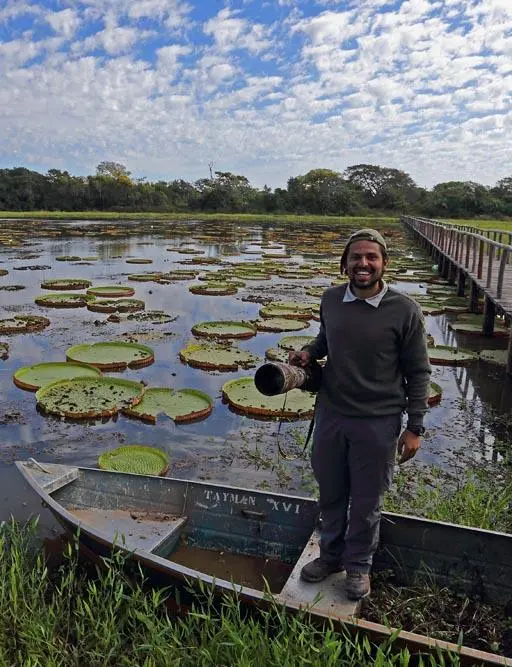
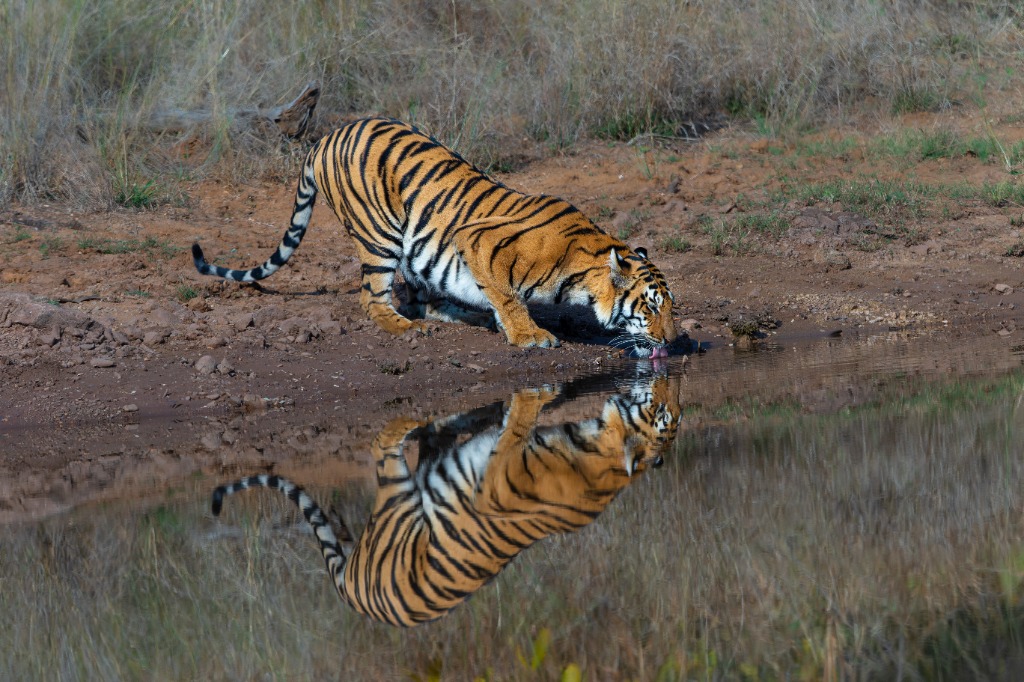
The alarm call of a spotted deer doesn't just mean a predator is near; its cadence tells you exactly what kind of predator it is, and its direction tells you where that predator is moving. When we track tigers in Central India, we don't start by looking for orange and black. We look at the dust. A fresh pugmark over a jeep track made twenty minutes ago. A scrape on a teak trunk still oozing sap. We listen to the langurs.
India's most exclusive wildlife encounters don't happen at 5-star resorts overlooking tiger reserves. They happen when a trained naturalist leads you through the forest at first light, before any other vehicle is on the track, reading the silent language of the ecosystem. This guide is not a catalogue of where to book a jeep. It is a field manual from the naturalists who have spent their lives tracking the Royal Bengal Tiger, designed to help you understand the forest before you even step into it.
Table of Contents
- What a Naturalist's Tiger Expedition Actually Means
- India's Tiger Reserves: A Naturalist's Map
- Kanha National Park: The Benchmark
- Satpura Tiger Reserve: The Walking Safari
- Bandhavgarh National Park: The High-Density Stronghold
- Panna National Park: The Riverine Comeback
- The Sundarbans: A Chapter Apart
- The Tigers Unlimited Expedition
- Who Leads These Expeditions
- Frequently Asked Questions
What a Naturalist's Tiger Expedition Actually Means
When most people book a tiger safari in India, they are booking a zone permit and a driver. The vehicle enters the park, races to a spot where a tiger was seen yesterday, and waits. If nothing happens, the vehicle moves to the next known spot. This is tourism by lottery, and it is the reason so many visitors leave India's magnificent forests feeling underwhelmed by the crowds and disconnected from the wilderness.
An expedition is fundamentally different. Between Erwin D'rose's five years studying tiger behaviour at Kanha and our camera trap work in Satpura's buffer zones, we know these individual animals - not just the species. Erwin knows the territory of Kanha's dominant males the way a villager knows their fields. He knows which nala a female uses in February when she is hiding cubs, and which waterhole a male marks after the monsoon breaks. That is not information you get from a zone permit. It is knowledge earned through thousands of hours of silent observation.
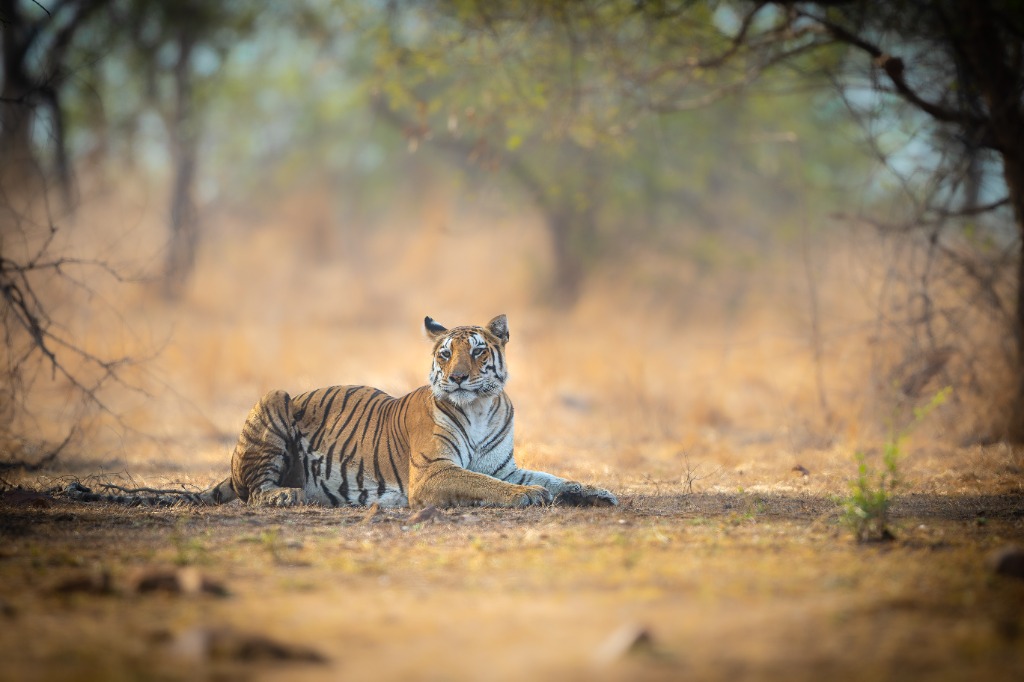
Tracking a tiger ethically requires you to engage with the entire forest. When we lead an expedition, we spend the first hour of the morning reading the overnight news written in the dirt. We look for the drag marks of a kill. We smell the distinct, musky scent of tiger spray on a roadside bush. We listen for the deep, resonant territorial call of a male. We position the vehicle not where the tiger is, but where the tiger is going, allowing the animal to emerge on its own terms. This approach drastically reduces the pressure on the wildlife and transforms the safari from a passive viewing experience into an active masterclass in field ecology. If you want to understand the tiger, you must first understand the forest it rules.
India's Tiger Reserves: A Naturalist's Map
The Royal Bengal Tiger is highly adaptable. It thrives in the freezing altitudes of Bhutan and the humid, salty swamps of the Bay of Bengal. In India, the landscape you choose to visit will dictate the kind of tracking you experience. The dense, towering sal forests of Kanha offer a very different visual background from the dry, golden teak leaves of Satpura or the ancient rocky plateaus of Bandhavgarh.
Understanding these habitats is crucial for anyone serious about wildlife photography or behavioral observation. In an open maidan (meadow), you might observe a tiger from a distance for an hour as it stalks a herd of barasingha. In a dense bamboo thicket, the encounter might last only ten seconds, but it will be at a proximity that makes your heart race. As naturalists, we don't rank these reserves from best to worst. We categorize them by the specific ecological stories they tell.
If your goal is to photograph a tiger crossing water, the riverine corridors of Panna are ideal. If you want to experience the deep silence of tracking on foot, Satpura is the only viable option. If you want to see tigers swimming between tidal islands, you must board a boat in the Sundarbans. Choosing your reserve is not about maximizing probability; it is about matching the habitat to the kind of wilderness encounter you are searching for. For a comprehensive overview of how tigers fit into the broader feline landscape, refer to our Big Cats of India Expedition Guide.
Kanha National Park: The Benchmark of Central India
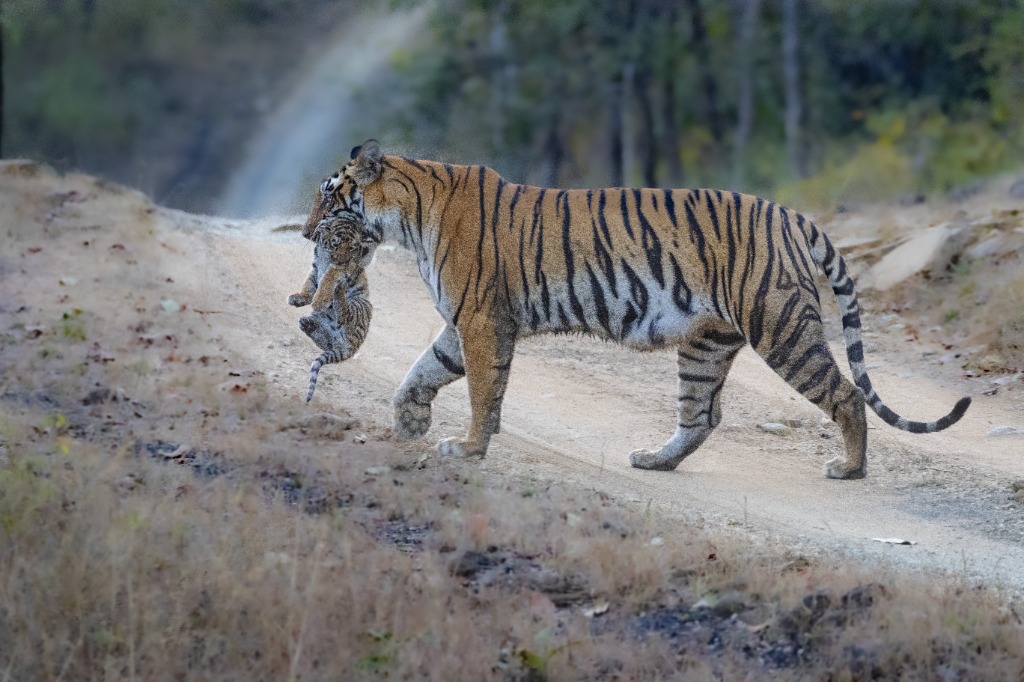
Erwin D'rose spent five years at Kanha before he joined our expeditions. Five years, not five visits. When we take guests to Kanha, we aren't just visiting a national park; we are walking into Erwin's backyard. Kanha is the benchmark against which all other Central Indian forests are measured. It is visually stunning - the kind of landscape that inspired Kipling's Jungle Book - characterized by ancient, straight-trunked sal trees that open up into vast maidans.
These maidans are the remnants of relocated forest villages, now reclaimed by wild grasses. They serve as massive grazing grounds for chital, sambar, and the reserve's famous hard-ground barasingha. Because the prey base aggregates in the open, the predators follow. This makes Kanha arguably the best reserve in India for observing predatory behavior and territorial disputes in plain sight. A tigress stalking through the tall grass of the Mukki zone, three-quarters obscured by golden stems, one amber eye visible and watching, is a classic Kanha visual.
For a photographer, the morning mist hanging over the Kanha maidans provides a dramatic, moody canvas. For a serious enthusiast, the sheer size of the core area allows for long, undisturbed tracking sessions if you know where to look. We often bypass the congested routes where tourist vehicles cluster, opting instead to track along the quieter fire lines where dominant males patrol their territorial boundaries. To understand how we navigate this specific terrain, read our dedicated Kanha National Park: The Definitive Tiger Safari Guide.
Satpura Tiger Reserve: The Walking Safari
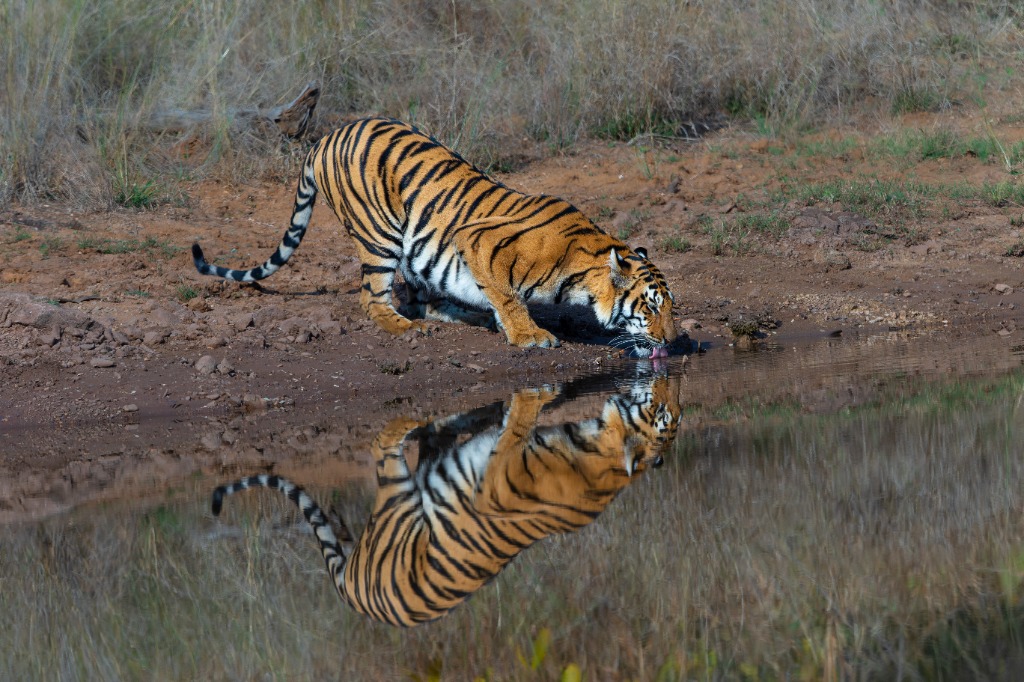
Satpura is personal. This is the forest where Aly Rashid built his career, spending seven years as head naturalist at Reni Pani Jungle Lodge. It is the landscape where we conducted extensive camera trap studies in the buffer zones, mapping the populations of leopards, wild dogs, and tigers that exist outside the designated tourist boundaries. We know this terrain intimately.
Satpura does not hand you its wildlife on a silver platter. It is a rugged, undulating landscape of sandstone peaks, deep ravines, and dry deciduous teak that crackles underfoot. The prey density is lower here than in Kanha, which means the tigers hold larger territories and move extensively. But what Satpura lacks in sheer tiger density, it makes up for in unparalleled access.
This is the only tiger reserve in Central India where you can legitimately track on foot. Stepping out of a jeep and onto the forest floor changes everything. Your perspective drops to eye level. You notice the size of a fresh pugmark in the sand of a dry riverbed. You hear the crunch of dry leaves long before you see the animal making the sound. We track the "Super Six" here (tiger, leopard, wild dog, sloth bear, gaur, and Indian giant squirrel), and encountering a sloth bear or a leopard while walking is an adrenaline spike that no vehicle safari can replicate. We also utilize boat safaris on the Denwa River, slipping silently past crocodiles and scanning the banks for tigers coming down to drink. For a deeper look at the specific species we track here, explore our Satpura's Super Six: A Naturalist's Deep Dive.
Bandhavgarh National Park: The High-Density Stronghold
Bandhavgarh is famous for its density. Nestled among the Vindhya hills, the core area is relatively small compared to Kanha, meaning the resident tigers are packed into a tighter geographical space. This high density translates to high sighting probabilities, making it the most heavily requested park by international travelers and first-timers.
Historically, this forest is known for the legacy of the White Tiger. Let’s be factually clear: the White Tiger was not a distinct subspecies or a mystical genetic miracle. It was a leucistic mutation, first sighted in this region in 1951, and the entire captive white tiger population in the world descends from that one captured animal. Today, Bandhavgarh's tigers are amber-eyed, heavily striped, and far more interesting than the myth. They are robust, aggressive, and fiercely territorial, often documented battling over the prime real estate of the Chakradhara and Rajbehra meadows.
The dramatic backdrop of the ancient Bandhavgarh Fort, rising sheer from the center of the park, provides incredible photographic context. However, high density attracts high tourist volume. The challenge in Bandhavgarh is not finding a tiger; the challenge is finding a tiger without twenty other jeeps surrounding it. Our methodology here relies on anticipation. We use our knowledge of specific tiger territories to position our vehicles at predicted exit points rather than joining the cluster at the initial sighting spot. For a side-by-side breakdown of how Bandhavgarh compares with Kanha and Pench across core density, terrain, and airport logistics, read our Bandhavgarh vs Kanha vs Pench Tiger Reserve Comparison Guide.
Panna National Park: The Riverine Comeback
Panna is a testament to resilience. In 2009, the reserve faced a catastrophic crisis: it had lost its entire tiger population to poaching. What followed is one of conservation's most remarkable Indian success stories. Tigers from other reserves were carefully reintroduced, and today, Panna boasts a thriving, healthy population.
Aly Rashid's connection to this landscape goes beyond standard guiding. In 2014, he worked alongside Dr. Shekhar Kolipaka on a dedicated caracal research and conservation project within Panna's boundaries. When we drive through Panna, we are reading a landscape we have studied intimately for over a decade.
The geography of Panna is starkly different from the flat maidans of Kanha. It is defined by the Ken River, which cuts a deep, stunning gorge through the Vindhya hills. The terrain is a mix of dry deciduous forest and expansive, rocky plateaus. Tigers here often use the deep ravines to move unseen, and tracking them requires a sharp eye on the ridges. Because the Ken River flows year-round, boat safaris offer a unique vantage point to photograph marsh crocodiles and tigers resting on the banks. The steep gorge walls also make Panna one of the best locations in India to observe critically endangered vulture species nesting on the cliffs. It is a quieter, wilder experience than Bandhavgarh.
The Sundarbans: A Chapter Apart
If you take everything you know about tiger tracking in Central India and throw it out the window, you have the Sundarbans. This is the largest mangrove forest on earth, a constantly shifting maze of tidal rivers, estuaries, and mudflats where the Ganges, Brahmaputra, and Meghna rivers meet the Bay of Bengal.
The Royal Bengal Tiger here is exactly the same species as the tigers in Kanha or Satpura, but its behavior is radically different. Sundarbans tigers are amphibious. They drink saline water. They swim miles across fast-flowing tidal channels. They hunt spotted deer, wild boar, and occasionally fish and crabs. They are notoriously aggressive and incredibly elusive.
You cannot drive a jeep in the Sundarbans. You cannot walk. You track by boat. A naturalist approaches this ecosystem differently from sal or teak forest. We don't look for pugmarks in the dust; we look for pugmarks in the slick mud of the riverbanks exposed at low tide. We don't listen for langur alarm calls; we listen for the sudden silence of the forest or the sharp bark of a spotted deer echoing across the water. Sighting a tiger in the Sundarbans is entirely dependent on the tides and the skill of the boatman and naturalist to position the vessel silently against the bank. It is the most challenging tiger tracking in India, and visually, the most arresting. For an in-depth look at this unique environment, see The Sundarbans: Tracking the Royal Bengal Tiger by Boat.
The Tigers Unlimited Expedition
For those who want to understand the tiger rather than just check it off a list, we created the Tigers Unlimited expedition. Running from February 15 to February 26, 2027, this is our flagship fixed departure. February is arguably the finest time to be in the Central Indian forests. The extreme cold of winter has lifted, the mornings are crisp with a light mist, the undergrowth has died back for excellent visibility, and the tigers begin to use the open tracks more frequently.
Covering multiple reserves on a single trip is usually a logistical nightmare of competing operators and inconsistent guiding. The Tigers Unlimited expedition eliminates this. You have the combined field experience of Aly Rashid and Erwin D'rose guiding you seamlessly across the different ecological zones of Central India. You aren't just seeing a tiger in Kanha and a tiger in Bandhavgarh; you are being shown why the tiger in Kanha behaves differently from the tiger in Bandhavgarh.
We maintain a strict small-group ethos. We do not pack vehicles, and we do not rush sightings. This expedition is built for photographers who need time to set up their shots, and for enthusiasts who want to sit quietly and watch a tigress interact with her cubs without the pressure of a ticking clock. If you are reading this as the forests reopen in October, the February departure sits exactly in the right planning horizon to secure premium accommodations and the best zone permits.
Who Leads These Expeditions
A wildlife expedition is only as good as the person leading it. We do not use freelance guides hired for the day. Our core team consists of naturalists who have dedicated their lives to the Indian jungle.
Aly Rashid is the Founder of Just Nature Expeditions and a trained ornithologist. With over seven years as the head naturalist at Reni Pani Jungle Lodge, he has conducted critical camera trap studies in Satpura and caracal research in Panna. He is the author of Tales from the Bush: A Peek into the World of Satpura.
Erwin D'rose is our Senior Naturalist. Before joining Just Nature, he spent five years stationed at Kanha National Park specifically studying tiger behaviour, followed by eight years at Reni Pani. His ability to predict big cat movement is unmatched.
Shivraj is a Naturalist and Wildlife Photographer with over 12 years of field experience. Trained alongside African safari guides, he is a specialist in tracking Satpura's elusive species and mentoring guests on ethical, high-quality wildlife photography.
You can read the full credentials of our team on the Expedition Leaders page.
Frequently Asked Questions
What is the best tiger reserve in India for a naturalist-led safari?
How is a naturalist-led tiger expedition different from a regular zone safari?
Which Indian national park has the highest probability of seeing a tiger?
What is the best time of year for a tiger safari in India?
Can I see tigers in multiple reserves on one India wildlife trip?
How do I choose between Kanha, Bandhavgarh, and Satpura for a tiger safari?