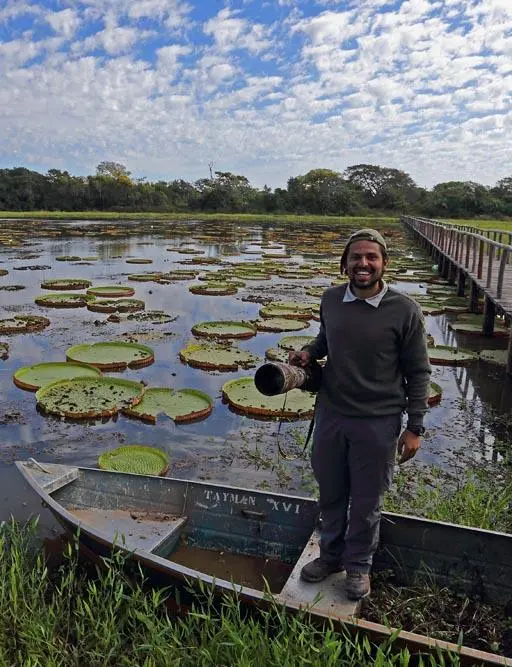
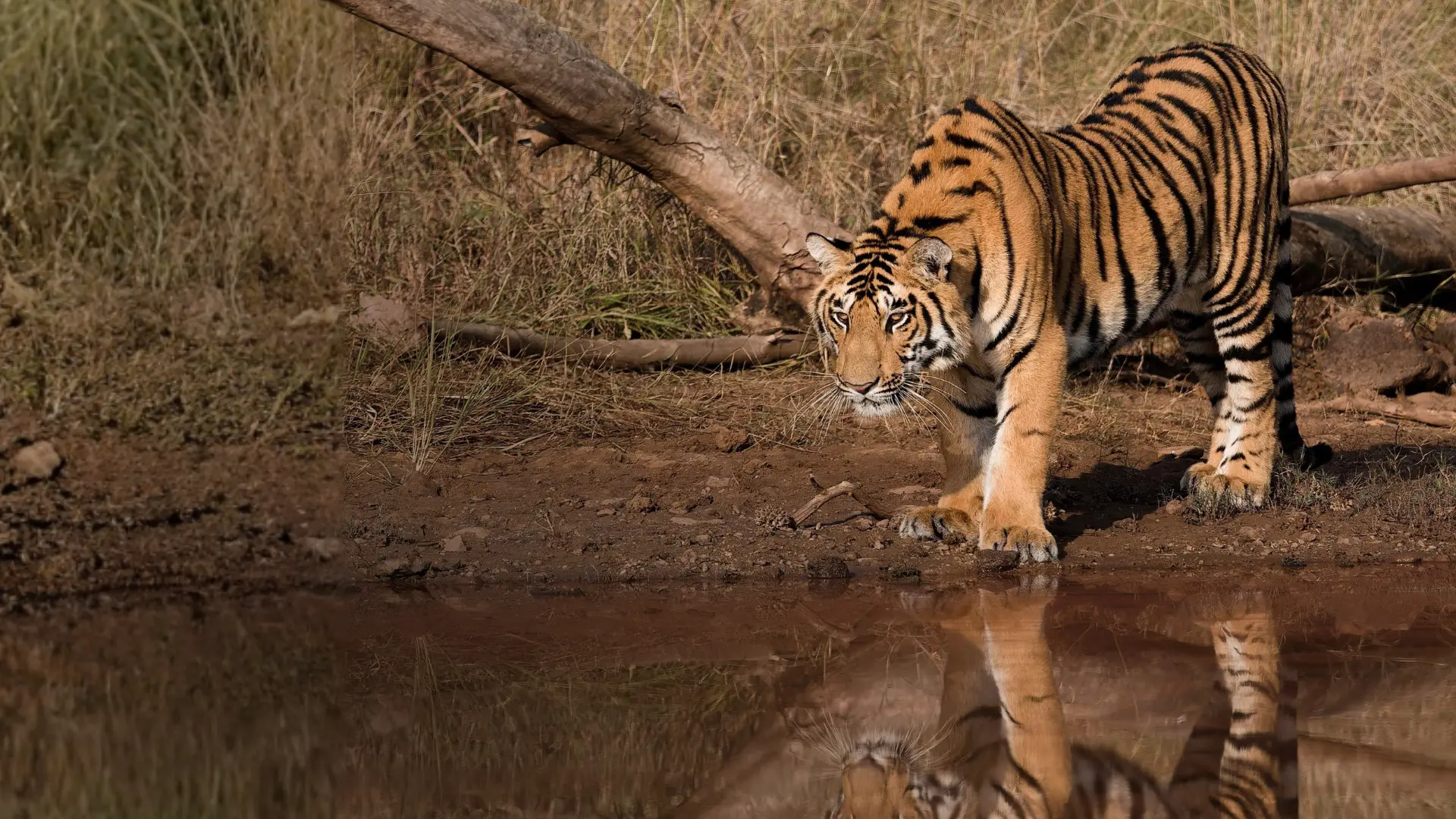
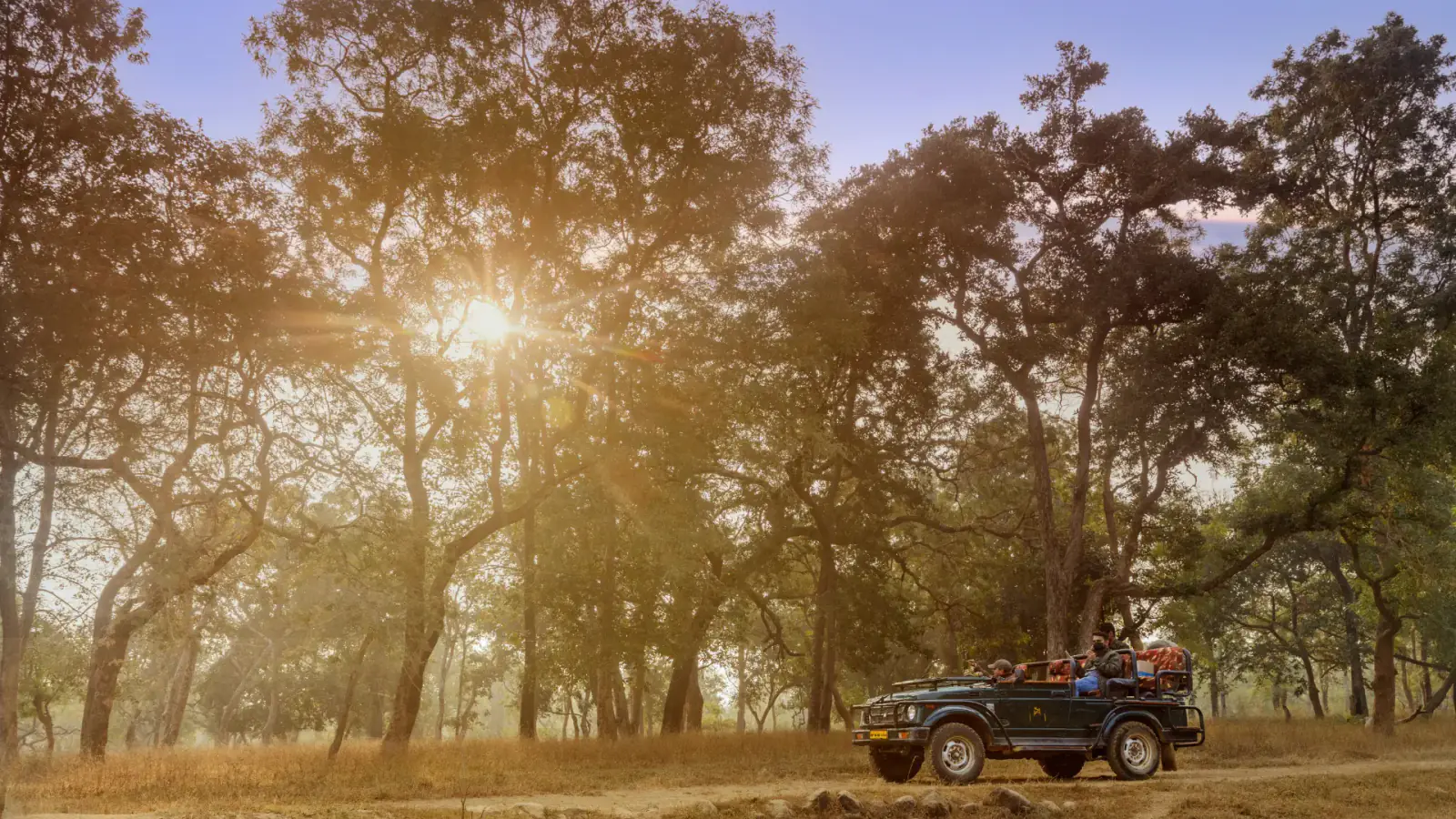
Before a single jeep engine turns over in Satpura Tiger Reserve, you have to cross the Denwa River by boat in the pre-dawn dark. Mist coils off the still water while river terns and black-necked storks lift silently from the sandbars, and on the far bank at Madhai, only a handful of waiting 4x4 gypsies line the forest edge. For more than seven years, while heading the naturalist team at Reni Pani Jungle Lodge, checking camera traps in the surrounding buffer corridors, and writing my book Tales from the Bush: A Peek into the World of Satpura, this river crossing was my daily commute. Guests often arrive on a Satpura tiger safari expedition expecting another single-species search. Within their first two drives, the forest teaches them a larger truth: Satpura is defined not by one predator alone, but by the ecological interplay of its Super Six.
Table of Contents
- Why Satpura Is Central India's True Naturalist's Wilderness
- The Sloth Bear and the Indian Leopard: Masters of Sandstone and Mahua
- The Royal Bengal Tiger and the Dhole (Indian Wild Dog): Apex Rivals of the Teak Valleys
- The Indian Giant Squirrel and the Indian Gaur: Canopy Acrobat and Forest Titan
- Beyond the 4x4: Walking Safaris, Denwa Canoe Tracking, and Wilderness Camping
- What Seven Years and Hundreds of Camera Traps Taught Us About Satpura
- Inside Our 9-Day Satpura Explorer Expedition (Madhai to Bori)
- Who Leads Our Satpura Expeditions
- Frequently Asked Questions
Why Satpura Is Central India's True Naturalist's Wilderness
To understand why Satpura feels fundamentally different from the mainstream tourist circuits of Central India's forests, you have to look at its topography and its history. The name Satpura translates from Sanskrit as the "Seven Folds", a series of ancient, faulted sandstone ridges, deep box canyons, and high plateaus that rise from the Denwa River valley at 300 metres to the peak of Dhoopgarh at 1,352 metres.
Unlike flat meadow parks where sixty vehicles funnel through a single gate every morning, Satpura restricts Madhai core entry to roughly twelve vehicles per shift. That spatial breathing room changes everything. Instead of driving from one jeep cluster to the next, a naturalist here can stop the vehicle in a sun-dappled teak glade, cut the engine, and listen to the entire forest breathe.
Because the elevation and moisture gradients shift rapidly between the Denwa backwaters, the dry deciduous teak slopes of Madhai, the open grasslands of Churna, and the towering bamboo valleys of Bori Wildlife Sanctuary, no single predator monopolises every niche. Instead, six charismatic mammals share the spotlight in what field naturalists across the Pachmarhi Biosphere call Satpura's Super Six: the Sloth Bear, Indian Leopard, Royal Bengal Tiger, Dhole (Indian Wild Dog), Indian Giant Squirrel, and Indian Gaur.
| Super Six Species | Primary Micro-Habitat in Satpura | Peak Daily Activity Window | Key Tracking Sign & Acoustic Cue | Prime Sectors |
|---|---|---|---|---|
| 1. Sloth Bear (Melursus ursinus) | Sandstone boulder caves, mahua and tendu groves, termite-rich scrub | First light (5:45 AM to 8:30 AM) and late afternoon | Freshly excavated termite mounds, claw marks on mud, loud vacuum-suction feeding sounds | Madhai, Churna, and Reni Pani buffer |
| 2. Indian Leopard (Panthera pardus fusca) | Rocky escarpments, dry river nalas, lateral arjuna and teak limbs | Dawn, late afternoon, and post-dusk buffer drives | Sawing territorial calls, langur guttural alarm coughs, pugmarks along rocky ridges | Madhai ridges, Lagda, Bori, and buffer zones |
| 3. Royal Bengal Tiger (Panthera tigris tigris) | Bamboo valleys, perennial stream beds, relocated meadow flats | Early morning patrol hours and late afternoon waterhole visits | Fresh pad impressions on firelines, tree scent-sprays, sharp sambar dhank calls | Bori Wildlife Sanctuary, Churna, and Madhai core |
| 4. Dhole / Wild Dog (Cuon alpinus) | Open dry deciduous teak corridors and meadow edges | Diurnal pack hunts at sunrise and late afternoon | Clustered canid track lines on dirt roads and high-pitched metallic whistle calls | Churna road, Madhai meadows, and Bori |
| 5. Indian Giant Squirrel (Ratufa indica) | Moist riverine canopy corridors of terminalia, mango, and jamun | Early morning canopy foraging (6:30 AM to 9:30 AM) | Large spherical twig dreys high in tree forks and resonant staccato rattling calls | Bori riverine belts, Pachmarhi footnotes, Madhai streams |
| 6. Indian Gaur (Bos gaurus) | Bamboo thickets, moist valley floors, and open grassy maidans | Throughout the day; grazing open meadows at dawn and dusk | Deep heart-shaped hoof prints, stripped bamboo shoots, and resonant alarm snorts | Churna grasslands, Bori valleys, and Keria |
The Sloth Bear and the Indian Leopard: Masters of Sandstone and Mahua
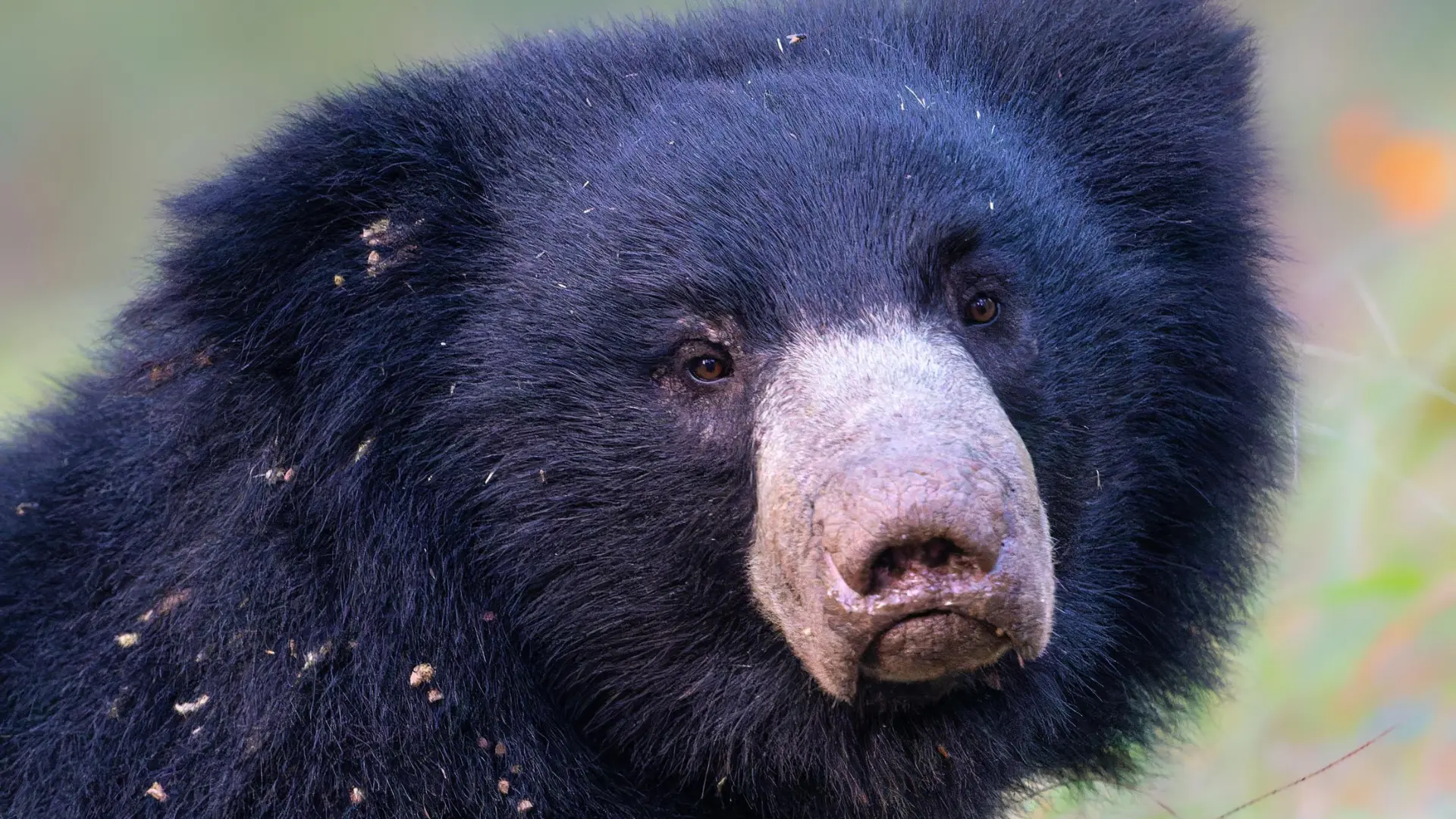
In most Central Indian tiger parks, the sloth bear (Melursus ursinus) is a fleeting dark shape crashing into dense undergrowth before you can lift your camera. In Satpura, the sloth bear is royalty. During my seven years based at Reni Pani, there were winter and spring mornings when we would encounter four or five different bears on a single drive, including mothers walking unhurriedly down the track with two fluffy cubs clinging to the thick mat of hair between their shoulder blades.
From an evolutionary standpoint, the sloth bear is a masterpiece of specialization. It is a myrmecophagous bear, engineered specifically to harvest subterranean termites and ants. Look closely at a Satpura sloth bear through binoculars and you will notice its long, mobile pale snout, nostrils that can seal completely shut to keep out dust, and a gap where its two upper middle incisors are missing. After tearing open a rock-hard termite mound with its three-inch curved ivory claws, the bear blows away the loose dirt with a loud snort and sucks up thousands of termites through that tooth gap like a vacuum hose, a sound you can hear clearly from a hundred metres away in a quiet forest.
Between March and April, when the fleshy, sugar-rich cream corollas of the mahua tree (Madhuca longifolia) rain onto the forest floor at dawn, Satpura's sloth bears shift from nocturnal foraging to prolonged morning feasts beneath the groves.
Why Satpura Is a Forest Leopard Stronghold
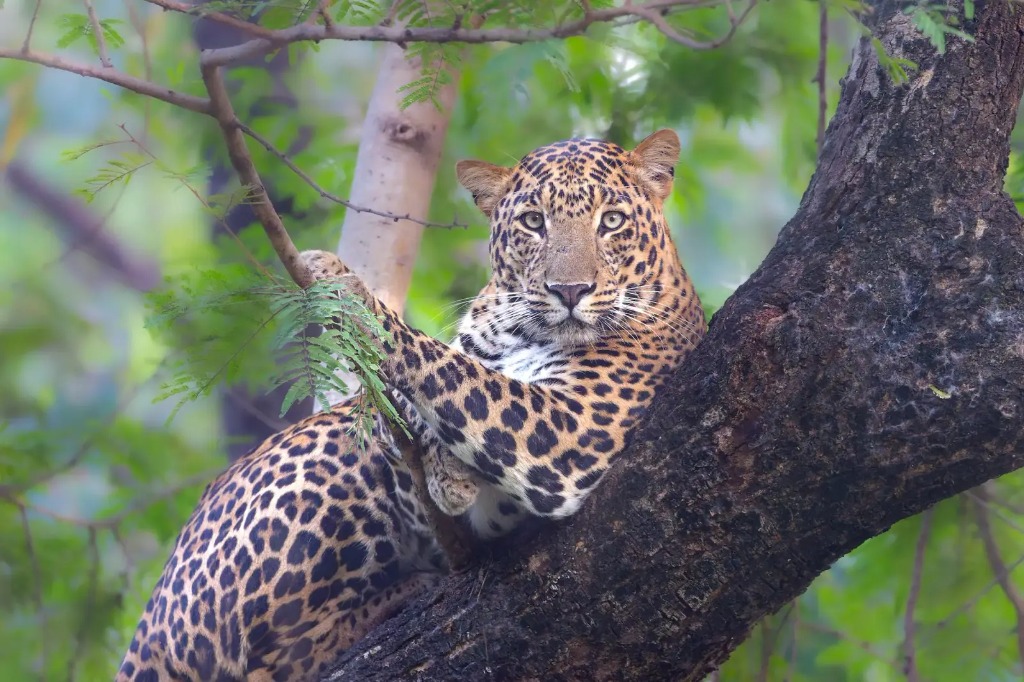
Sharing those same sandstone ridges and rocky escarpments is the second member of the Super Six: the Indian Leopard (Panthera pardus fusca). As we noted in our Big Cats of India complete guide, leopards in flat, high-density tiger parks are pushed to the periphery. In Satpura, the rugged, broken terrain works in the leopard's favour.
Because steep sandstone ledges, boulder-choked nalas, and dense lantana and bamboo pockets break up the valley floor, leopards have countless vertical escape routes and elevated vantage points where tigers rarely climb. Whether scanning the thick lateral limbs of white-barked arjuna trees along dry stream beds in Madhai or tracking across the Parsapani and Reni Pani buffer zones at dusk, Satpura consistently rewards patient observers with extended, eye-level leopard sightings.
The Royal Bengal Tiger and the Dhole (Indian Wild Dog): Apex Rivals of the Teak Valleys
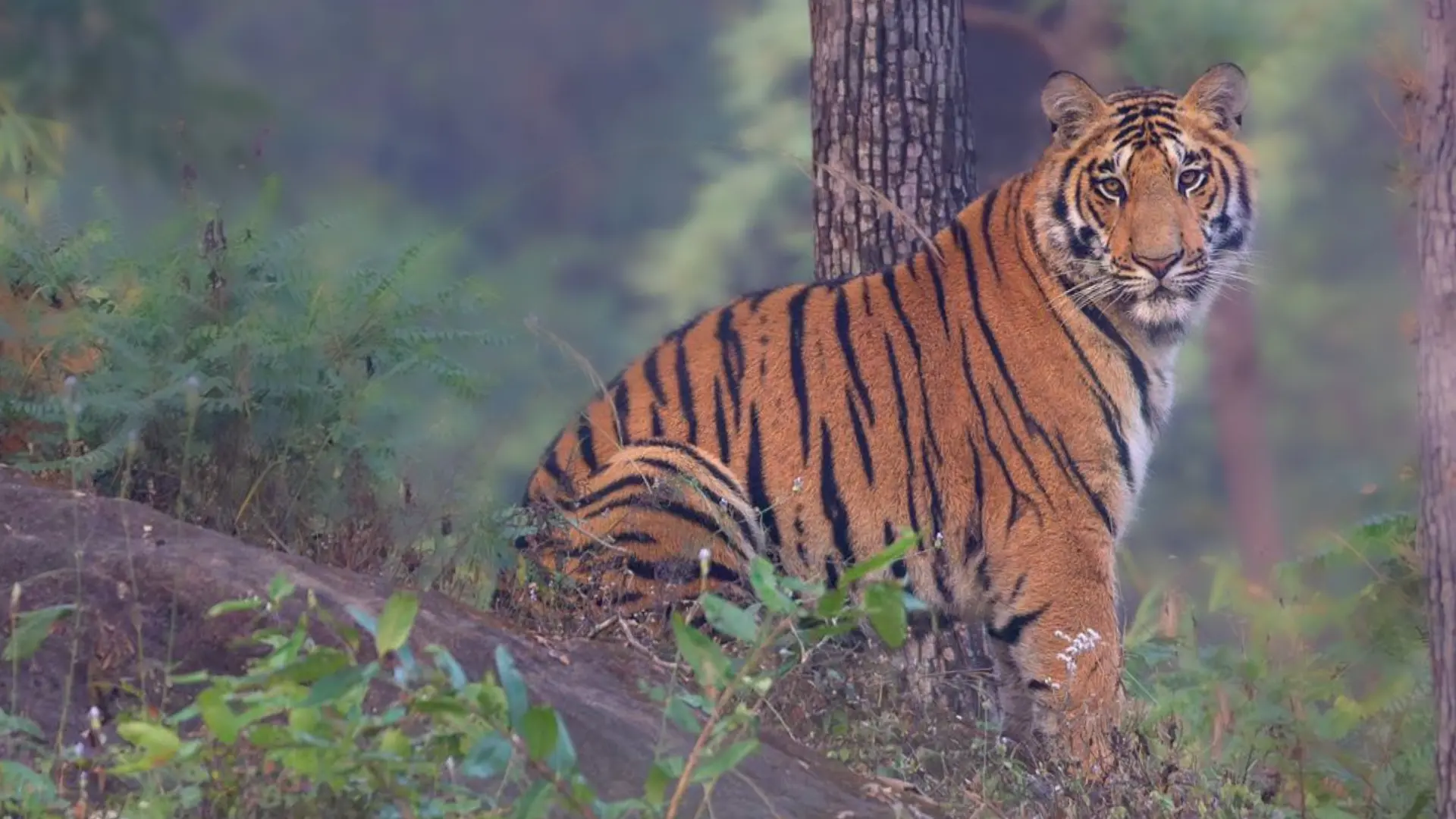
When guests ask how a Satpura tiger safari expedition compares with parks like Bandhavgarh or Kanha, which we examine in our Bandhavgarh vs Kanha vs Pench comparison guide, we always start with honest ecology. Satpura's tigers hold much larger territories than tigers in small, prey-dense core zones. You do not come to Satpura to join a twenty-jeep traffic jam around a roadside cat. You come to Satpura to track a tiger through wild, undulating country, and when you find one, to have that animal entirely to yourself.
Over the past decade, following the voluntary relocation of several interior forest villages such as Bori, Churna, and Dhain, expansive grassy maidans have regenerated across Satpura and Bori Wildlife Sanctuary. Chital and sambar numbers have surged in response, and with them, tiger sightings across both Madhai and Bori have grown steadily stronger every season. Watching a dominant male tiger emerge from a bamboo ravine in Bori or sit quietly beside a dark tree trunk on a fern-covered hillside while only your vehicle is present is an encounter that stays with you for life.
The Whistling Hunters: Satpura's Dhole Packs
Sharing the open firelines with the tiger is the fourth member of the Super Six: the Dhole, or Indian Wild Dog (Cuon alpinus). Rust-red with bushy black tails and rounded ears, dholes are among the most captivating social carnivores on the planet. Living in cohesive clans of six to eighteen individuals, they communicate across dense teak woodland using a distinctive, bird-like metallic whistle that you can imitate by blowing across the brass rim of an empty cartridge case.
Because dholes are strictly diurnal hunters, early morning drives along the Churna road and Bori meadows frequently reveal packs trotting in single file, greeting one another with excited squeaks and ritual nose-touching before fanning out to test the sambar herds.
The Indian Giant Squirrel and the Indian Gaur: Canopy Acrobat and Forest Titan
A true naturalist's safari never looks only at carnivores. The fifth and sixth members of Satpura's Super Six illustrate the sheer vertical and structural richness of the Pachmarhi Biosphere:
Measuring nearly three feet from nose to bushy tail-tip, the Malabar or Indian giant squirrel is a brilliant coat of deep maroon, burnt crimson, and creamy buff. Biogeographically, its presence in Satpura is fascinating: the moist riverine valleys of Bori and Pachmarhi act as an evolutionary bridge linking the fauna of the Western Ghats to Central India. Look high into the crowns of tall terminalia, mango, and jamun trees at first light and you will see them making twenty-foot leaps across canopy gaps, or hear their loud, metallic staccato rattle echoing through the treetops.
At the base of those very trees stands the largest wild bovid on earth. Adult male gaurs in Satpura stand nearly two metres at the shoulder and weigh up to a metric ton, clad in glossy jet-black hides with muscular dorsal ridges, sweeping curved horns, and contrasting white stockings from knee to hoof. Beyond their sheer physical presence in the meadows of Churna and Bori, gaur herds are essential allies for a tracking naturalist: when a matriarch freezes, raises her muzzle, and lets out a deep, explosive snort toward a bamboo thicket, you know an apex predator is close.
Beyond the 4x4: Walking Safaris, Denwa Canoe Tracking, and Wilderness Camping
As we highlight in our Tigers Unlimited guide to India's top tiger reserves, what sets Satpura apart from every other national park in Madhya Pradesh or Maharashtra is how you are allowed to move through it. In Kanha, Bandhavgarh, or Pench, your feet never touch the core forest floor. In Satpura, our 9-day Satpura Explorer expedition immerses you in four completely distinct modes of exploration:
- Core-Zone Walking Safaris on Foot: Stepping off the jeep track and onto a sandy riverbed on foot transforms your sensory awareness. Led by our senior naturalist and accompanied by trained forest guards, you crouch to examine the fresh claw-print of a sloth bear, run your fingers over a leopard scrape on a teak trunk, and feel the genuine electricity of hearing a langur alarm call when there is no steel vehicle bodywork around you.
- Dawn Canoe Safaris on the Denwa River: Without the hum of an engine, a two-person canoe glides within yards of basking marsh crocodiles, foraging smooth-coated otters, and flocks of endangered Indian skimmers slicing the water surface with their scissor-like lower mandibles, while scanning the shoreline for sloth bears and tigers coming down to drink.
- Overnight Wilderness Camping Under the Stars: On Day 4 of our Satpura Explorer itinerary, we leave the lodge behind after a full-day park drive (complete with a hot bush breakfast served inside the reserve) to spend the night at an intimate wilderness campsite in the heart of the forest, waking at dawn for a guided birding and tracking walk right from camp.
- Scenic Boat Transfer Across the Reservoir to Bori: Rather than backtracking along highway tarmac, our expedition links Reni Pani Jungle Lodge (Madhai) to Bori Safari Lodge via a private boat journey across the sweeping Denwa and Tawa reservoir waters, watching ospreys, river terns, and forested ridge peaks unfold along the way.
"Until you have walked a dry sandy nala in Satpura on foot, listening to a sambar bell echo off sandstone cliffs while fresh leopard pugmarks lead around the bend ahead of you, you have only watched the Indian jungle through a window."
What Seven Years and Hundreds of Camera Traps Taught Us About Satpura
When I lived at Reni Pani, one of our most rewarding scientific projects was deploying infrared camera traps across the reserve forests and buffer corridors outside the primary tourist loops. Many visitors assume that wildlife stops at the core national park gate. Our camera traps proved the exact opposite: the buffer streams, rocky hillocks, and village fringes of Satpura are teeming with predators and rare specialists that use the cover of night to move across the landscape.
Reviewing thousands of time-stamped triggers over the years, many of which inspired chapters in Tales from the Bush, gave our team an intimate map of Satpura's lesser-known treasures that we actively look for alongside the Super Six:
- Rusty-Spotted Cat (Prionailurus rubiginosus): Weighing barely 1.5 kilograms, the world's smallest wild cat is a regular resident of Satpura's dry teak and bamboo buffer tracks, frequently spotted on dusk and evening buffer drives.
- Ratel / Honey Badger & Porcupine: Our nocturnal camera traps consistently recorded fearless honey badgers (Mellivora capensis) and Indian crested porcupines sharing the same rocky trails used by tigers and sloth bears minutes earlier.
- Chousingha (Four-Horned Antelope): The dry, hilly plateau grasslands of Satpura shelter the shy Tetracerus quadricornis, Asia's smallest bovids and the only wild mammal in the world where males carry two distinct pairs of horns.
- Malabar Pied Hornbill & Indian Skimmer: For birders, Satpura is a goldmine of over 300 avian species, from noisy flocks of Malabar pied hornbills in the riverine ficus trees to breeding colonies of Indian skimmers and black-bellied terns on the Denwa sandbars.
Inside Our 9-Day Satpura Explorer Expedition (Madhai to Bori)
Most standard itineraries give Satpura two rushed nights at Madhai before hurrying guests off to another park, leaving the entire southern half of the reserve untouched. Together with Senior Naturalist Erwin D'rose, who spent over eight years living and working in Satpura, we built the 9-day Satpura Explorer expedition to cover the complete northern-to-southern ecological arc of the reserve:
After arriving in New Delhi (staying at The Roseate House) and taking a short morning flight to our home city of Bhopal, a three-hour drive brings you to the acclaimed Reni Pani Jungle Lodge. Across your first two days in Madhai, we combine an evening core jeep drive with a silent early-morning canoe safari on the Denwa backwaters, targeting sloth bears, leopards, marsh crocodiles, and riverine birdlife.
On Day 4, we enter Satpura's core at first light, pausing mid-morning for a freshly prepared breakfast served inside the forest before heading out in the afternoon to our wilderness campsite for dinner under the stars. On Day 5, you wake to the dawn chorus for a guided nature walk on foot before returning to Reni Pani for lunch and an afternoon safari drive.
On Day 6, we board our private boat to cross the reservoir waters from Madhai directly to Bori Safari Lodge. Established in 1865 as India's oldest forest reserve, Bori Wildlife Sanctuary is a breathtaking landscape of giant bamboo, towering teak, and clear forest streams where tigers, dholes, giant squirrels, and immense gaur herds thrive. After three days of morning and afternoon safaris (with bush breakfasts inside the park and a final wilderness sundowner on Day 8), we transfer back to Bhopal Airport on Day 9 for your onward flight.
For guests seeking a private, custom-dated journey, we also craft bespoke Satpura circuits through our Luxury Wildlife Holiday in India portfolio, pairing Satpura and Bori with Kanha, Pench, or Bandhavgarh, or integrating them into our 12-day Tigers Unlimited expedition and 14-day Big Cats of India expedition. Need professional telephoto lenses for Satpura's forest light? Reserve mirrorless bodies and super-telephoto primes directly through our Camera Rentals by Just Nature Expeditions service.
Who Leads Our Satpura Expeditions
As we outline in our guide on how to choose a wildlife expedition operator in India, there is no substitute for traveling with naturalists who have lived for years inside the ecosystem you are visiting. When you join one of our Guided Tours or private Tailor-Made Safaris in Satpura, you are walking into our team's personal backyard:
- Aly Rashid (Founder & Naturalist Expedition Leader): Headed the naturalist team at Reni Pani Jungle Lodge in Satpura for over seven years, led camera-trap studies across the Satpura reserve forests, conducted caracal research in Panna (2014), and authored Tales from the Bush: A Peek into the World of Satpura.
- Erwin D'rose (Senior Naturalist & Satpura Explorer Leader): After five years studying tiger behaviour in Kanha National Park, Erwin spent more than eight years as a senior naturalist and lodge manager in Satpura, knowing every waterhole, fireline, and sloth bear corridor from Madhai to Bori.
- Shivraj (Naturalist & Wildlife Photographer): Over 12 years of field tracking experience across Central India, trained alongside African safari guides, and our resident specialist for tracking and photographing Satpura's Super Six in dappled forest light.
Explore full biographies of our leaders on the Expedition Leaders page, or browse all of our wild habitats on the Destinations directory.
Frequently Asked Questions
What are the Super Six wildlife species of Satpura Tiger Reserve?
Why is Satpura considered the best national park in India for sloth bears and leopards?
Can you really do a walking safari on foot inside Satpura Tiger Reserve?
What is the difference between the Madhai zone and Bori Wildlife Sanctuary in Satpura?
What is the best time of year for a Satpura tiger safari expedition?
How do I reach Satpura Tiger Reserve from Bhopal, Nagpur, or Delhi?