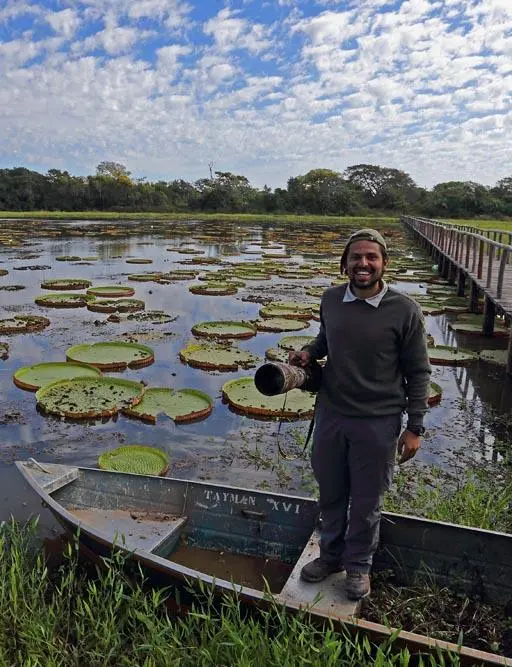
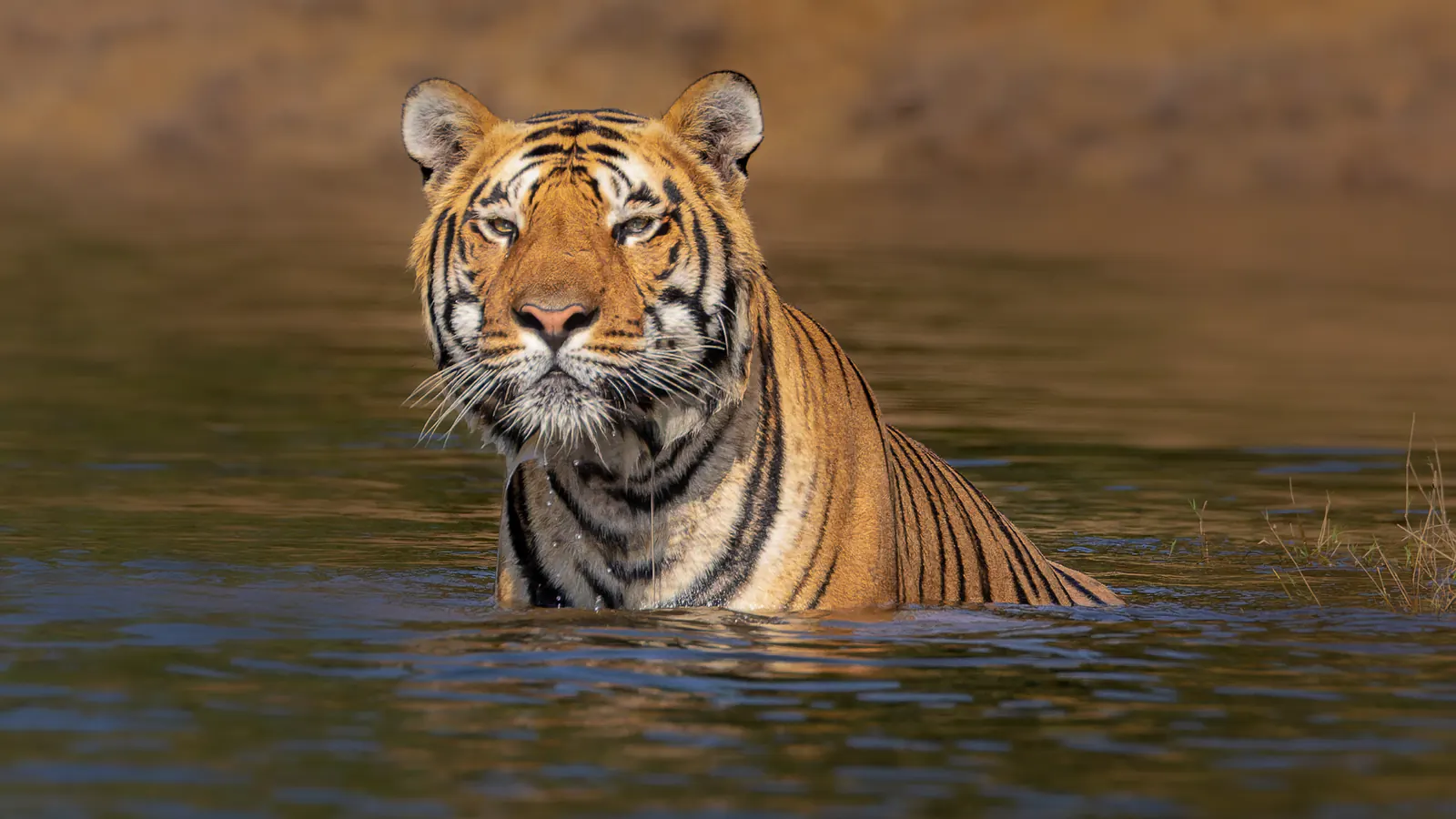
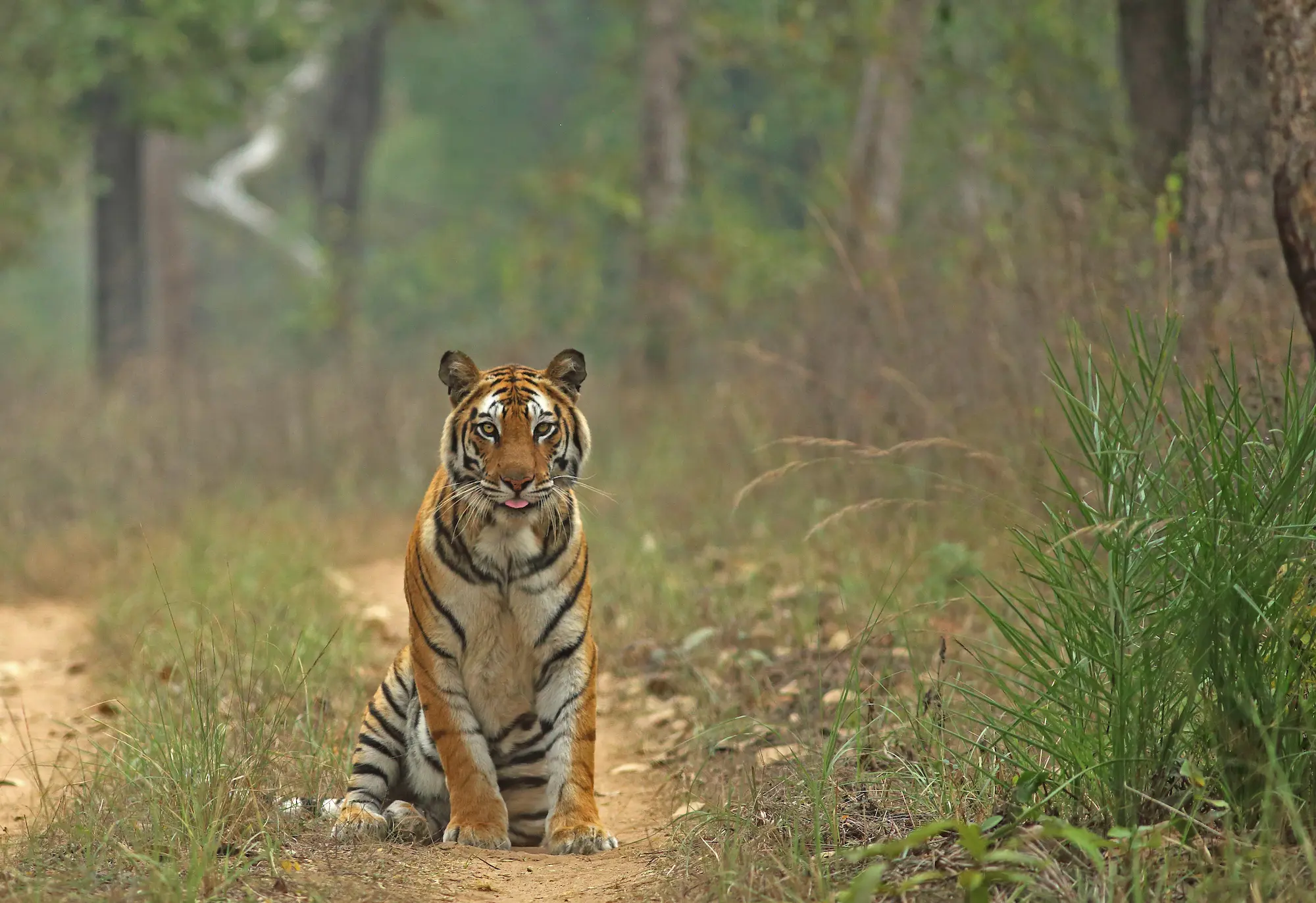
Before the eastern gate opens at dawn, the Yamuna river carries a low ribbon of mist behind the Taj Mahal. The marble is not white yet; in the cool half-light before sunrise, it holds the slate grey of the sky. You stand on the red sandstone platform, hearing only parakeets waking in the garden trees and the soft shuffle of bare feet in shoe covers. Hold that stillness in mind. Within a day on a Taj Tigers luxury safari India journey, the quiet breaks differently: the sharp, metallic alarm call of a sambar deer ringing across dry deciduous forest. Fresh pugmarks press into the cold sand of a forest track. At Just Nature Expeditions, I design this Agra wildlife expedition so two of the world's most recognisable experiences belong to one unhurried rhythm, where neither the monument nor the wilderness compromises the other.
Table of Contents
- Why Taj and Tigers Belongs in One Journey
- The Taj Mahal Done Properly
- The Tiger Half: What a Naturalist-Led Safari Actually Is
- Choosing Your Tiger Reserve
- Designing the Journey: How the Logistics Actually Work
- Staying in Style: What Luxury Means Here
- When to Go
- Practical Planning for First-Time Visitors
- Who Leads This Expedition
- Frequently Asked Questions
Why Taj and Tigers Belongs in One Journey
When international visitors or couples sit down to plan a first journey to India, they almost always face the same tension. They want to stand in front of the Taj Mahal, and they want to spend real time in the wild looking for a Royal Bengal Tiger. Yet most itineraries treat these two ambitions as separate worlds. Typically, the traveller is pushed through a hectic city circuit first, and then, almost as an afterthought, dropped into a crowded wildlife reserve for two hurried drives at the end of the week. By the time they reach the forest gate, they are exhausted.
It does not have to be designed that way. Look at a map of north and central India. The river plains around Agra give way quickly to the rocky plateaus of the Vindhya and Aravalli ranges, and beyond them to the deep sal and teak forests of central India. Human history and natural history sit side by side here. The Mughal emperors who built Agra's monuments hunted across these very forest belts; their court painters documented blackbuck, sarus cranes, and big cats with the precision of field naturalists.
What makes the pairing work emotionally is the contrast in how you pay attention. At the Taj Mahal, your eye rests on symmetry. Every carved marble dado, inlaid semi-precious stone, and water channel was calculated by human hands to create order. In a tiger reserve, nothing is symmetrical. You are looking into tangled bamboo, dry riverbeds, and dappled winter light where a two-hundred-kilogram predator can vanish behind a single clump of grass.
Why the Order and Pacing Matter
We almost always advise visiting Agra first and placing the forest second. International travel takes a toll. Stepping off a long-haul flight, adjusting to Indian time, and visiting the Taj Mahal requires very little physical exertion if the schedule is kept clean: one quiet dawn at the mausoleum, perhaps an afternoon walk through Agra Fort or across the river at Mehtab Bagh, and a proper night's sleep.
Once you leave the city behind and reach the reserve, the rhythm changes. You are waking before dawn, wrapping up against the morning chill in an open four-wheel-drive vehicle, and spending hours listening to the forest. Starting in Agra and finishing with several unbroken days in tiger habitat means your trip slows down as it progresses. You leave India with woodsmoke and forest air in your lungs rather than highway traffic.
The Taj Mahal Done Properly
The Taj Mahal does not need your adjectives. Anyone who has stood on the main gateway platform at five-thirty in the morning knows that the building speaks for itself, provided you give it the quiet it deserves. Most travellers who walk away disappointed from Agra are not disappointed by the architecture. They are worn down by poor timing: arriving at ten in the morning when the sun glares flatly off the stone and the forecourt is choked with day-trippers from Delhi.
As naturalists, we approach the Taj Mahal the exact way we approach a forest: by working around light and human traffic.
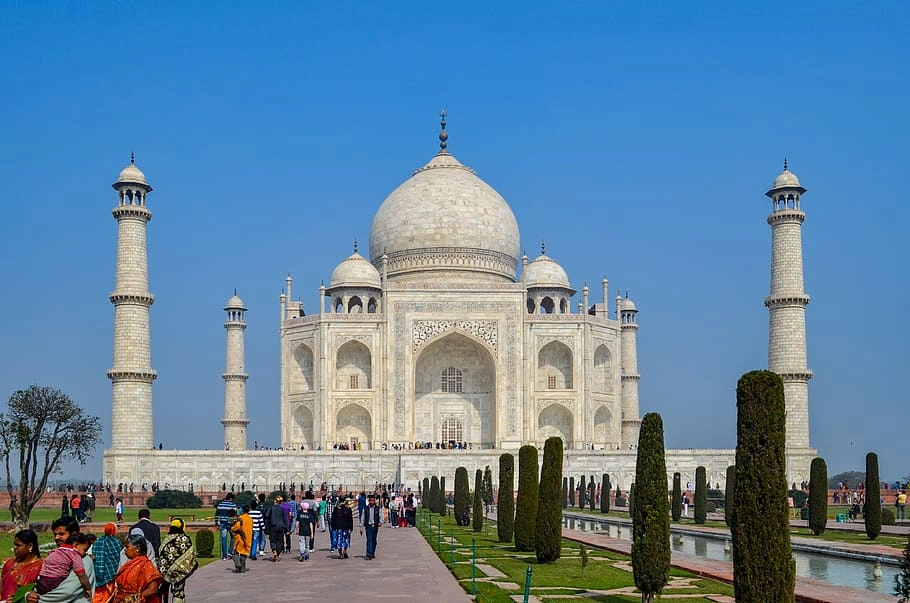
Dawn vs. Dusk: Reading the Light on Makrana Marble
The mausoleum is faced in Makrana marble from Rajasthan, a stone with a dense crystalline structure that reacts to low-angle light much like snow on a high mountain ridge:
- First light (Dawn): In the twenty minutes before and after sunrise, the stone shifts from cool slate-blue to soft rose, and finally to warm ivory. Because the overnight air cools the marble gardens, the courtyard feels calm and the birdlife (rose-ringed parakeets, black kites along the river wall, and spotted owlets in the older trees) is active.
- Midday: Avoid midday entirely. The overhead sun flattens the relief carvings, the marble radiates heat, and visitor numbers peak.
- Late afternoon from across the Yamuna: Rather than re-entering the main complex in the afternoon crowd, we often suggest watching the sunset from Mehtab Bagh, the charbagh garden directly across the Yamuna river. From there, you see the northern facade reflected in the river with space to breathe.
Practical Rules Every First-Time Visitor Needs to Know
If this is your first visit to India, the entry logistics at Agra are simple once someone explains them plainly, and frustrating if no one does. Because Archaeological Survey of India (ASI) entry windows and security protocols are updated periodically, we verify every rule for your exact travel dates before you arrive:
- Gate opening times and ticket windows: Gates traditionally open shortly before sunrise, and standing at the security queue ahead of opening is the single best investment of thirty minutes you will make in Agra.
- Weekly closure: The Taj Mahal closes to general visitors on Fridays for prayers at the mosque within the complex. When we sequence your itinerary, we build the calendar so you are never caught arriving in Agra on a Thursday night for a Friday morning visit.
- Security and prohibited items: Security at the East and West gates is strict, closer to an airport screening than a museum entrance. Large camera bags, tripods, extra batteries, food, tobacco, lighters, and charging cables are routinely held back at the gate. Carry only your passport, ticket, phone, and a single camera body with a standard lens.
- Footwear on the main plinth: To protect the marble on the upper platform, you will either step into cloth shoe covers provided near the base stairs or walk barefoot. In winter, bring a thick pair of socks in your coat pocket because morning marble in December and January is ice-cold under bare feet.
The Tiger Half: What a Naturalist-Led Safari Actually Is
On our Luxury Wildlife Holiday in India hub page, we make a simple argument: the rarest luxury in Indian wildlife travel is not thread count at the lodge, but access to genuine field knowledge in the forest. Nowhere does that distinction matter more than on a combined Taj and tiger journey.
Anyone can bolt two or three safari drives onto a Golden Triangle itinerary. What usually happens in those generic arrangements is that a hotel concierge books a seat in a shared vehicle, hands you a packed breakfast box at five in the morning, and sends you to the park gate. You sit in the back of an open jeep with a park driver and a mandatory roster escort who may speak very little English and whose primary incentive is to race to the nearest reported tiger sighting, pause for ten chaotic minutes alongside twenty other vehicles, and drive back for lunch.
If you have never been on safari in India, let me explain how the forest system actually works, and what changes when a career naturalist is in the vehicle with you.
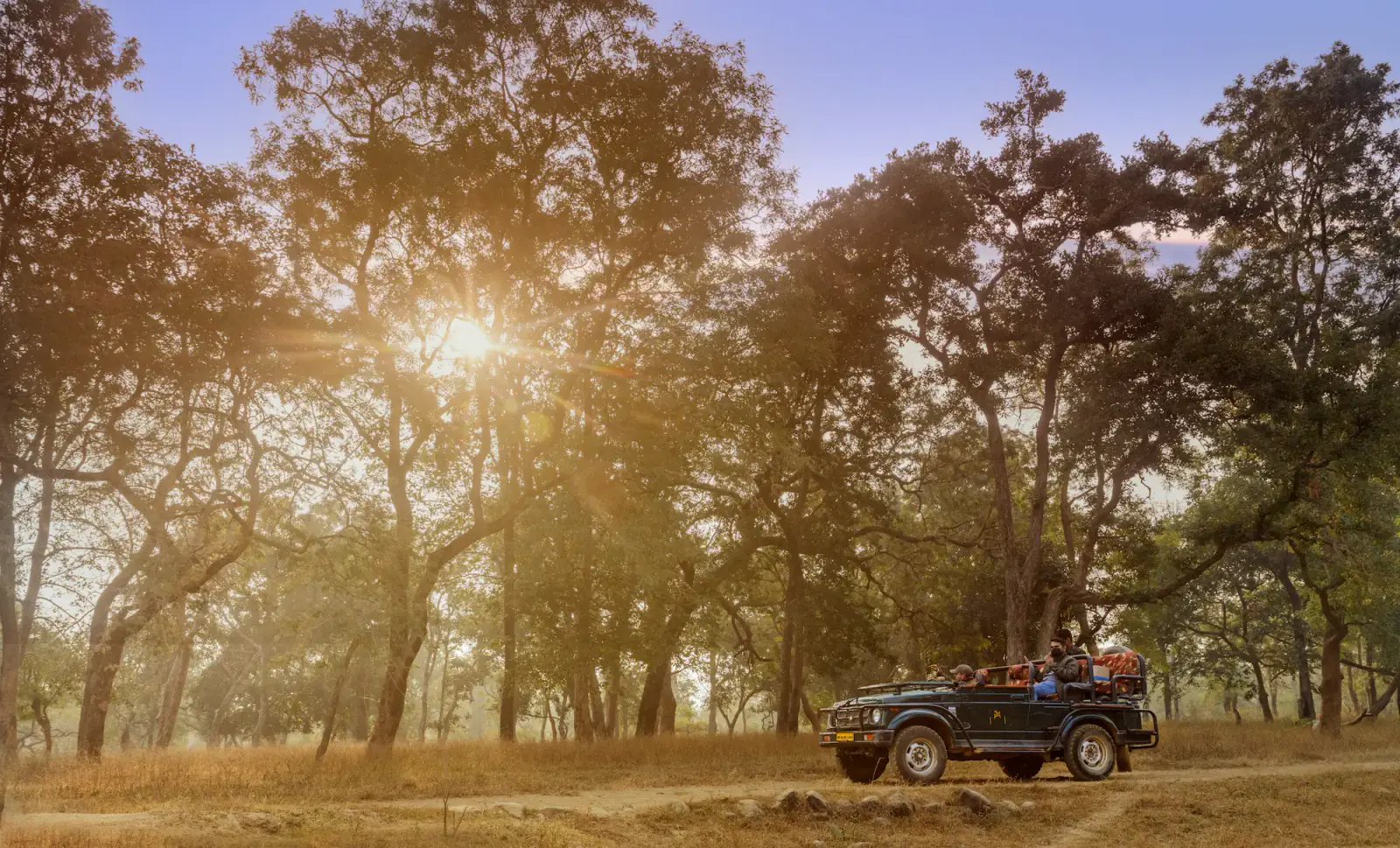
How Indian Tiger Reserves Work: Zones, Permits, and Dawn Starts
Indian national parks are strictly regulated by the Forest Department to protect wildlife from overcrowding. You cannot simply drive into a reserve whenever you choose, nor can you drive off-track through the bush:
- What a "Safari Zone" is: Most tiger reserves are divided into core zones (the central, strictly protected breeding habitat) and buffer zones (the surrounding forest where wildlife also moves freely). Each core area is further split into numbered tourism zones, with a strict cap on how many vehicles can enter each morning and afternoon.
- Why permits matter: Your entry permit locks you into a specific zone for that drive. Knowing which zones hold active territories, where water remains in a dry month, and how to secure the right combination of permits months in advance is half the battle before you even pack your bags.
- Why we start before dawn: Big cats, tigers and leopards alike (as we cover in depth in our Big Cats of India resource), are crepuscular and nocturnal hunters. They patrol territorial boundaries, scent-mark trees, and hunt while the air is cool. Those first ninety minutes after the forest gate opens at dawn are when the night's story is still written clearly in the sand of the road.
Reading the Forest: What a Naturalist Does Differently
When I step into a safari vehicle with guests who are visiting an Indian forest for the first time, I ask them to stop looking for orange and black stripes in the bushes. In dry deciduous sal, teak, or dhok forest, looking directly for a sleeping tiger is the hardest way to find one. Instead, we listen to the animals that spend their lives trying not to be eaten by one.
Here is what happens during a naturalist-led morning in the field:
1. Reading the sand: As soon as we pass the entry barrier, we look down at the dusty track. After a night of dew or wind, the road is a clean slate. We check whether the pugmarks pressing into the soil were laid down before or after the nightjar tracks and the early-morning peafowl footprints. We measure stride length, pad shape (a male tiger's front pad is noticeably squarer than a female's), and the direction of travel.
2. Triangulating alarm calls: A forest has a constant acoustic baseline. When a spotted deer (chital), a sambar stag, or a troop of Hanuman langurs sees a predator on the move, their warning calls change pitch and cadence. A langur coughing from the top of a mahua tree tells you a predator is visible from the canopy; a sambar stamping its hoof and belling from a shaded ravine tells you something large is moving through the undergrowth. A driver hears a call and accelerates toward it. A naturalist listens to whether the calls are stationary or moving along a ridge line, and positions your vehicle quietly at the natural crossing point twenty minutes ahead of the cat, engine off, waiting in silence.
3. Understanding individual territories: Tigers are not interchangeable. After years spent in central Indian reserves, our team tracks which dominant male controls a given valley, which female has cubs hidden in a rocky den, and how sub-adult siblings are being pushed toward the edges of a range. Knowing the social map of the reserve changes every decision we make at a crossroads.
Aly Rashid, Founder & Naturalist Expedition Leader
Even in the hours when no tiger walks out onto the track, you are never just rattling around in the dust. You are watching crested serpent eagles warm their wings in the sun, observing sloth bear diggings around a termite mound, or watching dholes (Indian wild dogs) whistle to rally their pack. You leave the forest understanding how an ecosystem holds together.
Choosing Your Tiger Reserve
Because a Taj & Tigers in Style itinerary is tailor-made around your dates and travel style, the choice of which reserve to pair with Agra is the single biggest design decision of the trip.
Many first-time visitors have heard of only one park near the Golden Triangle, or have no sense of how different two Indian tiger reserves can feel on the ground. Below is an honest orientation to the reserve options paired with Agra so you know what each delivers, and what trade-offs come with each. For a wider look at how all of India's premier tiger habitats compare, read our Tigers Unlimited hub.
Option 1: Ranthambhore National Park (Rajasthan)
Set where the Aravalli and Vindhya hill ranges meet in eastern Rajasthan, Ranthambhore is the classic geographic neighbour to Agra. Its dry dhok (Anogeissus pendula) scrub forest wraps around a tenth-century hilltop fort, ancient stone pavilions (chhatris), and three shallow lakes covered in water lilies.
What it offers: Visually, Ranthambhore is striking. Because the dry deciduous canopy is relatively open and tigers frequently patrol the edges of Padam Talao, Rajbagh, and Malik Talao lakes, cats here are accustomed to vehicles and often walk openly in daylight.
The honest trade-off and how our methodology adapts: Ranthambhore is a high-traffic, zone-based reserve where popular lakeside zones can feel busy when a tiger is in view. When we lead guests here, the value of having a private naturalist in your vehicle is avoiding the herd mentality: working the quieter perimeter tracks, reading alarm calls away from the main lake congestion, and positioning your vehicle ethically and patiently.
Option 2: Panna National Park (Madhya Pradesh)
Located across the border in northern Madhya Pradesh near the temple town of Khajuraho, Panna is a remarkably different wilderness, and a deeply personal territory for Just Nature Expeditions. In 2014, I spent months in Panna working on the Caracal Research and Conservation Project alongside Dr. Shekhar Kolipaka. I know its escarpments, teak plateaus, and river bends intimately.
What it offers: Panna is carved into dramatic step-like tablelands by the Ken River, one of the cleanest rivers in central India. Instead of crowded lakeside tracks, you are tracking tigers, leopards, and sloth bears beneath soaring sandstone cliffs where seven species of vultures nest on the rock ledges, and taking silent boat safaris past mugger crocodiles and gharials along the Ken. Panna is also one of the great conservation comeback stories in the world: after losing its entire tiger population to poaching by 2009, a disciplined reintroduction and protection effort rebuilt a thriving, multi-generational tiger population.
The honest trade-off: Reaching Panna from Agra involves a longer rail or air connection via Khajuraho rather than a short road transfer. In exchange, you step into a quieter, deeply atmospheric central Indian forest with far fewer vehicles at the gate. You can explore our dedicated Panna Expedition itinerary for a closer look at its gorges and habitats.
| Feature | Ranthambhore (Rajasthan) | Panna (Madhya Pradesh) |
|---|---|---|
| Primary Terrain | Dry dhok scrub hills, shallow lakes, and ancient fort ruins | Tableland teak plateaus, deep sandstone gorges, and the Ken River |
| Connection from Agra | Same-day overland or rail transfer | Rail or regional air connection via Khajuraho |
| Vehicle Atmosphere | Higher vehicle density in popular lakeside zones; strict zone permits | Noticeably quieter gates; unhurried tracking across gorge country |
| Signature Species | Tiger, leopard, sloth bear, sambar, marsh crocodile | Tiger, leopard, sloth bear, gharial, seven vulture species |
| Beyond the Jeep | Walk up to historic Ranthambhore Fort | Boat safari on the Ken River; proximity to Khajuraho temples |
An Honest Word About Tiger Sightings
If this is your first safari, someone may try to sell you an itinerary by quoting a percentage guarantee of seeing a tiger. Walk away from anyone who promises you a wild animal on cue.
A tiger reserve is not a zoo with open fences; it is hundreds of square kilometres of thorny scrub, bamboo ravines, and tall grass. Some mornings, a tigress walks straight down the centre of the forest road ten minutes after the gate opens and lies in the winter sun for half an hour. Other mornings, you find fresh pugmarks, hear a langur bark twice in a deep valley where no road goes, and spend four hours tracking a shadow that never steps into the clearing.
What we promise you is method. By scheduling enough drives in the reserve (never just a token overnight stop), securing the right zone permits in advance, and placing a dedicated naturalist in your private vehicle who knows how to read the forest, we stack the odds heavily in your favour while respecting the animal's space. And when that tiger finally steps out of the grass onto the track, the sighting feels earned.
Designing the Journey: How the Logistics Actually Work
When an international trip to India goes wrong, it almost never goes wrong at the monument or inside the national park. It goes wrong in the hours between them.
First-time visitors frequently underestimate how tiring Indian road and rail transitions can feel if they are packed back-to-back without breathing room. A poorly planned itinerary treats the map like a European motorway network: landing from an overnight international flight, driving straight to Agra in midday heat, rushing the Taj Mahal in the afternoon crowd, waking at dawn for a long road transfer, and trying to make an afternoon safari drive the same day. By day three, you are too tired to enjoy where you are.
Designing a seamless Taj & Tigers in Style tailor-made itinerary is an exercise in logistics and pacing. We build every private departure around three structural rules.
1. Where Buffer Time Belongs
- On arrival: After landing at your international gateway, your first evening is for rest, a quiet meal, and resetting your body clock, rather than jumping straight onto a highway or into a sightseeing queue.
- Around the Taj Mahal: We position you in Agra the afternoon before your main Taj Mahal visit. That allows you to wake close to the gate, enter at first light when your mind is fresh, and return to your hotel for a late breakfast while the day-trip buses are just arriving.
- Entering the forest: On the day you travel from Agra to the tiger reserve, we prefer you arrive at the lodge in time for lunch or afternoon tea, settle into your cottage, meet your naturalist over an evening briefing by the fire, and start your first safari the next morning at dawn.
2. Why Six to Eight Safari Drives Is the Real Threshold
A common mistake on combined cultural and wildlife trips is booking two nights at a safari lodge and assuming that equals "two days of safari." In practice, two nights often yields only three drives, and if one of those drives is in a quieter buffer zone or during a windy afternoon when alarm calls are hard to hear, your margin for finding a tiger shrinks dramatically.
We recommend staying in the reserve long enough for a minimum of six to eight morning and afternoon drives. That gives your naturalist time to build a picture of where the cats are moving across consecutive days. What you hear but do not see on Tuesday afternoon often tells your naturalist exactly where to wait at six o'clock on Wednesday morning.
3. Sample Pacing Architecture (Tailor-Made Framework)
| Stage | Focus of the Days | Pacing Principle |
|---|---|---|
| Stage 1: Arrival & Reset | International arrival at gateway city; private transfer to hotel; unhurried evening rest | Absorb time-zone shift before any early morning starts |
| Stage 2: Agra & The Taj Mahal | Travel to Agra; optional sunset view across the Yamuna; next-morning dawn entry at the Taj Mahal with private historian | Experience the Taj Mahal at first light before crowds build; leave midday free |
| Stage 3: The Forest Transition | Private overland or rail/air transfer from Agra to your chosen tiger reserve | Treat transfer day as a rest and orientation day; evening briefing with your naturalist |
| Stage 4: Deep in the Reserve | Multiple full days of morning and afternoon private 4x4 safaris (plus boat or buffer walks where permitted) | Unbroken days in the field allow your naturalist to track individual tiger territories across drives |
| Stage 5: Unhurried Departure | Final morning drive or relaxed lodge breakfast; private transfer back to gateway airport | Generous buffer time before international evening flights |
Staying in Style: What Luxury Means Here
Let us be straightforward about comfort. If you are travelling to India for the first time, planning a honeymoon or milestone anniversary, or bringing your family on a private holiday, where you sleep and how you are looked after at the end of a dusty morning drive matters enormously.
When we talk on our Luxury Wildlife Holiday in India hub about luxury being defined by access rather than excess, we do not mean roughing it. We mean choosing properties that understand the rhythm of the places they sit in, rather than glass-and-marble city hotels transplanted to the edge of a forest.
What We Look for in Agra and Wilderness Properties
Because our founder spent over seven years heading the naturalist team at Reni Pani Jungle Lodge, one of central India's finest wilderness camps, we judge safari lodges from the inside out. When selecting properties for your itinerary, we look for four things:
- Proximity to the entry gates: The most opulent suite in the region ceases to feel luxurious if it sits forty-five minutes down a potholed highway from the core safari gate. We prioritise lodges positioned close to the forest boundary so you sleep later before dawn drives and return quickly for a hot shower afterwards.
- Low-density architecture and quiet grounds: In the forest half of the trip, we work with intimate, low-impact wilderness lodges and tented camps set in native vegetation or restored buffer land. Between drives, you should be able to sit on your verandah with a book and watch paradise flycatchers, treepies, and langurs in the trees around your cottage.
- Warmth that fits the climate: Winter mornings in northern and central India are genuinely cold. Proper luxury after a dawn drive in January means a hot water bottle tucked into your blanket before you climb into the jeep at five-thirty, steaming masala chai poured from a flask during your mid-morning forest breakfast, and a wood fire waiting at dinner.
- Restraint for couples and celebration travellers: Many of our guests on this route are couples marking a wedding, honeymoon, or anniversary, or families wanting private time together. You do not need forced clichés or staged resort theatrics. A private candlelit dinner under a mahua tree after a day of tracking tigers, an uncrowded plunge pool in the afternoon heat, and a vehicle strictly to yourselves in the field let the setting do all the work.
When to Go
Because this itinerary joins a river-plain city with a wild forest ecosystem, every month between autumn and early summer shifts the balance between human comfort in Agra and wildlife visibility in the reserve. India's core tiger reserves close during the heavy southwest monsoon rains and reopen in October.
October to November: The Post-Monsoon Opener
When the forest gates reopen in October, the monsoon has washed the dust from every leaf in northern and central India. In the forest, the sal, teak, and dhok canopy is lush and deep green, seasonal streams are still flowing, and the morning light is clean and crisp. Because water and cover are abundant, tracking requires patience and sharp ears: your naturalist relies heavily on alarm calls and road pugmarks rather than waiting by waterholes. In Agra, daytime temperatures are warm but manageable, the air is clearer than in deep winter, and the gardens around the Taj Mahal are fresh from the rains.
December to February: Crisp Winter Days and Cold Dawns
This is the classic peak window for international visitors escaping the northern hemisphere winter. Daytime temperatures in the forest are glorious, and migratory birds, from bar-headed geese to winter raptors and flycatchers, fill the wetlands and river gorges. Dawn drives, however, are bitingly cold in an open vehicle, and tigers often seek out the warm dust of the forest tracks or flat sun-warmed rocks in the first two hours after sunrise.
The Agra Fog Factor: Honest planning for late December and January requires factoring in northern India's winter radiation fog. On very cold, windless mornings along the Yamuna river, dense fog can veil the Taj Mahal right at sunrise and lift only by mid-morning. When we design winter itineraries in late December or January, we often recommend keeping both a sunset viewing window and a morning window open in Agra so winter mist never steals your clear view of the marble.
March to Early Summer: Dry Heat and High Sighting Concentration
As spring turns toward April and May, the deciduous trees drop their leaves, the forest floor turns copper and gold, and seasonal streams dry back to a handful of permanent waterholes and river pools. If your primary focus is maximising big cat sightings and behaviour photography, these warmer months are extraordinary. Tigers cannot wander far from water during the heat of the day; they come down to cool off in shaded pools and rocky streams, where a patient naturalist can observe them for long stretches. In Agra, afternoon heat in April and May is intense, so we schedule all architectural visits strictly at dawn and keep midday completely free.
Practical Planning for First-Time Visitors
If you have never travelled to India, or never been on a wildlife expedition, much of the anxiety around planning comes from not knowing what happens on the ground between point A and point B. Here are the practical fundamentals to know before you book.
1. Arrival Gateway and Internal Connections
For almost all international travellers arriving from the UK, Europe, North America, or Australia, New Delhi is the natural entry and exit gateway. From the moment you clear customs, a private expedition means you are met personally at the arrivals hall, handed to a dedicated driver in a clean, comfortable vehicle, and assisted through every hotel check-in, train platform, or regional airport transfer. You never have to negotiate station platforms, highway tolls, or park gate paperwork on your own.
2. Visas and Safari Permits (And Why Lead Time Matters)
Two pieces of documentation govern your timeline:
- Indian Visa: International visitors require a valid visa prior to boarding their flight to India. Most nationalities use India's official electronic tourist visa (e-Visa) system. Always apply only through the official government portal and check that your passport holds at least six months' validity from your arrival date with two blank pages.
- Forest Department Safari Permits: Core zone permits in premier tiger reserves are issued against your exact passport number and name, and they open for booking months in advance. Because core vehicle numbers are strictly capped each day, reaching out early (ideally four to nine months before your travel window) gives us the best hand when securing prime zones and intimate wilderness lodges.
3. What to Pack for Agra and the Forest
Packing for a combined Taj and tiger journey is simpler than most first-timers expect, provided you dress for two microclimates: the marble courtyard in Agra and an open four-wheel-drive vehicle moving through shaded forest at six in the morning.
- Muted earth tones for the forest: Pack neutral greens, khakis, browns, and greys for safari drives. Avoid bright white, neon colours, or stark black, which stand out visually against dry deciduous brush when you are watching wildlife at close range.
- Layered warmth for winter dawns: Between November and February, temperatures in an open moving jeep before sunrise feel significantly colder than the daytime forecast suggests. Bring a thermal base layer, a fleece, a windproof down jacket, a warm beanie, and gloves that you can peel off layer by layer as the sun climbs by nine o'clock.
- Dust and sun protection: A soft cotton scarf or buff, polarized sunglasses, a wide-brimmed hat that stays on in a moving vehicle, and high-SPF sunscreen are essential on open forest tracks.
- Modest, comfortable walking attire for Agra: Light, breathable linen or cotton clothing that covers shoulders and knees works best for Agra's monuments, paired with slip-on walking shoes that are easy to remove or cover at the Taj Mahal plinth.
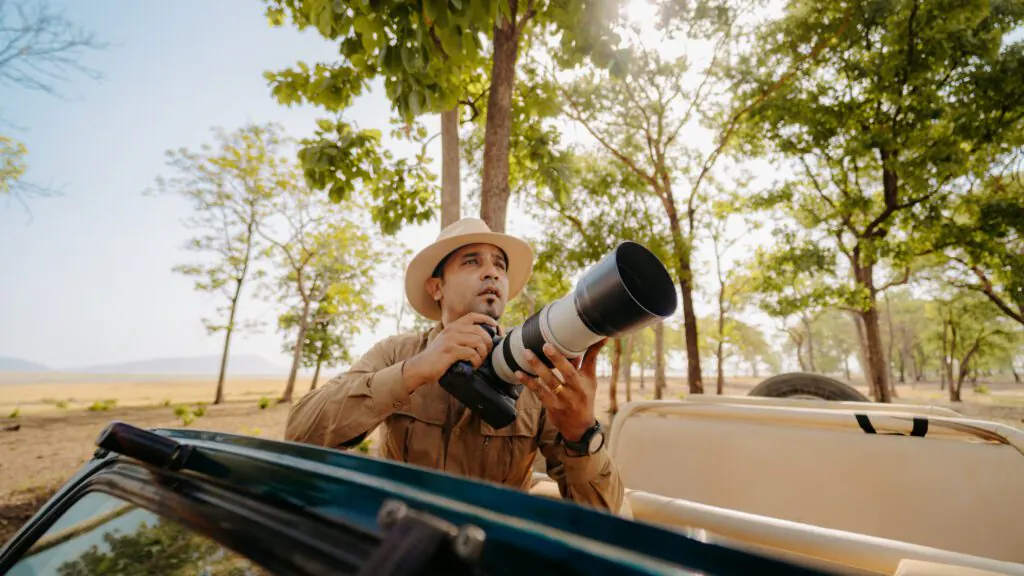
- Optics and camera gear: Bring a good pair of 8x42 or 10x42 binoculars so you do not have to share when a leopard is spotted high on a rocky cliff. If you enjoy photography but do not want to haul heavy telephoto lenses on international flights, Just Nature Expeditions also operates a dedicated in-house camera and lens rental service for our guests.
Who Leads This Expedition
When you travel with Just Nature Expeditions, you are not handed over to a chain of local subcontractors who have never met one another. Our company was founded in Bhopal by naturalists who spent their careers working on the ground in central India's forests before ever designing itineraries for guests.
Aly Rashid, our founder and expedition leader, is a trained naturalist and ornithologist who spent more than seven years heading the naturalist team at Reni Pani Jungle Lodge in Satpura. A member of the royal family of Bhopal who chose a life in the bush over city life, Aly led field research on the elusive caracal in Panna National Park in 2014 alongside Dr. Shekhar Kolipaka, conducted camera-trap studies on central Indian predators, and authored the published book Tales from the Bush: A Peek into the World of Satpura.
Depending on your dates and reserve, you will be accompanied in the field by Aly or by our core senior naturalists:
- Erwin D'rose (Senior Naturalist): Over eight years as a naturalist at Reni Pani Jungle Lodge and five years in Kanha National Park studying tiger behaviour and territorial dynamics first-hand.
- Shivraj (Naturalist & Wildlife Photographer): More than twelve years in the field across Kanha, Panna, Bandhavgarh, and Satpura, combining sharp predator tracking with practical field mentoring for guests who want to photograph what they see.
You can read the full biographies and field backgrounds of our team on our Expedition Leaders page.
Frequently Asked Questions
Can you combine the Taj Mahal with a tiger safari in India?
What is the best time of year for a Taj Mahal and tiger safari trip?
How many days do you need for a Taj Mahal and tiger safari?
How likely am I to see a tiger on a safari in India?
Is a luxury tiger safari in India suitable for a honeymoon?
Do I need a visa for a wildlife trip to India?
Begin Designing Your Journey
Because Taj & Tigers in Style is a 100% tailor-made private expedition, there are no fixed departure dates to squeeze into and no preset group schedule to follow. We build each journey from a blank sheet of paper around the people travelling.
When you reach out to us, your first conversation is not with a call-centre salesperson reading from a brochure. You will speak directly with our team to work through four practical questions:
- Your travel window: How the season you are considering affects light at the Taj Mahal, temperatures in the vehicle, and wildlife movement in the forest.
- The right tiger reserve for you: Whether the fort-and-lake drama of Ranthambhore or the quiet river gorges of Panna better suits your interests and available days.
- Your pace: How many mornings you want in the field, and where to build quiet afternoons so the journey feels restorative from start to finish.
- Your comfort preferences: Selecting the right combination of heritage stays and intimate wilderness lodges for your trip.