Across India's most celebrated tiger reserves, an identical version of the "luxury safari" is sold every season. It begins in an exquisite tented suite with private plunge pools and copper bathtubs, transitions into a sunrise jeep drive along designated zone tracks, and concludes with vintage champagne served on a wooden deck overlooking a watering hole. It is undeniably comfortable. It is also an illusion of exclusivity. When that jeep enters the park gate, it joins the exact same queue, traverses the exact same graded road, and parks behind the exact same cluster of diesel vehicles as the visitor who paid a tenth of the price. The luxury ends at the resort boundary. True exclusivity in the natural world cannot be constructed out of polished teak, imported linens, or silver service. India's most exclusive wildlife encounters don't happen at 5-star resorts overlooking tiger reserves. They happen when Aly Rashid leads you through Satpura at first light, before any other vehicle is on the track.
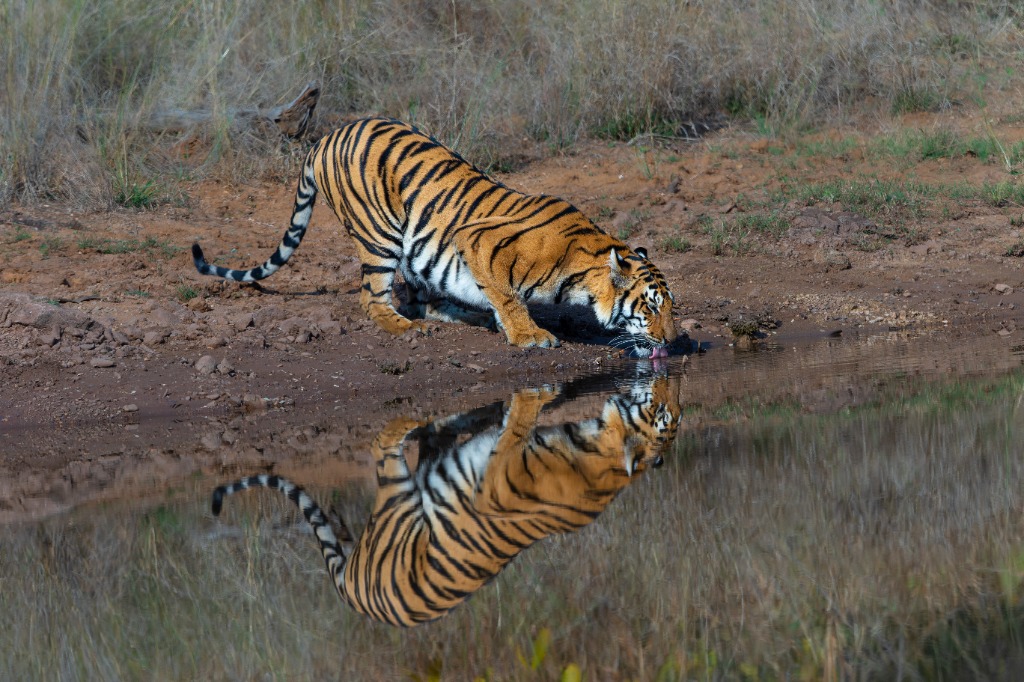
Table of Contents
- Redefining Luxury in the Wild
- The Founder: A Royal Who Chose the Forest
- What a Luxury Wildlife Holiday Actually Looks Like
- The Expeditions: Where Luxury Meets the Wild
- India's Wildlife Landscape: What Every HNI Traveller Should Know
- Bespoke Luxury: Building Your Expedition
- What Our Guests Say
- Frequently Asked Questions
- The Conversation Starts Here
Redefining Luxury in the Wild
In the luxury travel market, commercial hospitality has conditioned guests to evaluate experiences by tangible comforts: room dimensions, butler ratios, spa menus, and private dining settings. When applied to the Indian wilderness, this framework creates an immediate contradiction.
Wild nature does not yield to capital. A Bengal tiger does not adjust its patrol route because a guest has booked the presidential villa at a premier lodge. A leopard will not descend from a granite boulder in Jawai for a bespoke sundowner. When conventional travel operators attempt to manufacture luxury in the bush, they almost invariably overcompensate on the domestic perimeter by building heavier, more opulent physical barriers between the guest and the wild, while outsourcing the actual wilderness experience to whoever happens to be assigned to drive the morning safari vehicle.
For high-net-worth travellers who have already stayed at the finest wilderness lodges in the world, this model quickly reveals its shallowness. You wake up in world-class accommodation, only to spend four hours idling in zone traffic, listening to static crackling over park radios, arriving at a sighting ten minutes after fifty other people have already surrounded it.
At Just Nature Expeditions, we operate on a fundamentally different premise: in the wild, the only rarity that matters is access.
Access does not mean breaking park regulations or encroaching upon wildlife. Access means intellectual, temporal, and spatial advantage. It means:
- Temporal Advantage: Being positioned at a dry riverbed crossing thirty minutes before an alarm call sounds, because your naturalist knows the resident tigress has cubs hidden in the nullah three kilometres upstream.
- Methodological Advantage: Knowing how to read the tension in a herd of chital, the angle of a langur's gaze in the mahua canopy, or the freshness of a scrape on a Terminalia arjuna trunk without waiting for a radio dispatch.
- Spatial Advantage: Designing expeditions across private concessions, wilderness corridors, and non-congested park zones where the vehicle in front of you and the vehicle behind you do not exist.
- Intellectual Access: Sitting beside someone who has spent twenty years studying predator ethology, who can decode the subtle acoustic difference between a sambar's leopard bark and its tiger alarm, transforming a passive sighting into a masterclass in ecology.
- Aly Rashid, Founder & Expedition Leader
When you strip away the marketing gloss, the rarest commodity in India is not a five-star suite. India has hundreds of magnificent hotels. What it has in vanishingly short supply are master field naturalists who have spent decades living inside these ecosystems, who track because it is their life's work, and who choose to share that work with only a handful of guests each season.
The Founder: A Royal Who Chose the Forest
To understand why Just Nature exists, one must understand the background of the person who built it.
Aly Rashid is a member of the royal family of Bhopal. In India, royal heritage is frequently commodified by luxury travel agencies as decorative branding: a coat of arms printed on an itinerary, a heritage haveli converted into a boutique hotel, or a curated dinner under sandstone arches. For Aly, that lineage represents something entirely different: a lifelong familiarity with what authentic, uncompromised quality actually entails. When you grow up in a lineage where refinement is an inheritance rather than an aspiration, you do not need to perform luxury. You understand its essence: precision, discretion, restraint, and an absolute refusal to accept mediocrity.
Yet rather than remaining within the comfortable perimeters of ancestral estates, Aly chose the forest. He trained formally as a field naturalist and ornithologist, authoring Tales from the Bush: A Peek into the World of Satpura and spending more than seven years heading the naturalist operations at Reni Pani Jungle Lodge, widely recognised as one of India's benchmark wilderness camps. Over decades of walking Satpura's rugged sandstone gorges, tracking caracals in Panna, and following the ghosts of Hemis in winter, he established a national reputation acknowledged across Outlook India, ANI News, Nature inFocus, and the Bhopal Literature Festival.
The significance of this biography for a high-net-worth traveller is singular: it resolves the tension between comfort and authentic wilderness.
Too often, wildlife journeys in India force an unacceptable compromise. You either choose an ultra-luxury lodge where the hospitality is flawless but the guiding is pedestrian, or you hire an obsessive field tracker whose wilderness skills are unmatched but whose logistical arrangements are chaotic and uncomfortable. Aly Rashid built Just Nature to extinguish that compromise forever. Having lived at the highest levels of Indian society and spent his working life in the dust of the bush, he knows how to orchestrate private aviation transfers, source exceptional wilderness bases, and respect an HNI guest's privacy, while ensuring that once the vehicle leaves the perimeter, the fieldcraft is among the most uncompromising and scientifically grounded on the Asian continent.
What a Luxury Wildlife Holiday with Just Nature Actually Looks Like
To understand the operational difference between a standard five-star safari and a Just Nature expedition, consider a typical morning in the field.
On a standard luxury lodge itinerary, your morning begins with a wake-up call, a tray of tea, and a departure through the main park gate alongside thirty other vehicles. You drive the designated speed limit along primary tourist routes. If a tiger is sighted near the road in Zone 2, your driver's phone or radio alerts him. He accelerates to the spot. When you arrive, seven vehicles are already idling there. You jockey for a viewing angle between lens hoods. You watch the animal for eight minutes before park regulations or the press of vehicles forces your driver to move forward. You return to the lodge for a lavish breakfast, satisfied that you "saw the cat," but completely disconnected from how or why it was there.
Now consider the Just Nature methodology:
We do not hunt sightings; we decipher landscapes. Your morning begins well before dawn, moving into peripheral buffer zones or exclusive entry gates that general tourism neglects. There are no radios crackling in our vehicles. In their place is a stillness so complete you can hear the morning dew dropping from the sal leaves.
Erwin D'rose, who spent five continuous years in Kanha documenting tiger behavioural ecology, or Aly Rashid himself, is at the wheel or in the tracker's seat. He is not looking down the road; he is reading the margins. He notices that the dry mud along the culvert has been scuffed within the last twenty minutes. He kills the engine.
For fifteen minutes, you do not move. You listen. At first, you hear nothing. Then Erwin points to the canopy three hundred metres away: the high-pitched, staccato warning chirp of a lone common langur. A minute later, a sambar stag bellows from the bamboo thicket: deep, resonant, and terrified.
Erwin does not rush toward the sound. He evaluates the wind direction, the gradient of the ridge, and the territory of the specific animal he knows occupies this nullah: a nine-year-old male whose mother he tracked a decade ago. He repositions the vehicle four hundred metres down-valley, turning off the ignition beside a dry stream bed where the animal's territorial scent marks are renewed every three days.
Ten minutes later, the male tiger emerges from the tall grass, stepping directly onto the sandy bed precisely where predicted. There is no other vehicle within five kilometres. You do not spend eight hurried minutes taking snapshots over someone's shoulder; you spend forty-five unhurried minutes observing the predator drink, scent-mark a trunk, and vocalise to mark his boundary. When the animal slips back into the sal forest, you do not immediately start the engine. You sit in silence, listening as the forest slowly exhales and returns to balance, while your naturalist explains the exact biomechanics and territorial dynamics you just witnessed.
This is the distinction. The luxury is not the vehicle; it is the mind operating inside it.
The Expeditions: Where Luxury Meets the Wild
Every expedition in our luxury portfolio has been designed from first principles. We do not operate off-the-shelf tour departures. We lead small, private journeys engineered for travellers who demand intellectual depth alongside seamless logistical execution.
Tigers Unlimited: Central India's Premier Habitats
Central India's teak and sal forests remain the global epicentre of wild tiger conservation. Yet visiting them through standard commercial itineraries often yields disjointed, crowd-heavy safaris. Tigers Unlimited is our answer: an expansive, multi-reserve private expedition linking the dry deciduous canyons of Satpura, the sprawling meadows of Kanha, and the high-density tracts of Bandhavgarh. Led personally by Aly Rashid and Senior Naturalist Erwin D'rose, this journey avoids mass-market zone circuits, combining private wilderness drives, walking safaris in Satpura's core buffer, and deep behavioural tracking across diverse ecosystems.
Jawai: The Leopard Landscape of Rajasthan
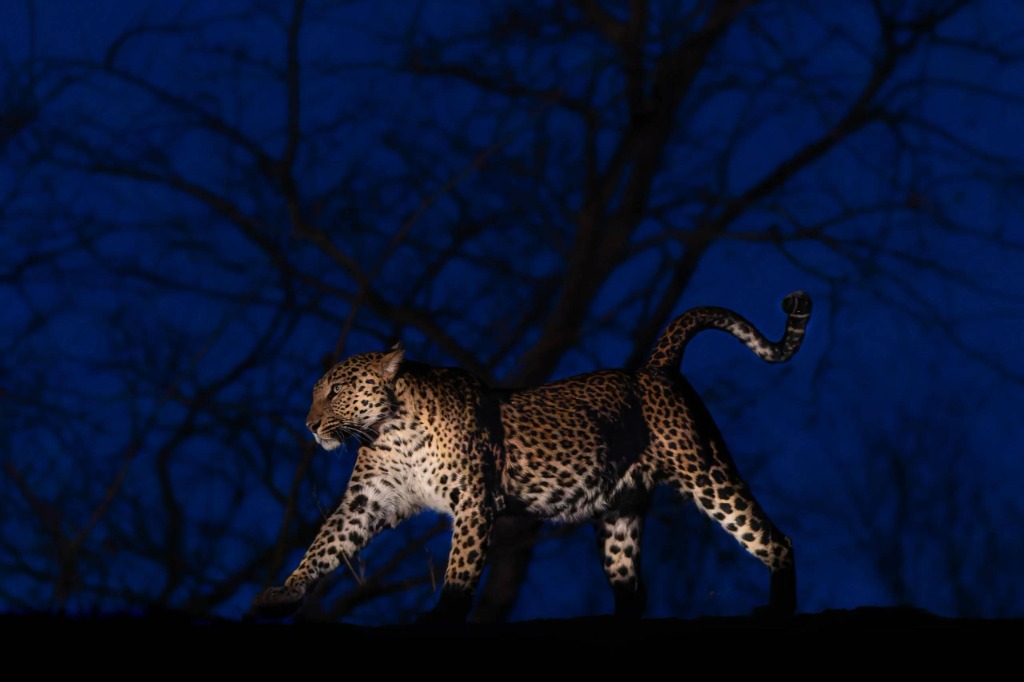
Set against an ancient landscape of billion-year-old granite monoliths and arid scrub, Jawai represents one of the most remarkable wildlife spectacles on earth: an ecosystem where wild leopards coexist peacefully with the semi-nomadic Rabari pastoralists. Our Jawai Expedition bypasses standard resort jeep routes to offer private, unhurried tracking across private pastoral lands and granite boulder complexes. Here, under the dramatic desert light of southern Rajasthan, guests witness leopards living on temple hillsides, tracking them with naturalists who have worked alongside local pastoral trackers for more than a decade. Explore our dedicated Jawai Leopard & Rabari Coexistence Field Guide to learn how we track across these granite domes.
Taj & Tigers in Style: Two Icons, One Seamless Journey
For international travellers seeking to combine India's cultural crown jewel with its greatest wildlife predator, standard itineraries are notorious for exhausting road transfers and chaotic crowds. Our Taj & Tigers in Style expedition reconceptualises this classic route. By coordinating private charters, dawn access to the Taj Mahal before the complex opens to tour buses, and immediate transfers into the tranquil wilderness of Panna or Ranthambhore's private buffer zones, we deliver an unhurried, dual-icon journey where historic architecture and wild apex predators are experienced with equal refinement.
Snow Leopard Tracking: Ladakh and Spiti
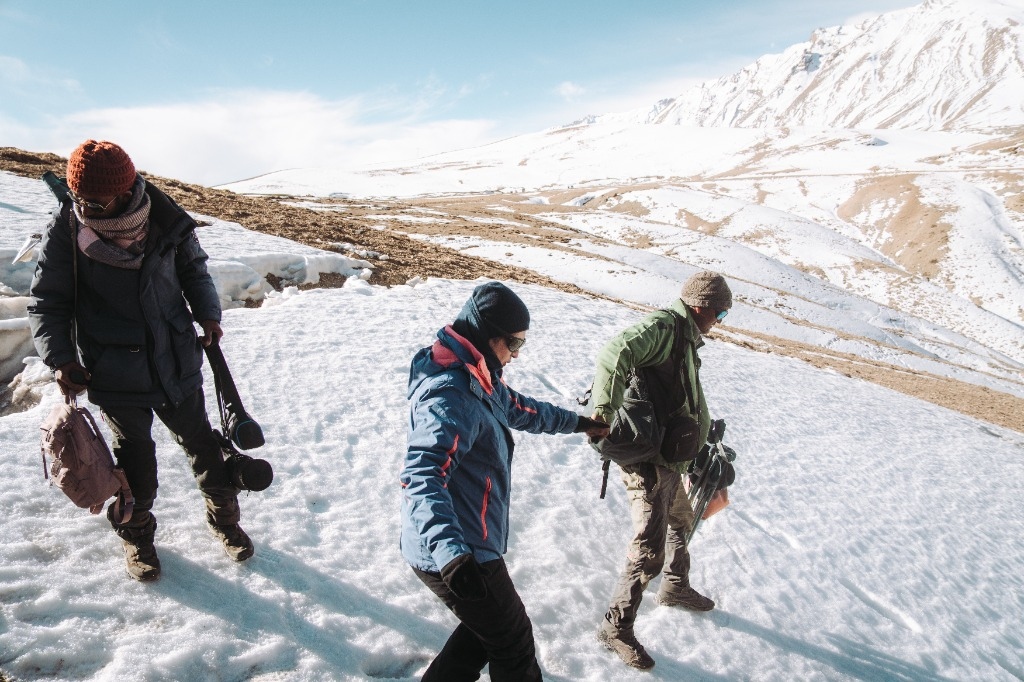
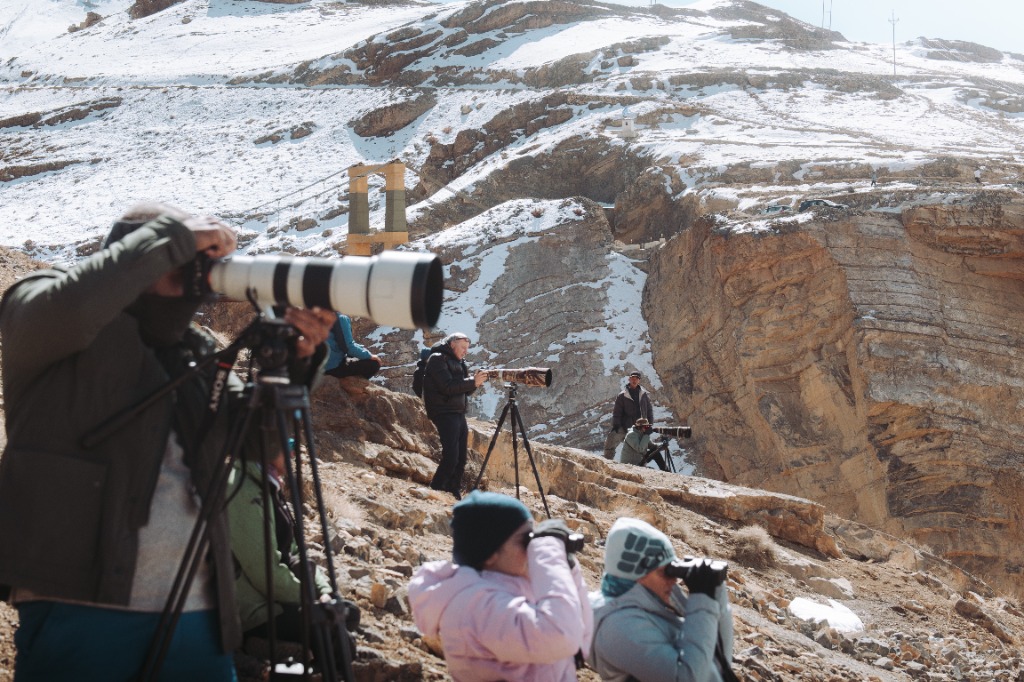
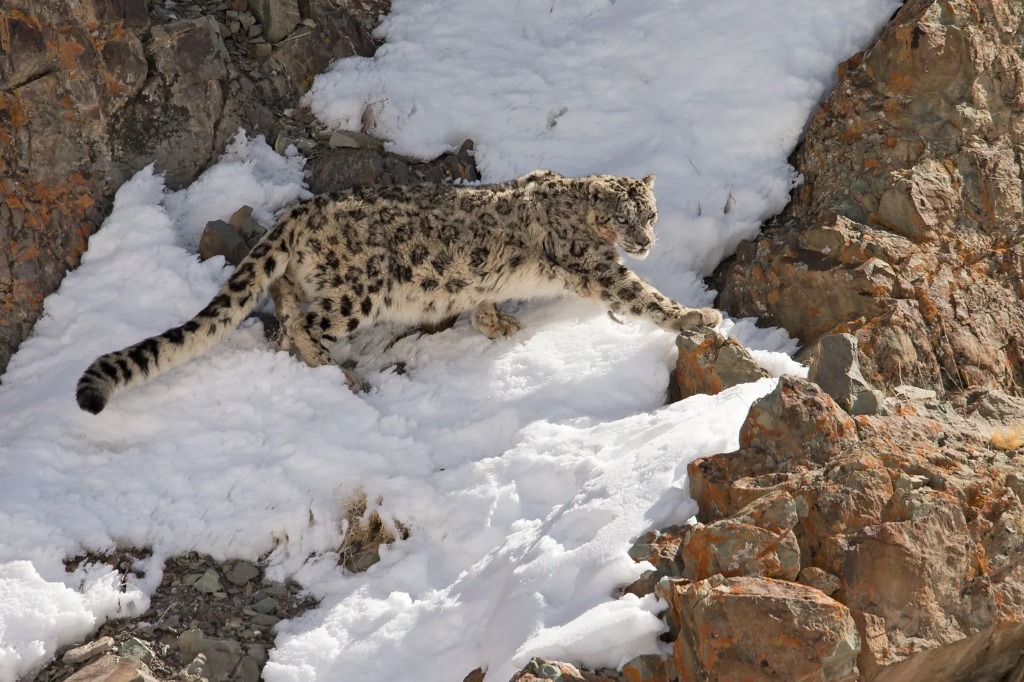
The high-altitude cold deserts of the Western Himalaya host the ultimate test of wilderness tracking: Panthera uncia, the ghost of the mountains. At 14,000 feet, standard tourist operations rely on basic homestays and crowded spotter networks. Just Nature's Snow Leopard Expeditions in Ladakh and Spiti elevate high-altitude tracking into a sophisticated private expedition. Utilizing heated all-weather dome camps, private high-altitude medical support, and legendary local Ladakhi trackers working exclusively under our expedition leaders, we offer the most exclusive, scientifically rigorous big-cat encounter in Asia.
The Big Cats of India Portfolio
For travellers who wish to experience the full spectrum of Asian feline diversity, our Big Cats of India master expedition unites the royal Bengal tiger, the Indian leopard, the snow leopard, and the last remaining wild population of the Asiatic lion in Gujarat's Gir Forest. Spanning four distinct geographic biomes over two weeks, this is India's most ambitious private naturalist odyssey, handled end-to-end with private aviation and founder-led field leadership.
Beyond Borders: The Global Naturalist Portfolio
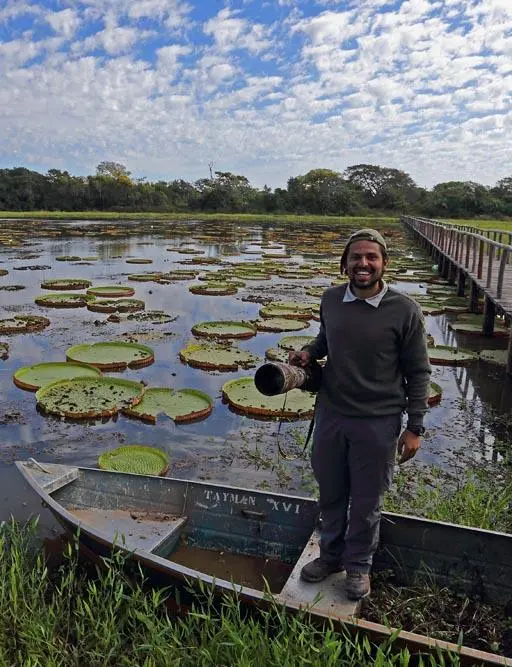
The standard of naturalist leadership that defines Just Nature in India extends to our private international expeditions. For clients who have explored the subcontinent with us, we lead small private journeys to Brazil's Pantanal for wild jaguars, Kenya's Masai Mara for private conservation conservancy tracking, the ancient dipterocarp rainforests of Borneo, and the marine and leopard habitats of Sri Lanka. Across every continent, the methodology remains unchanged: founder-led access, uncompromised fieldcraft, and zero crowd tolerance.
India's Wildlife Landscape: What Every HNI Traveller Should Know
When planning a high-end safari in Africa, the geography is relatively straightforward: the savannahs of the Serengeti and Masai Mara offer open-plains visibility, while the Okavango Delta presents seasonal floodwaters. India, by contrast, is an ecological continent disguised as a country. Its wildlife cannot be understood through a single destination, and no single lodge network can cover its breadth.
To design an exceptional holiday, discerning travellers must understand India's five primary wilderness biomes:
| Region | Primary Habitats | Flagship Species | Optimal Season | The Just Nature Advantage |
|---|---|---|---|---|
| Central Indian Highlands | Sal forest, mixed deciduous, sandstone canyons (Kanha, Satpura, Bandhavgarh, Panna) | Royal Bengal Tiger, Sloth Bear, Leopard, Dhole, Hardground Barasingha | October to May (Peak: Feb–May) | Deep territory knowledge; exclusive walking safaris in Satpura; private buffer concessions avoiding convoys. |
| Western Himalaya & Trans-Himalaya | High-altitude cold desert, scree slopes, river gorges (Ladakh, Spiti) | Snow Leopard, Tibetan Wolf, Himalayan Ibex, Blue Sheep, Eurasian Lynx | December to March | Dedicated heated mountain bases, private oxygen/medical protocol, generational local spotters. |
| Arid Granite & Scrublands | Granite boulder hills, dry thorn forest, ravines (Jawai, Ranthambhore) | Leopard, Striped Hyena, Desert Fox, Marsh Crocodile | October to April | Off-track private pastoral access in Jawai; private property transit; sunrise light positioning. |
| Western Ghats Escarpments | Dense wet evergreen rainforest, montane shola grasslands (Amboli, Nilgiris) | Endemic Herpetofauna, Malabar Pit Viper, Lion-tailed Macaque, King Cobra | July to September (Monsoon expeditions) | Micro-wilderness night walks; advanced macro-photography field lighting led by published naturalists. |
| Eastern Himalaya & Sub-tropics | Temperate rhododendron & bamboo forest, wetlands (Singalila, Kaziranga) | Red Panda, Greater One-horned Rhino, Clouded Leopard, Asian Elephant | October to April | Historic colonial Land Rover tracking in Singalila; specialized foothill bird and mammal tracking. |
Very few luxury travel operators in India possess genuine, in-house operational competence across all five of these ecosystems. Hotel chains operate properties only where large commercial footprints are viable. Boutique travel agencies subcontract ground handling to third-party regional vendors.
Just Nature stands apart because our expedition leaders have lived and worked across these specific landscapes for decades. When you move from tracking tigers in the dry teak forests of Central India to following snow leopards at minus twenty degrees in Ladakh, you are not handed off to an unfamiliar subcontracted agency. Your journey is overseen by an integrated naturalist team that maintains the same exacting standards of safety, intellectual rigor, and discretion across every biome.
Bespoke Luxury: Building Your Expedition
True luxury is never pre-packaged. When a luxury agency presents you with a static brochure featuring fixed departure dates and generic daily schedules, they are prioritizing their operational efficiency over your wilderness experience.
At Just Nature, every luxury wildlife holiday is a bespoke commission. We view an expedition as a collaborative architectural project designed around your family or travel group:
1. The Naturalist Consultation
The planning process does not begin with a sales representative asking for your budget. It begins with a direct consultation with our founder or senior naturalist team. We explore your wilderness history: Have you tracked big cats in Africa or South America? Are you focused on predator behavioural photography, or do you prefer an unhurried, multi-disciplinary ecological overview? Are there multi-generational family dynamics, physical considerations, or particular species obsessions that must shape the route?
2. Temporal and Seasonal Calibration
The timing of your journey is calibrated down to the week, not just the month. If your objective is dramatic tiger photography near waterholes, we may place you in Central India in late April when high ambient temperatures force predators into predictable watering routines. If you prefer crisp morning light, vibrant bird migrations, and emerald forest canopies, we will route you through Satpura and Kanha in November or February.
3. Hand-Picked Wilderness Accommodations
Because we are independent naturalists and not a hotel brand, we have no contractual obligation to force you into a specific lodge chain. We select your accommodations based solely on field proximity, architectural authenticity, and environmental discretion. Where an ultra-luxury jungle camp offers genuine conservation credentials and private park access, we partner with them; where a remote wilderness area has no commercial five-star hotels, we erect our own fully serviced, private luxury mobile camps (complete with private chefs, heated en-suite canvas bathrooms, and curated dining under the stars), placing you directly in the habitat while maintaining absolute personal comfort.
4. Seamless Private Aviation and Ground Logistics
India's wilderness gems are rarely adjacent to commercial international airports. To protect your time and eliminate grueling commercial connections, we orchestrate private fixed-wing and helicopter charters connecting Delhi, Mumbai, or Jaipur directly with airstrips near Panna, Kanha, Jabalpur, or Leh. From the tarmac, you step directly into our private expedition vehicles, avoiding public transit hubs entirely.
5. The Small Group Ethos
We enforce an unyielding limit on group sizes. While commercial safari operators fill vehicles with six to eight passengers to maximize margins, a Just Nature vehicle carries a maximum of two to four guests. This guarantees every passenger 360-degree viewing angles, unrestricted camera panning clearance, and direct, continuous dialogue with your naturalist.
What Our Guests Say
The travellers who choose Just Nature are rarely first-time safari tourists. They are typically discerning individuals who have already explored the Serengeti, the Masai Mara, the Okavango Delta, or the Pantanal. They arrive in India with high standards, having experienced premier guiding in Africa, and they are acutely sensitive to the difference between commercial hospitality and genuine naturalist leadership.
Our guest roster includes international wilderness travellers from the United Kingdom, continental Europe, and North America, as well as prominent Indian families, wildlife photographers, and corporate leaders:
- Experienced Multi-Continent Safari Enthusiasts: Guests such as Graham & Marian (United Kingdom), who have completed extensive expeditions across multiple continents, travel with us because our field naturalists match and exceed the tracking standards they experienced in East Africa.
- Scientific and Medical Professionals: Travellers such as Dr. Rajen Rai (India), who had previously completed safaris across Ngorongoro, the Serengeti, and the Masai Mara before joining us in the high-altitude winters of Ladakh, choose Just Nature for our scientific rigor and medical preparedness in remote habitats.
- Discerning European Explorers: Guests including Michaela Bauerova (Czech Republic), with prior expedition experience across Tanzania and the Brazilian Pantanal, seek out our tailor-made journeys for our intimate vehicle protocols and deep field patience.
- Indian HNI Families and Cultural Leaders: Prominent Indian travellers such as Nonita Lall Qureshi recognise that an expedition led by someone of Aly Rashid's background provides an effortless standard of discretion and logistical grace that standard commercial operators simply cannot duplicate.
Frequently Asked Questions
What makes a luxury wildlife holiday in India different from a standard tiger safari?
Which is the most exclusive wildlife experience in India?
Can you see India's big cats on a private naturalist-led expedition?
How is a Just Nature luxury expedition different from a lodge-based safari package?
What is the best luxury wildlife destination in India for an experienced international traveller?
The Conversation Starts Here
If your vision of an Indian wildlife holiday involves crowded park gates, loud vehicle convoys, and superficial lodge entertainment, the Indian tourism market offers hundreds of choices.
If, however, you seek the wilderness as it was meant to be experienced: silent, vast, intellectually demanding, and guided by people who have dedicated their lives to decoding its secrets, we invite you to begin a conversation.
Whether you wish to track snow leopards through the gorges of the Western Himalaya, follow tigers through the ancient forests of Central India, or design a private, multi-reserve journey with your family, every expedition is built individually, from first principles.