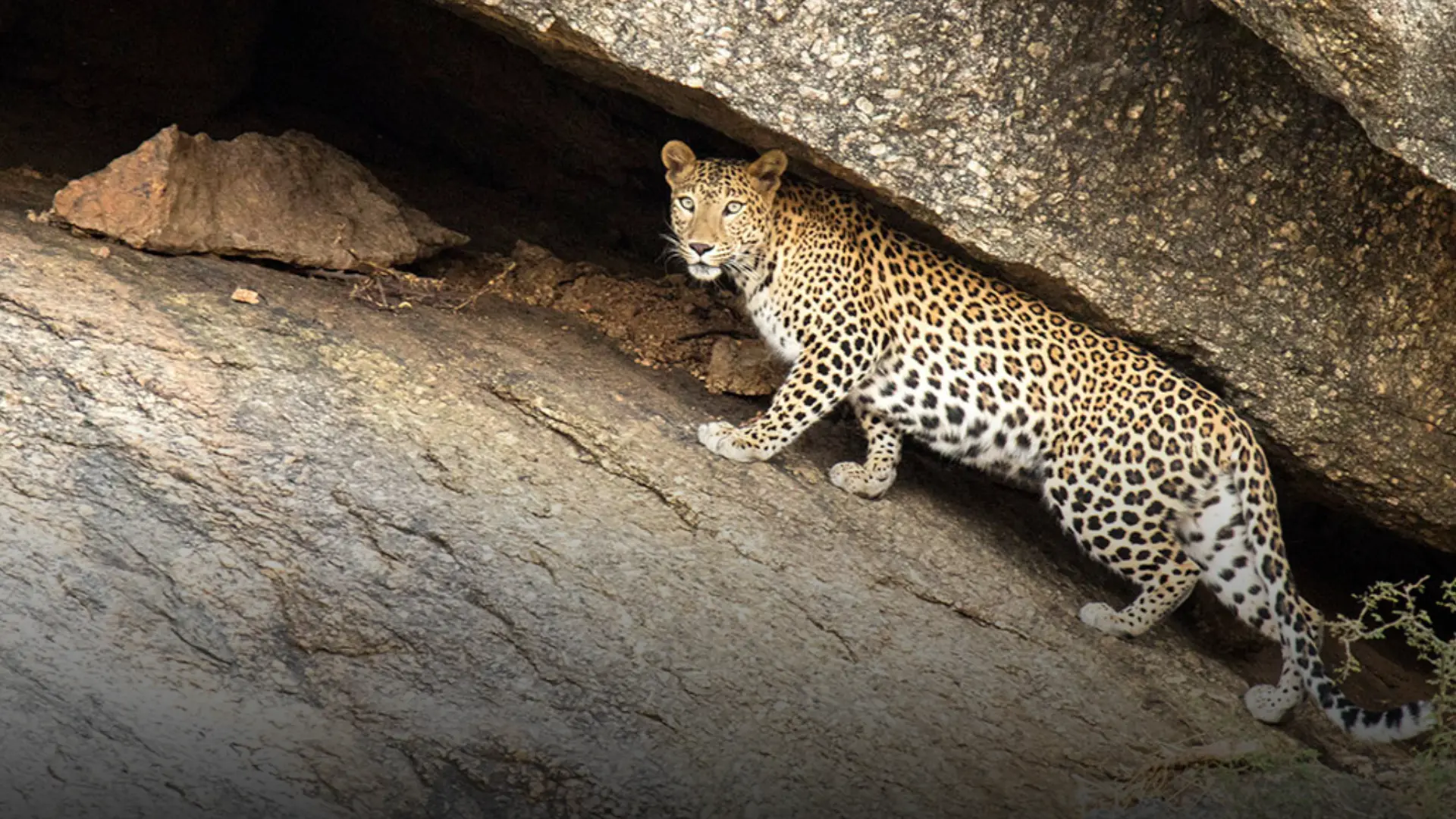
At six-fifteen on a November morning in Bera, the billion-year-old granite domes of southern Rajasthan are still cold to the touch, painted pale rose by the first light over the Aravalli horizon. Look two hundred feet up the face of a smooth rock inselberg and you will see two silhouettes sharing the same ridge: a whitewashed hilltop temple flying a saffron flag, and twenty yards from its steps, a full-grown male Indian leopard stretched along a sun-warmed ledge. Directly below that rock face, a Rabari herdsman in a crimson turban walks behind forty cattle, whistling softly as he guides them down a sandy village lane. Neither the herdsman nor the leopard pays the other the slightest alarm. For anyone planning a Jawai expedition Rajasthan leopard safari after years of tracking in forested national parks, this single scene rewrites every rule you thought governed big cat behaviour.
Table of Contents
- The Granite Landscape of Jawai: Where the Leopard Rules Unchallenged
- The Rabari and the Leopard: How Centuries of Coexistence Actually Work
- How We Track Leopards on Granite: Field Craft Beyond the Jeep Crowd
- Beyond the Leopard: Jawai Dam, Striped Hyenas, and Wetland Birdlife
- Photographing Jawai: Golden-Hour Silhouettes, Blue-Hour Tracks, and Lens Strategy
- Best Time to Visit Jawai & How to Plan Your Rajasthan Safari Logistics
- Inside Our 4-to-5-Day Tailor-Made Jawai Expedition
- Who Leads Our Jawai Expeditions
- Frequently Asked Questions
The Granite Landscape of Jawai: Where the Leopard Rules Unchallenged
If you have spent time with us tracking in Central India's forests, such as Kanha, Bandhavgarh, or Satpura, you know the Indian leopard (Panthera pardus fusca) as a creature of shadows. In tiger country, a leopard's survival depends on staying out of a larger predator's path. It moves quietly through dense undergrowth, caches its kills thirty feet up a mahua or sal tree, and vanishes the moment a vehicle pauses on a forest track.
Step into the Bera and Jawai region of southern Rajasthan and that ecological hierarchy disappears. Roughly 850 million years ago, volcanic intrusions and relentless wind erosion sculpted the western flank of the Aravalli range into dozens of isolated granite inselbergs, locally called kopjes or bhakars. These pale, rounded monoliths rise starkly out of flat thorny scrub, mustard fields, and dry riverbeds, honeycombed with deep horizontal caves, subterranean rock clefts, and cool stone chambers.
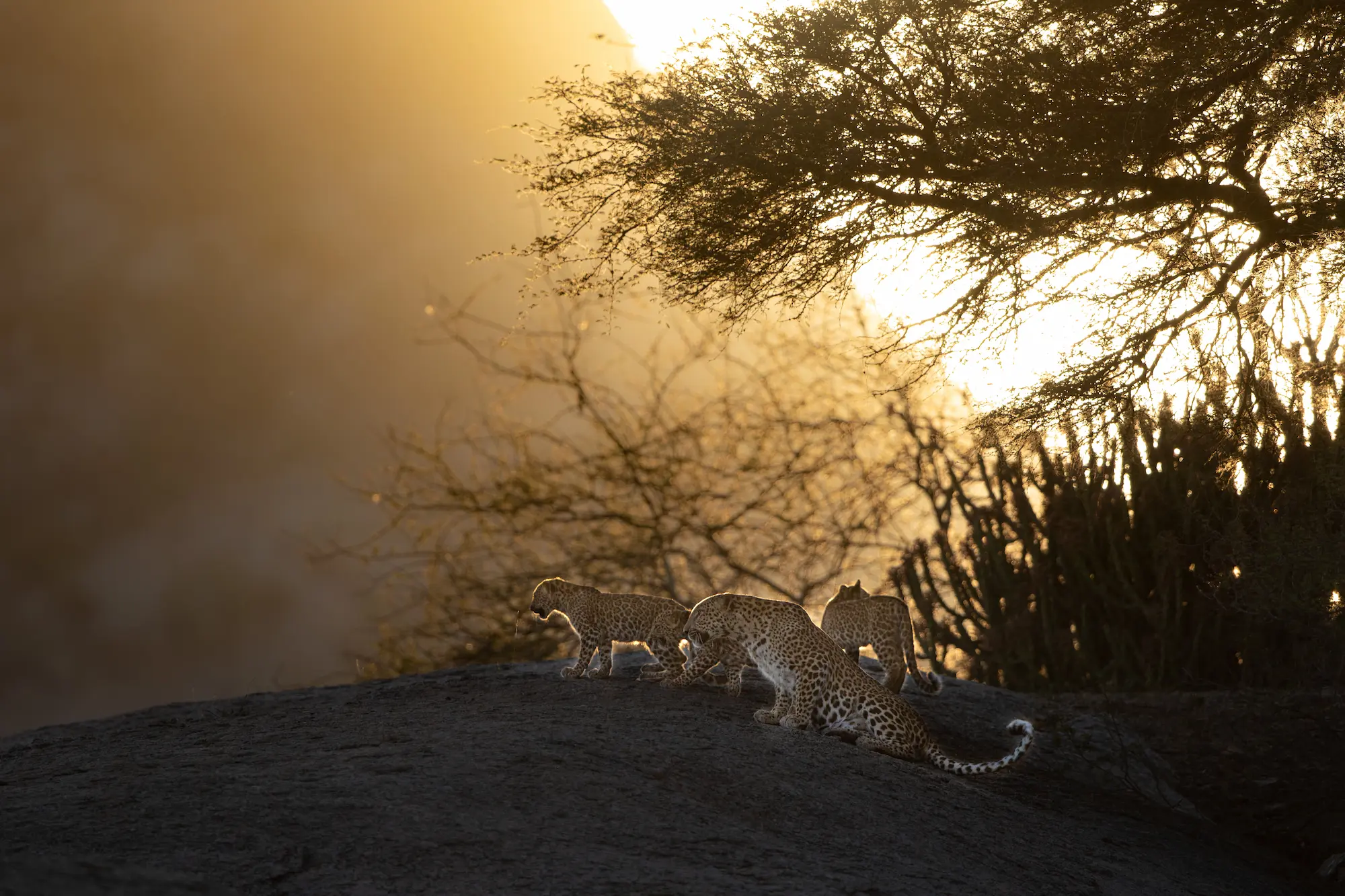
In this vertical rock world, there are no Royal Bengal Tigers. As we explain in our Big Cats of India complete guide, removing the tiger triggers what ecologists call competitive release. In Jawai, the leopard does not need to hide in tree canopies or restrict its patrols to midnight. It owns the ridgeline. Mothers bring eight-week-old cubs out onto flat granite slabs at sunrise to groom in full view. Dominant males walk along the crests of the boulders against the evening sky, surveying their territories with the unhurried confidence of lions on a savannah kopje.
| Ecological Factor | Jawai & Bera (Rajasthan Granite Hills) | Central Indian Tiger Reserves (Sal & Teak Forests) |
|---|---|---|
| Apex Predator Status | Undisputed apex predator (no tigers or lions present) | Subordinate mesopredator sharing habitat with larger Bengal tigers |
| Dominant Terrain | Billion-year-old granite inselbergs, caves, rock fissures, and arid scrub | Dense sal, bamboo, and dry deciduous teak woodland with meadows |
| Typical Leopard Behaviour | Bold, crepuscular and diurnal; rests openly on boulders and hill temples | Elusive, highly arboreal, and cautious; caches kills high in trees |
| Boundary Structure | Unfenced human-wildlife mosaic shared with Rabari pastoral villages | Strictly demarcated core and buffer zones with relocated villages |
| Tracking Methodology | Binocular scanning of rock ridges, cave ledges, and peafowl alarm calls | Reading pugmarks in soft dust, tree scrapes, and langur/chital calls |
| Safari Restrictions | Flexible dawn and dusk windows across community and pastoral tracks | Fixed park gate entry/exit times and lottery-allocated core zones |
| Primary Photographic Style | Dramatic ridgeline silhouettes, rock textures, and low-light blue hour | Dappled canopy light, horizontal branch poses, and forest tracks |
The Rabari and the Leopard: How Centuries of Coexistence Actually Work
The most extraordinary thing about Jawai is not how many leopards live here, though packing roughly 60 to 70 individuals across a compact mosaic of hills and villages represents one of the highest leopard densities on earth. The real marvel is that there is no fence between the leopards and the people.
The granite caves where female leopards den sit directly above the villages of Bera, Sena, Perwa, and Velar. Every morning, the Rabari (also known in Marwar as the Raika), a semi-nomadic pastoral community instantly recognisable by their towering scarlet turbans, white cotton tunics, and silver earrings, lead herds of sheep, goats, cattle, and camels along the base of these very hills.
In almost any other pastoral landscape on the planet, big cats living fifty metres above livestock pens would trigger poisoning, trapping, or retaliatory conflict. Why hasn't that happened in Jawai? Having spent years talking with Rabari elders and local trackers around Bera, I can tell you it comes down to three interlocking realities:
Almost every major granite hill in Jawai houses a small shrine dedicated to Lord Shiva (revered locally as Kambeshwar Ji) or regional Mother Goddesses (Mataji). In Rabari cosmology, the leopard is not a pest or a trespasser; it is the sacred guardian of the shrine and the vehicle of the deity. Temple priests climb up stone steps at dawn to light incense while wild leopards rest on the rocks ten yards away. Harming a leopard is viewed as a spiritual transgression against the hill itself.
Because Jawai has a modest wild ungulate density compared to a national park, leopards subsist on a mixed diet of peacocks, hares, nilgai calves, feral dogs, and domestic livestock. When a leopard takes a goat or calf, traditional Rabari herders refer to the loss as prasad, an offering claimed by the guardian of the hills. Today, that cultural tolerance is reinforced by government livestock compensation schemes and conservation-linked tourism jobs that employ local youths as spotters and drivers.
Generations of living without conflict have shaped the behaviour of the cats themselves. Jawai's leopards are deeply habituated to the sight and sound of villagers, temple bells, and cattle herds. Despite living in tighter proximity to humans than almost any wild big cat population in the world, attacks on people in the Bera core hills are virtually unheard of.
"In Central India, conservation succeeded by separating humans and apex predators behind park boundaries. In Jawai, conservation endures because an ancient pastoral culture never forgot how to share the rock."
How We Track Leopards on Granite: Field Craft Beyond the Jeep Crowd
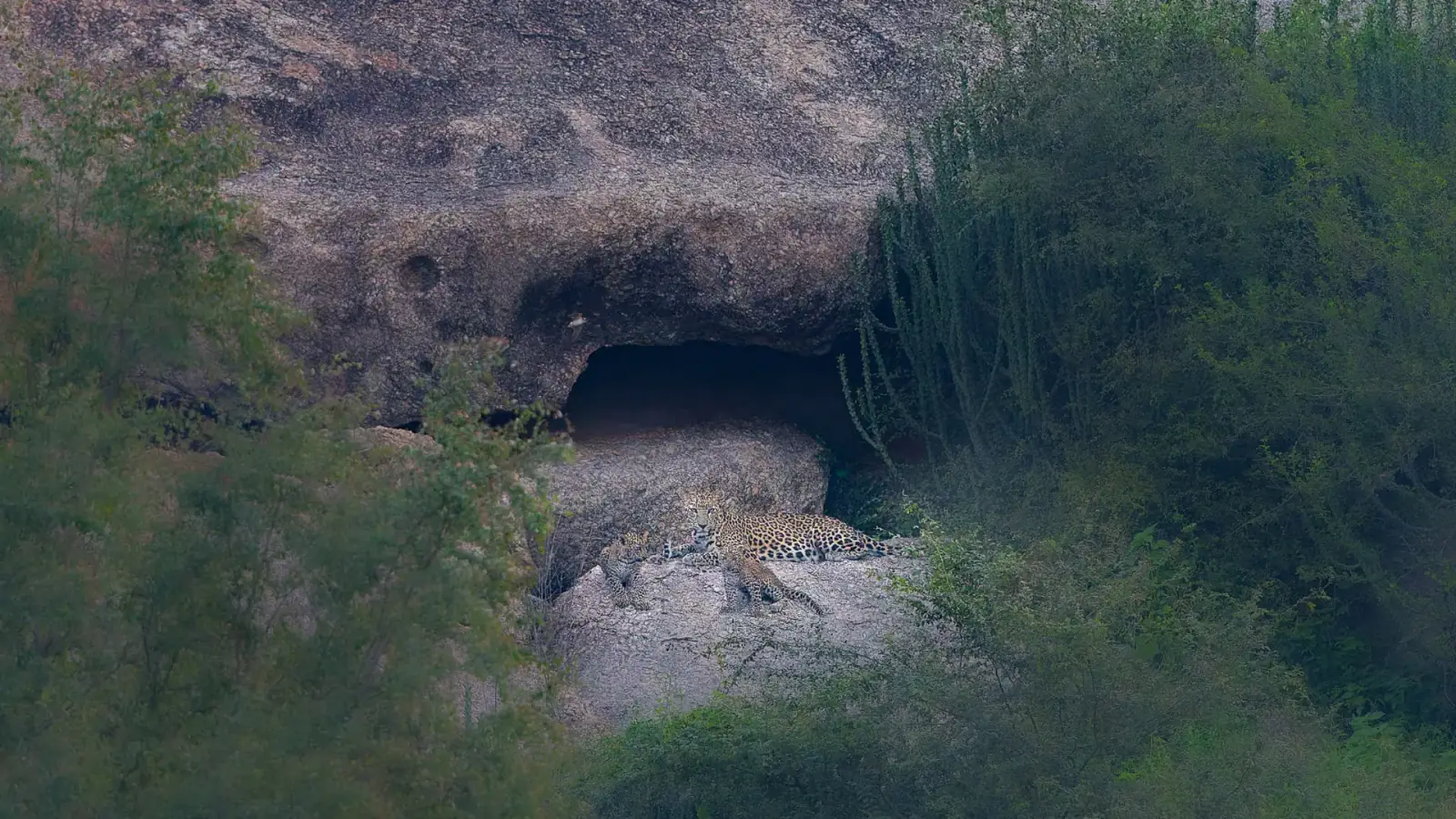
When a naturalist moves from a forest reserve to Jawai, the entire tracking toolkit shifts. In Kanha or Bandhavgarh, we spend the first hour after gate entry looking down at the road surface to read overnight pugmarks in soft dust. In Jawai, a two-hundred-foot granite dome holds zero footprints. If you wait to see a track in the sand, you have already missed the cat on the rock above you.
Over the past decade, as Jawai's reputation has grown, dozens of commercial hotels have opened around the reservoir, sending convoys of vehicles to the same two or three easily accessible hills every afternoon. As we emphasise in our Luxury Wildlife Holiday in India philosophy, true luxury in Jawai is spatial privacy and patient field craft. Here is how our naturalists and local Bera trackers approach each drive on our Tailor-Made Jawai Leopard Expedition:
- Reading Thermal Behaviour Across the Day: Granite is a giant thermal battery. On crisp winter mornings (November to February), the cave interiors cool down overnight, so leopards emerge between 6:15 AM and 8:00 AM onto east-facing slabs to absorb the first direct sunlight. By 9:30 AM, as the rock heats up, they slip back into shaded horizontal fissures. In the late afternoon, as stored heat radiates from the stone, they step out onto elevated windward ridges to scan for prey before descending at dusk.
- Acoustic Triangulation off Rock Faces: Sound travels remarkably far across open granite amphitheatres. The sharp, metallic trumpet of an Indian peafowl flushing from a scrub gully, the agitated cackle of a grey francolin, or the guttural cough of a Hanuman langur troop sitting on a cliff edge tells you not only that a leopard is moving, but which fissure it is threading through.
- Methodical Grid-Scanning with High-Grade Optics: A leopard's rosettes blend into lichen-spotted pink and grey granite with uncanny precision. Rather than driving aimlessly from hill to hill, we park silently at a respectful distance and grid-scan cave mouths, shadow lines, and euphorbia thickets through binoculars until the twitch of a white tail-tip or the curve of an ear gives the cat away.
- Working Private Pastoral Tracks Away from Vehicle Clusters: Because our team works alongside veteran local trackers who know the resident females, sub-adults, and territorial males by their spot patterns, we deliberately avoid congested hills when ten hotel gypsies gather. Instead, we track across quieter boulder complexes where you can watch a leopard descend the rock face in total silence.
Beyond the Leopard: Jawai Dam, Striped Hyenas, and Wetland Birdlife
One of the biggest mistakes hurried travellers make in Jawai is treating the landscape solely as a two-hour leopard chase and heading straight back to the lodge. As an ornithologist by training, I find the contrast between Jawai's arid granite monoliths and the shimmering expanse of the Jawai Bandh (Jawai Dam) to be one of the most rewarding dual ecosystems in western India.
Constructed across the Jawai River (a tributary of the Luni) between 1946 and 1957 by Maharaja Umaid Singh of Jodhpur, this vast reservoir is framed by granite peaks and shallow mudflats. When we dedicate a late morning or golden afternoon session to the dam backwaters and surrounding scrubland, the species diversity opens up dramatically:
- Striped Hyena & Indian Wolf: The deep rock crevices and dry thorn scrub around Bera harbour healthy populations of nocturnal striped hyenas (Hyaena hyaena), golden jackals, jungle cats, and the elusive Indian wolf patrolling the outer pastoral plains.
- Marsh Crocodiles (Muggers): Jawai Dam holds one of Rajasthan's largest populations of mugger crocodiles (Crocodylus palustris), with more than 300 individuals regularly seen basking in dozens along the sun-warmed granite shelves at the water's edge.
- Flamingos, Cranes & Winter Waterfowl: Between October and March, the shallow reservoir margins turn pink and grey with flocks of greater and lesser flamingos, demoiselle cranes, resident sarus cranes, bar-headed geese, ruddy shelducks, and Dalmatian pelicans.
- Raptors, Owls & Sloth Bears: The cliff ledges are prime territory for the Indian eagle-owl (Bubo bengalensis), Bonelli's eagle, and laggar falcon, while the deeper boulder caves in the Aravalli foothills shelter resident sloth bears.
Photographing Jawai: Golden-Hour Silhouettes, Blue-Hour Tracks, and Lens Strategy
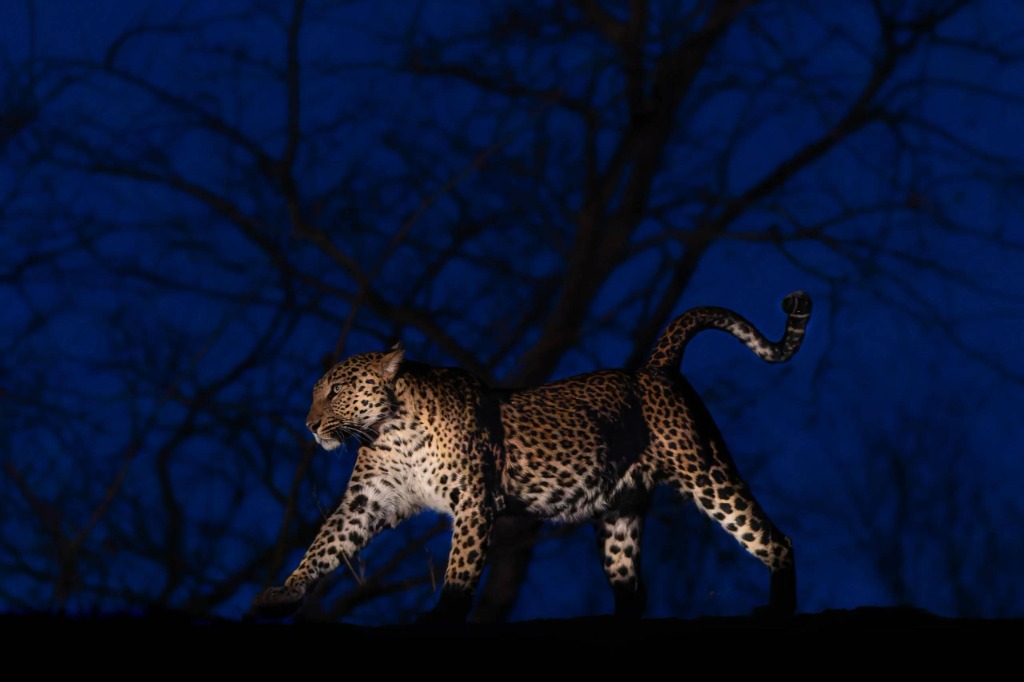
For guests joining our photo safaris, Jawai offers compositions you simply cannot create in any forested park in India. Because the cats walk along elevated rock spines against open desert skies, Jawai is the capital of environmental wildlife photography and dramatic rim-lit silhouettes.
When our photography specialist Shivraj mentors guests in Bera, we focus on three technical adjustments specific to Rajasthan's granite terrain:
- Carry Two Bodies (Wide Telephoto + Super-Telephoto): Do not lock yourself into a 600mm prime alone. While a 400mm f/2.8, 500mm f/4, or 200-600mm zoom is essential when a leopard is grooming cubs outside a high cave mouth, some of the most iconic frames in Jawai happen at 70-200mm or 100-400mm, showing a tiny spotted silhouette walking across a colossal wall of ancient stone.
- Dial Down Exposure Compensation for Sunset Ridges: When a leopard crests a granite ridge against a bright orange Rajasthan sunset, matrix metering will try to brighten the dark rock, washing out the sky. Dial in
-0.7 EVto-1.7 EVexposure compensation to preserve rich amber sky tones and crisp whiskers along the silhouette edge. - Prepare for Post-Sunset Blue Hour: Unlike national parks that force every vehicle out of the gate before sunset, Jawai's conservation reserve status allows us to stay with a sighting into dusk as the leopards descend from the hills. Fast f/2.8 or f/4 apertures and modern full-frame sensors capable of clean ISO 6400 to 12800 performance make a massive difference here.
If you do not wish to fly with heavy super-telephoto glass on domestic connections into Udaipur or Jodhpur, you can reserve matched mirrorless bodies and telephoto lenses directly through our Camera Rentals by Just Nature Expeditions service, delivered and tested by our naturalist team before your first drive.
Best Time to Visit Jawai & How to Plan Your Rajasthan Safari Logistics
When planning a Jawai expedition Rajasthan leopard itinerary, one of its greatest logistical advantages is seasonal flexibility. While core tiger reserves across Madhya Pradesh and Rajasthan close from July through September, Jawai's granite hills remain accessible year-round, with each season offering a distinct visual mood:
Winter & Early Spring (October to March, Peak Season): Crisp 8°C to 12°C mornings draw leopards out onto sunny rock ledges early in the day and keep them active later in the afternoon. The light is soft and golden, and Jawai Bandh is alive with thousands of migratory flamingos, pelicans, and cranes.
Dry Summer (April to June, High-Concentration Tracking): Daytime temperatures climb past 40°C, pushing leopards deep into cool granite caves during midday. However, dawn and dusk sightings around permanent water points and shaded rock overhangs are exceptionally reliable, with minimal tourist traffic.
Monsoon (July to September, The Emerald Season): Short desert rains transform the arid brown scrub around the grey boulders into a lush green carpet. For photographers seeking dramatic storm clouds and zero other vehicles, monsoon tracking in Jawai is a hidden gem.
How to Reach Jawai Seamlessly
Jawai sits almost exactly halfway between Rajasthan's two most celebrated heritage cities, making it effortless to integrate into a pure wildlife circuit or a wider cultural-and-wilderness journey:
- Via Udaipur Airport (UDR, Recommended Gateway): Approximately 140 km (2.5 to 3 hours by private SUV) along a scenic highway winding past the Aravalli hills of Kumbhalgarh and Ranakpur. All our private Jawai packages include door-to-door Udaipur Airport transfers.
- Via Jodhpur Airport (JDH): Approximately 165 km (3 hours by road) south through Pali, ideal if you are pairing Jawai with the Thar Desert or Tal Chhapar.
- By Direct Rail (Jawai Bandh & Falna Stations): Jawai Bandh railway station is only 15 to 20 minutes from our partner lodges in Bera, with direct express and Vande Bharat connections from Ahmedabad, Mumbai, Jaipur, and Delhi.
Inside Our 4-to-5-Day Tailor-Made Jawai Expedition
Because Jawai is an intimate landscape of individual leopard territories rather than a gated park with a single tourist circuit, we design our Tailor-Made Jawai Expedition around unhurried time in the field. Rushing in for one night gives you a snapshot; spending three full nights (six private drives) lets you follow the behavioural arc of specific resident cats.
Our team meets you at Maharana Pratap Airport in Udaipur for a private transfer through the Aravalli hills to Bera Safari Lodge or Veraval Leopard Camp in Jawai. After check-in and a freshly prepared lunch, we head out with your Just Nature naturalist for your first afternoon and dusk leopard tracking session across the granite domes, returning under star-lit skies for dinner.
We depart before dawn with hot coffee to position beneath key east-facing granite hills as the resident leopards emerge to bask in the first golden light. After returning to the lodge for breakfast and midday rest, our afternoon drive explores a second hill complex, scanning for mothers with cubs and staying until blue hour as the cats begin their evening patrol.
Our third morning combines granite hill leopard tracking with a dedicated session along the Jawai Dam backwaters to photograph mugger crocodiles, flamingos, sarus cranes, and raptors, while observing the morning rhythm of the Rabari herdsmen. In the afternoon, we return to the high boulders for your fifth private safari drive.
We dedicate our sixth and final drive to revisiting your favourite leopard territory in the crisp morning light before returning to the lodge for breakfast and a private transfer back to Udaipur Airport. Guests with 10 to 14 days frequently link Jawai westward to Gir National Park (for Asiatic lions) and Velavadar (for blackbuck and striped hyenas), or eastward to Ranthambhore and Central India as part of our flagship Big Cats of India Expedition. For guests comparing Central India's tiger parks for an onward extension, read our Bandhavgarh vs Kanha vs Pench comparison guide.
Who Leads Our Jawai Expeditions
As we detail in our field guide on how to choose a wildlife expedition operator in India, booking a hotel room in Jawai is easy; interpreting the behaviour of a free-ranging apex predator across unfenced community land requires a career naturalist in the seat beside you. When you explore our Tailor-Made Safaris or Guided Tours, you travel with naturalists who have dedicated their lives to India's wildernesses:
- Aly Rashid (Founder & Naturalist Expedition Leader): Trained naturalist and ornithologist, 7+ years heading the naturalist team at Reni Pani Jungle Lodge, caracal researcher in Panna National Park (2014), and author of Tales from the Bush: A Peek into the World of Satpura.
- Erwin D'rose (Senior Naturalist & Expedition Leader): Five years studying big cat behaviour in Kanha National Park followed by eight years as senior naturalist and lodge manager in Satpura, bringing decades of predator movement intuition to every drive.
- Shivraj (Naturalist & Wildlife Photographer): Over 12 years of field tracking experience, trained alongside African safari guides, and specialist in mentoring guests on low-light and silhouette wildlife photography in high-contrast terrain.
Read the full biographies of our field leaders on the Expedition Leaders page, or explore how we browse and curate India's wildest habitats on our Destinations hub.
Frequently Asked Questions
Why is Jawai considered the best place in India to see leopards?
How do leopards and the Rabari community coexist peacefully in Jawai without fences?
What is the best time of year for a Jawai leopard safari in Rajasthan?
How do I reach Jawai from Udaipur, Jodhpur, or Delhi?
How many safaris do I need in Jawai for strong leopard sightings and photography?
Can I combine a Jawai leopard safari with a tiger or Asiatic lion expedition?